Sixteen years as a physical therapist and eight of them spent walking office floors as an ergonomics consultant, and I still get the same email every week: which of these should I buy? It arrives with three or four listings pasted in, every one of them stamped with the word ergonomic, every one promising lumbar support, and not one of them explaining how that lumbar support actually adjusts. So this is my answer to that email, a straight comparison of four ergonomic office chairs that keep showing up in the same search results.
Let me be honest about the method first. None of these four has spent a full work week at my desk with a sensor pad on it, so this is a fit-and-design comparison, not a durability verdict. What I can do is read each chair the way I read a client: does the design solve a real problem, and what do you need to verify before you hand over money?
The short answer: for a standard 8-hour desk job, the SIHOO M18 is the safest of the four for most bodies, because a mesh back with a headrest and a lumbar pad is a better starting point for desk work than a leather seat with bolsters. If you are tall or broad through the shoulders, the GTPLAYER Predator is the one built around your frame. If the budget is the hard limit, the dual-layer support chair is the affordable experiment. The white leather chair with the footrest is for the person who wants to lean back at 6 p.m. and does not care what a PT thinks about bucket seats.
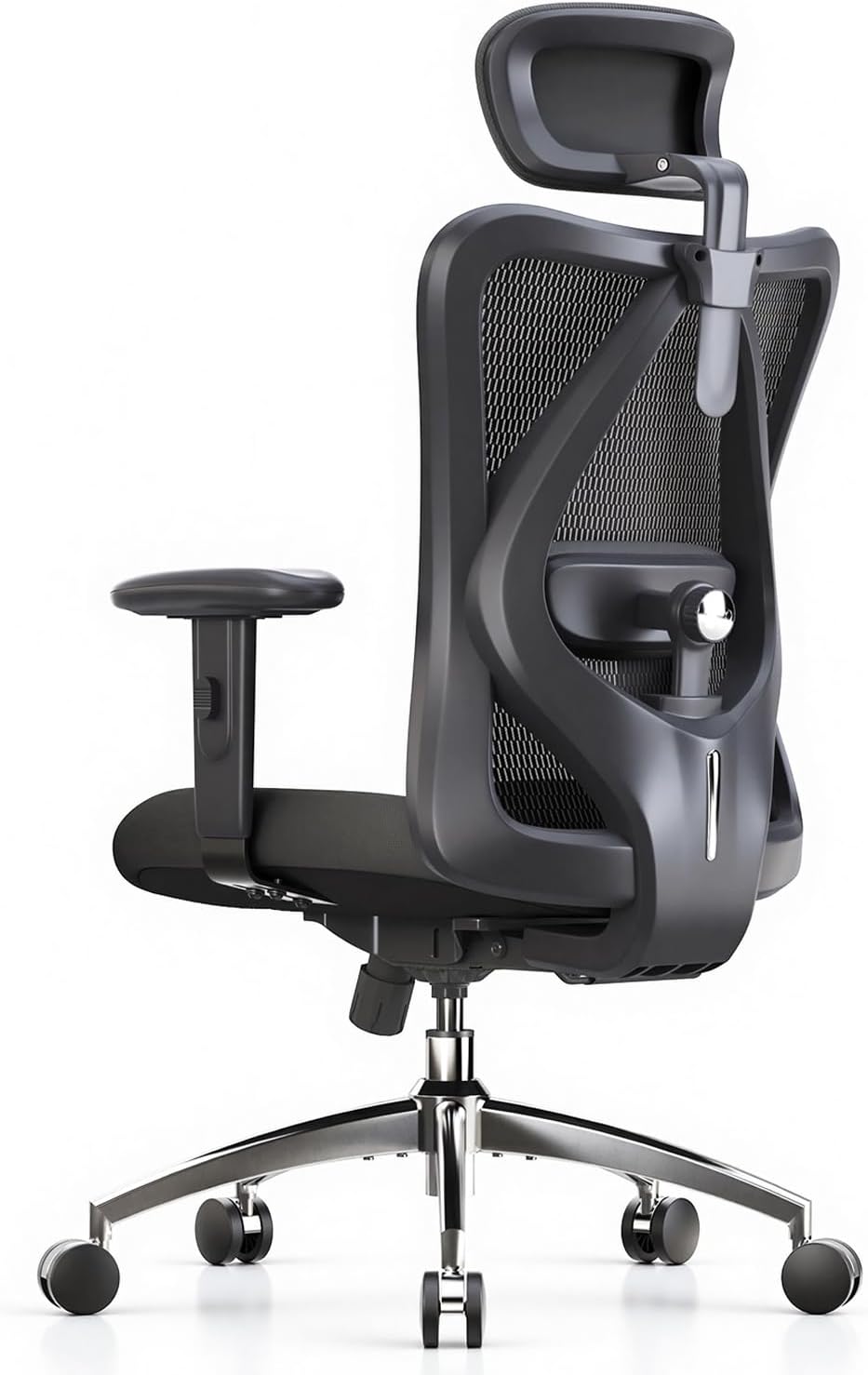
SIHOO M18 Ergonomic Office Chair, Mesh Back Desk Chair with Headrest
Mesh back plus a headrest is the right combination for desk work, and the lumbar pad is the piece that decides whether it fits you
Mesh is only as good as its tension, and a sagging mesh back becomes a hammock for your tailbone
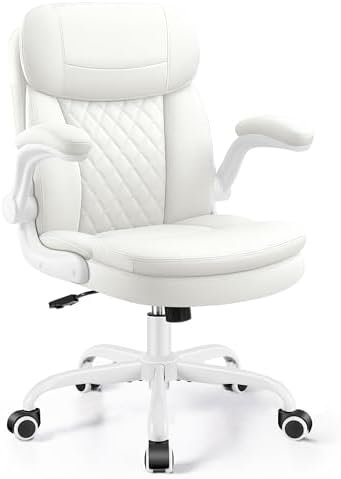
Office Desk Chair, Ergonomic Computer Chair with Unique Dual-Layer Support
Dual-layer support is the correct idea for a seat: soft where you sit, firm where you are held
The name describes an intention, not a mechanism, so how the back adjusts is something you have to verify yourself
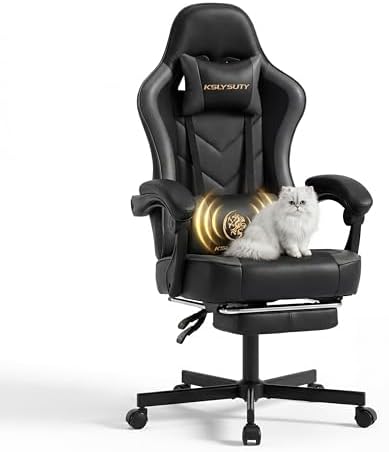
Desk Computer Gaming Chair, High Back Ergonomic Office Chair with Footrest and Lumbar Support, White Leather
Pocket spring cushioning spreads load better than a solid foam block, and the footrest is genuinely useful at the end of a shift
Leather over thick foam runs hot, white leather shows everything, and a high back with side bolsters can push your shoulders forward
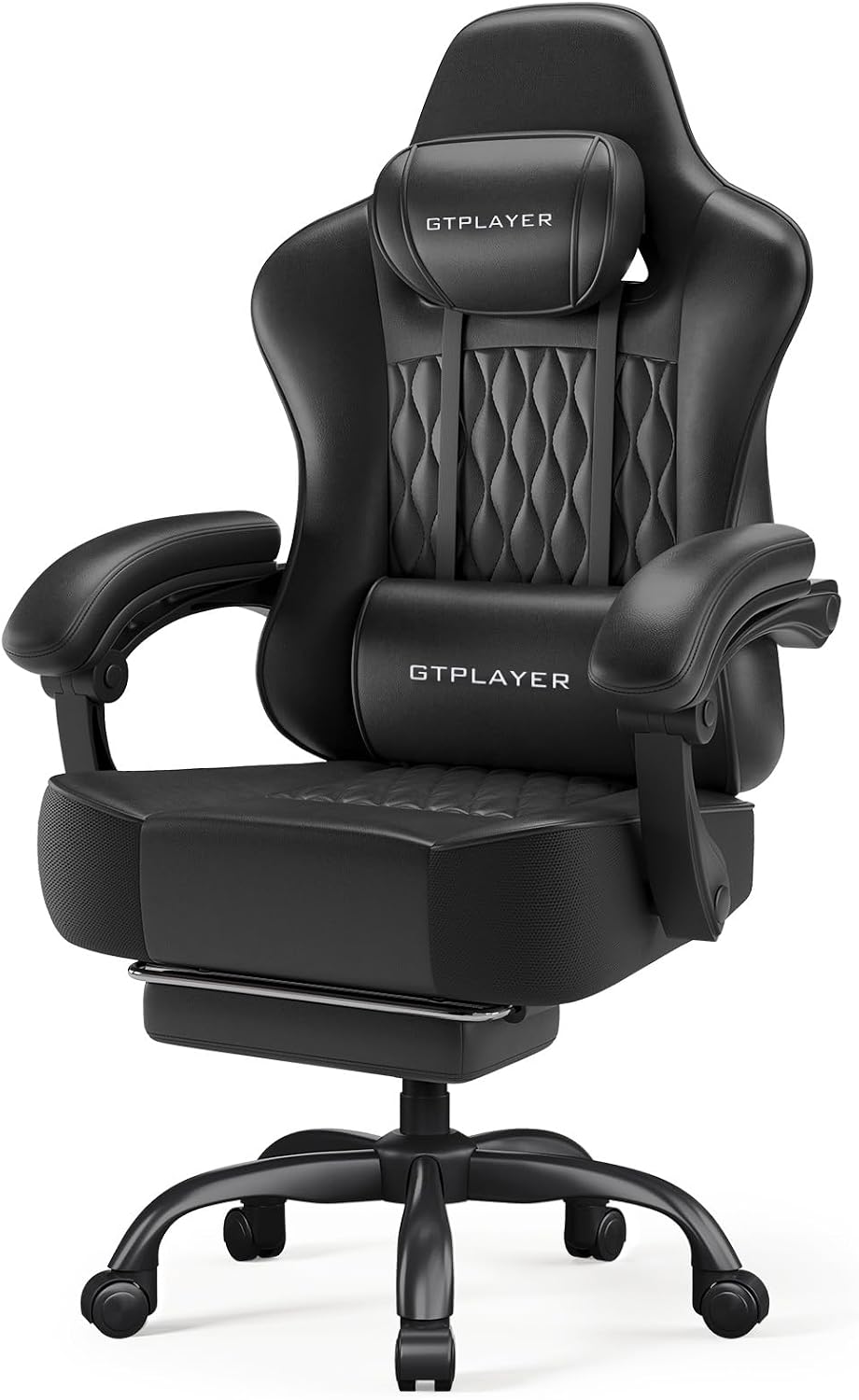
GTPLAYER Big and Tall Gaming Chair with Footrest, Ergonomic Office Desk Chair with 4.4in Thick Cushion and Wide Wingless Seat, Predator Series
Wide wingless seat and a 4.4 inch cushion address the two things that actually break chairs for bigger bodies
Big and tall geometry is the wrong shape for a small sitter, and leather this thick holds heat
Prices and availability were captured from Amazon Creators API and may change.
What a listing can and cannot tell you
I test chairs the same way every time: a full work week, a lumbar pressure check, and one 9-hour day with no standing breaks. You are not going to do that with four chairs, so here is the short version of the checklist I would run.
Does the lumbar piece adjust in place, or does it just slide up and down a rail? Can you sit in it past hour six without standing up to reset your back? Do the armrests hold their position when you put weight on them? Would I prescribe it to a client with low back pain?
Those four questions are the whole review. Marketing copy answers none of them, which is why the specification list matters more than the adjectives.
Lumbar support is the adjustment, not the pad
Every chair in this comparison claims lumbar support. What separates them is whether that support can be moved to meet your spine, or whether it sits where the factory decided it should sit.
The test is not how it feels in the first ten minutes in a showroom. The test is whether it is still holding your inward lumbar curve at 2 p.m. on a Tuesday, after you have shifted your weight forty times. A pad that slides down the rail under pressure is not support, it is decoration.
This is the first thing to check on the dual-layer support chair, because the product name tells you about the seat construction and says nothing about the back. It is also the reason the SIHOO M18's lumbar pad matters more than its headrest, even though the headrest is the more visible feature.
Seat depth and cushion thickness
Seat depth is how far the seat goes from the front edge of the backrest to the front edge of the cushion. Too long and it hits the back of your knees, which pushes you forward and rounds your lower back. Too short and your thighs dangle with no support under them.
Thickness is a different question, and it is where the GTPLAYER Predator's 4.4 inch cushion earns its place. Foam compresses under load. A cushion that starts thick still has something left under it after a year of daily sitting, which is more than I can say for the thin slabs on cheap chairs. The pocket spring cushion on the white leather chair works on the same principle as a mattress: individual springs under the foam take load off the highest pressure points, which for most people means the sit bones.
The dual-layer support chair is making the same argument in different language. Soft layer for pressure, firm layer for structure. That is the right architecture for a seat, and it is the main reason that chair belongs on this list at all.
Armrests and the shoulder problem
Floating elbows are how you get the shoulder pain I treat every single week. If your armrests are too low, your shoulders creep up toward your ears and stay there for eight hours. If they are too high, your shoulders shrug. Either way, the fix is adjustability, and that is a specification you have to look for on the product page rather than assume.
None of these four chairs is sold primarily on armrest engineering, so treat this as a verification item. If the armrests only go up and down, that covers most people. If they also move in and forward, better. If they are fixed, measure your own seated elbow height before you buy, because fixed armrests only work for one body size.
Recline and footrests
Both gaming chairs in this comparison include a footrest, and I want to be clear about what a footrest is for. It is for the end of the day, when you lean back and take your weight off your lumbar spine entirely. It is not a working posture. If you spend your day reclined with your feet out, your head drifts forward and your neck pays the bill.
Used correctly, though, a footrest is a real feature. Ten minutes of full recline a couple of times a day is one of the cheapest things you can do for a back that has been in flexion since 9 a.m.
The four chairs, one at a time
SIHOO M18 Ergonomic Office Chair
The M18 is the only chair here that names a headrest, and for desk workers who lean back between tasks that is more valuable than it sounds. A headrest is what keeps your neck supported once the backrest goes past about 110 degrees. Without one, your head drifts forward and your cervical spine does work your chair should be doing.
The mesh back is the other half of the argument. Air moves through it, your back stays cooler, and you are less likely to slide forward to get away from a hot seat. The risk with mesh is tension. Cheap mesh sags in year two and then it is a hammock for your tailbone, so this is a chair where the build quality of the frame behind the mesh is what you are really buying.
Office Desk Chair with Unique Dual-Layer Support
The design intent here is a two-density seat: a softer top layer to keep pressure off your sit bones, a firmer base layer so you are not sitting on the frame by hour three. In principle that is exactly how a seat should be built, and it is a more honest piece of engineering than a chair that sells itself on color.
What the name does not tell you is how the back adjusts, what the seat depth measures, or how the armrests are set up. That makes this the chair where you read the full product page before buying rather than the headline. For a buyer who wants a straightforward desk chair at the low end of the price range, it is the reasonable entry point, and it is the one I would point a student or a first apartment at.
Desk Computer Gaming Chair, White Leather, with Footrest and Lumbar Support
Pocket spring cushioning is the interesting part of this chair. Springs under foam distribute load across a wider area than a solid block does, which is why mattresses moved that direction decades ago. Add the footrest and a high back with lumbar support and you have a chair that is genuinely comfortable for the reclined half of your day.
The trade is material. Leather plus thick foam plus a high back equals heat, and white leather shows every mark. Before you buy, check whether the back has side bolsters. If it is shaped like a bucket, sitting upright for work pushes your shoulders forward, which is the exact posture that sends people to my office. If the back is flatter than it looks in the photos, most of my objection goes away.
GTPLAYER Big and Tall Gaming Chair, Predator Series
Two words in this listing do more work than the rest of it combined: wingless seat. Wings are the raised side bolsters that make a gaming chair look fast and fight your shoulders the moment you sit upright to type. A wide, wingless seat lets your arms hang naturally and lets your shoulder blades move. For anyone with a broad frame, that single design choice matters more than lumbar pads or headrests.
The 4.4 inch cushion is the second piece. Larger bodies put more load through the seat, and foam compresses under load. A cushion that starts thick still has something left under it later, which is the difference between a chair that lasts and a chair that develops a bottom you can feel the frame through.
The obvious limit: big and tall geometry is built for big and tall people. If you are five foot four, this seat will be too deep for you and the backrest will hit you in the wrong place.
The trade-offs nobody puts on the box
Mesh versus leather is the biggest one. Mesh runs cooler and sags over time. Leather holds its shape and holds your body heat. Neither is better in the abstract. Mesh suits warm offices and long uninterrupted stretches of work. Leather suits cooler rooms and people who lean back a lot.
Headrest versus no headrest is the second. A headrest is only useful if you recline. If you sit bolt upright all day, it is a piece of trim.
Footrest versus no footrest is the third, and it is about how you take breaks, not how you work.
The last one is size. Every chair is a one-size-fits-one product wearing a one-size-fits-all label, and I say that in every review I write. A chair that fits your coworker can be actively bad for you.
Who should buy which
Buy the SIHOO M18 if you sit for a full workday in a warm room, you want a headrest for the reclined portion of your day, and you want a mesh back that will not cook you by 3 p.m.
Buy the dual-layer support chair if price is the constraint and you want a simple desk chair with a seat built on the right principle, and you are willing to read the specification list carefully before ordering.
Buy the white leather chair with the footrest if you want maximum comfort in the reclined position, you like the look, and you have checked that the back is not a deep bucket.
Buy the GTPLAYER Predator if you are tall or broad through the shoulders and you are tired of chairs that squeeze you. The wingless seat is the feature that will change your day.
Bottom line
The chair that fixes your back is the one whose adjustments match your body, not the one with the longest feature list. Of these four, the SIHOO M18 is the safest default for a standard desk worker, the GTPLAYER Predator is the correct answer for a big frame, and the other two are legitimate picks for their own buyers, one on price and one on comfort.
What I am watching next is the unglamorous stuff: gas lifts that die in 14 months, mesh that sags before the warranty does, armrests that develop a wobble in month eight. That is where cheap chairs reveal themselves, and it is the reason I keep telling people that a chair is a five year purchase. The one that dies in 18 months was never cheap.