I have spent 16 years as a physical therapist and the last eight of those as an ergonomics consultant, which means I have watched a lot of offices buy 40 chairs at once off a spec sheet and then listen to the complaints for a year afterward. When people ask me to compare ergonomic office chairs for long workdays, the question is almost never which chair has the longest feature list. It is which chair still holds your lumbar curve at hour six, after the novelty has worn off and you have stopped sitting up straight on purpose.
I keep a notebook of which chairs my clients stop complaining about. That notebook is the reason I test the way I do, and it is the reason this comparison exists. The four chairs in front of me are the MUXX.STIL office chair in khaki, the HON Volt task chair, the Space Seating 24 Series manager's chair, and the Steelcase Amia. Two of them are mesh, two of them are not, and all four claim to be ergonomic.
Short answer: the HON Volt is the most sensible place to start in this group, the Steelcase Amia is the one worth stretching for if you sit nine hours a day, the MUXX.STIL is a genuine entry point rather than a toy, and the Space Seating 24 Series is the hardest one to justify.
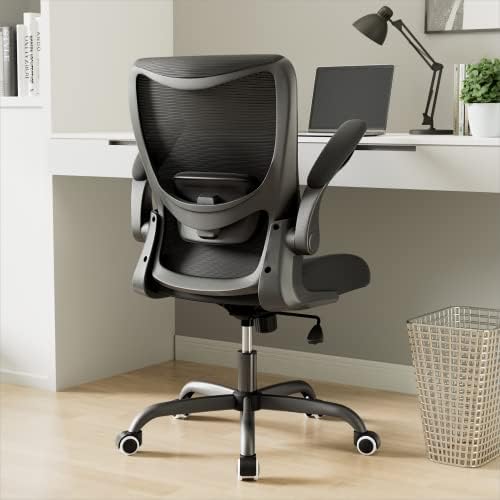
MUXX.STIL Office Chair
Flip-up armrests clear a small desk in one motion, mesh back, and a lumbar pad that actually moves
Mesh and foam at this end of the market are the parts that age first
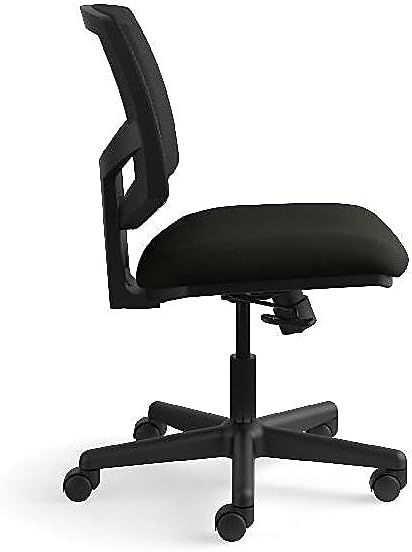
HON Volt Task Chair
Leather seat under a mesh back, a simple mechanism, and task chair proportions that fit most bodies
Fewer adjustments than the chairs one rung up the ladder
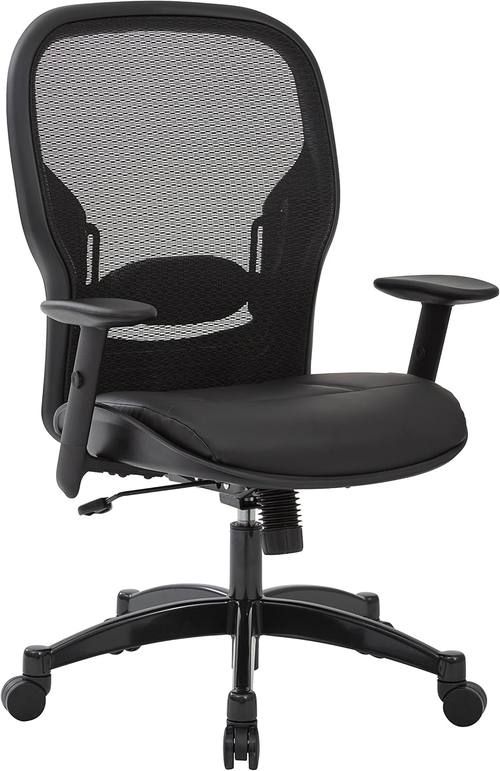
Space Seating 24 Series
Breathable mesh back with a bonded leather seat and manager chair proportions
Sits in the middle of the range without a middle of the range mechanism
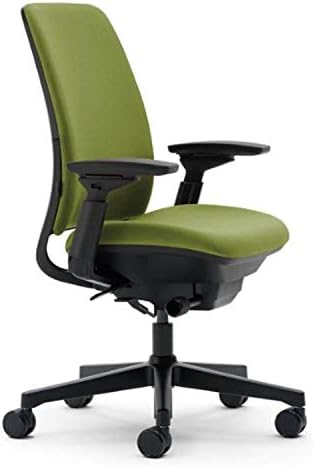
Steelcase Amia Office Chair
The most adjustability and the most substantial build in this group
The marketing name oversells comfort, and the price is the price
Prices and availability were captured from Amazon Creators API and may change.
What I check before I trust a chair
I run every chair through the same four questions, and they have nothing to do with the brochure.
Does the lumbar adjust in place, or does it just slide? This is the test that separates a real ergonomic chair from a chair with the word stamped on the back. Put your hand on the pad, push it into your lower back, and lean. If the pad slides down the frame under pressure, it was never supporting anything. It was a bump that happened to be in the right place while you were sitting still.
Can I spend nine hours in it without standing up out of frustration? Not nine hours of fidgeting. Nine hours of actual work, with a pressure map in my head instead of on a screen, asking where the weight is landing. If the answer is "the front edge of the seat" or "the tailbone," the chair fails no matter how it looks.
Do the armrests hold position under pressure? Floating elbows are how I end up treating shoulder pain in people who insist their chair is fine. An armrest that creeps down an inch over an afternoon is worse than no armrest, because you keep chasing it.
What is the seat depth? Too long and it hits the back of your knees and pushes you forward into a slouch. Too short and your thighs dangle, which loads the hip flexors and pulls your pelvis out of neutral. Seat depth is the spec nobody advertises and everybody feels.
The entry point: MUXX.STIL Office Chair
The MUXX.STIL chair is the one I would hand to someone setting up a first home office in a spare bedroom, and the flip-up armrests are the reason. When your desk is 40 inches wide and shares a wall with a bed, armrests that fold up out of the way are not a gimmick, they are the difference between a chair that fits the room and a chair that fights it.
The mesh back is breathable in the way budget mesh usually is, which means it moves air and it also moves when you lean. That is fine. What I want you to check before you commit is the lumbar pad. It is adjustable, and adjustable is only useful if the mechanism holds. Sit in it, set the pad, then lean back hard. If it stays, you have a chair that will still be doing its job at hour six. If it drops, you have a pad.
The khaki fabric and the light frame are a deliberate look, and they will show a coffee ring faster than black. That is a taste decision, not an ergonomic one. My verdict is that this is a legitimate entry point for a light user, a student, or a second desk, and it is not the chair I would prescribe to someone who already has lower back pain and sits eight hours a day. Visit on Amazon
The sensible default: HON Volt Task Chair
If I had to pick one chair out of this group for the average office worker without asking a single question about their body, it would be the HON Volt. That is a compliment to the restraint in the design, not a knock on the others.
The Volt pairs a mesh back with a leather seat, which is the combination I recommend to people who hate the feeling of mesh under their thighs. Mesh backs breathe and let your spine stay cooler through the afternoon. Mesh seats, especially cheap ones, can sag into a hammock and drop your tailbone into the void. A leather seat avoids that failure mode entirely, and the mesh back still does the ventilation work.
The task chair proportions are the other reason it lands in the middle of my recommendation list. It is not a throne. The seat is not so deep that a 5 foot 4 inch sitter ends up perched on the front edge, and the mechanism is simple enough that you can learn every adjustment in a minute and then never think about it again. That simplicity is a feature. I have watched people spend a week fiddling with a twelve-lever chair and end up in a worse position than they started in.
Where it loses is at the top end of adjustability. If your torso is unusually long, or your lumbar curve needs a pad that moves independently of the backrest angle, this chair will get you close and not all the way. For most people, close is enough. Visit on Amazon
The awkward middle: Space Seating 24 Series
The Space Seating 24 Series is a manager's chair in the classic sense: breathable mesh back, bonded leather seat, black, and built to look like it belongs in an office that has a reception desk. There is nothing wrong with it. That is also the problem.
At this position in the range, I want a chair to either save me real money or give me real adjustability, and the 24 Series does neither with much conviction. The mesh back is breathable, the bonded leather seat is easy to wipe down, and the adjustment set is the standard manager chair package. It will hold up in a conference room where it gets used two hours a day.
For a personal workstation where you sit for a full shift, I keep coming back to the same question I ask about every chair in this bracket: what am I paying for that the HON Volt does not already do? If the answer is the look, buy it for the look, and be honest about that. If the answer is the lumbar support, sit in both and check whether the pad holds when you lean. The mechanism is where the money should be, and bonded leather seats are a cost decision as much as a comfort one. Visit on Amazon
The long haul pick: Steelcase Amia Office Chair
The Amia is the chair in this group that I would prescribe to a client who sits nine hours a day, does not want to shop for a chair again in five years, and can absorb the cost. The Buzz2 fabric seat and back will outlast any mesh in this comparison, and the mechanism is the reason the price looks the way it does.
The name on the listing claims the most comfortable sit. I do not put much stock in comfort claims, because comfort is what a chair feels like in a showroom and support is what it feels like at hour six. What I do put stock in is a chair where the adjustments are independent enough that you can tune the seat height, the seat depth, and the back tension separately instead of compromising one to fix another.
That independence is what makes it the pick for longer torsos and for people with an existing lumbar issue. It is also what makes it a poor first chair for someone who has never thought about their posture, because a chair with more levers requires you to use them. I would rather see someone buy the HON Volt and set it up correctly than buy the Amia and leave it at the factory position.
The honest trade-off is price. This is the top of the range here by a wide margin, and if your budget stops well below it, nothing about the Amia will make the other three chairs bad chairs. Visit on Amazon
The trade-offs nobody puts on the box
Mesh is not automatically breathable. A cheap mesh back is a screen door with a frame around it. The good versions tension the weave so it supports your lumbar curve instead of sagging into it. The bad versions sag in year two, and then you are sitting in a hammock with a warranty card.
Armrests are not optional. Every chair here has them, and every one of them can wobble. Grab each armrest and push down and side to side. If it moves more than a fraction, you will spend the afternoon chasing it, and your shoulders will pay for the chase.
Tilt tension matters more than tilt lock. A locked back is comfortable for 20 minutes and stiff for the rest of the day. A loose tilt lets you slouch without noticing. You want the tension set so that leaning back takes a little effort, which keeps your lumbar curve loaded instead of flattened.
Gas lifts are the cheapest part of a chair and the first to fail. There is no way to test this in a showroom. There is only the warranty and the reputation of the brand, which is one more reason a chair is a five-year purchase and not a two-year one.
No chair in this comparison is one size fits all. I say that in every review because it is true in every review. Height, torso length, and where your pain lives decide more than any feature list.
Matching the chair to your body and your budget
If you are under about 5 foot 6 and you sit for four hours a day, the MUXX.STIL gets the job done and the flip-up armrests solve a real space problem. If you sit six to eight hours and want one chair that will not make you think about it, the HON Volt is where I would put the money. If you sit nine hours and you have already had a flare-up that sent you looking for answers, the Steelcase Amia is the one that will still be holding your lumbar curve in year five, and the Space Seating 24 Series is the pick for a shared office where the chair gets more guests than full shifts.
One more piece of advice that costs nothing: whatever you buy, set the seat height so your feet are flat, set the seat depth so you have two fingers of clearance behind your knee, and set the armrests so your elbows rest at roughly 90 degrees with your shoulders down. A well-set cheap chair beats a badly-set expensive one every single time.
What I am testing next
I have a sensor pad and a week of client work booked, and the next round is the budget mesh category again, because that is where the marketing is getting worse and where my clients are actually spending. I am also watching for the two failure points I cannot see in a first sitting: whether the lumbar pad still holds after a few months of leaning, and whether the gas lift keeps its height through a full day. If you want the results, they will be in the notebook either way.