I spent sixteen years as a physical therapist, and the last eight of those as an ergonomics consultant for offices that keep buying chairs nobody can sit in for a full workday. So when I line up budget ergonomic office chairs for a comparison, I do not start with the brochure. I start with one question: at 2 PM on a Tuesday, is the lumbar support still sitting where you put it, or has it quietly slid into a shelf that presses on the wrong part of your back?
Short answer up front: the TRALT office chair is the best fit for most people in this group, because adjustable lumbar support paired with a mesh back covers the widest range of bodies in this tier, and the adjustments are simple enough that you will actually use them. The 330 lb capacity high back chair is the pick if you want the tallest backrest here, and the 400 lb PU leather and mesh chair is the one to look at if you need the highest weight rating of the four.
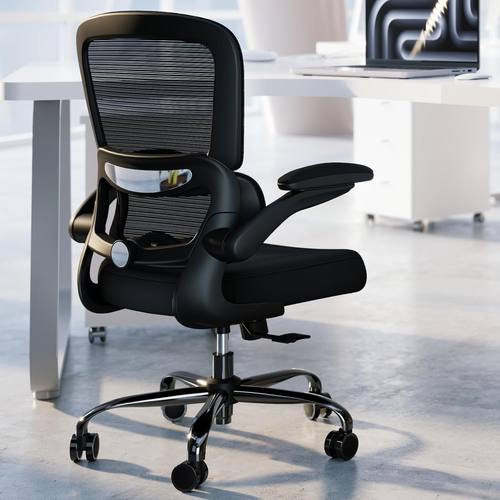
TRALT Office Chair
Adjustable lumbar support with a mesh back, which is the combination that keeps a lower back from both overheating and sinking; a simple, unfussy adjustment set
No published weight capacity, and no published seat material, so larger sitters have to guess
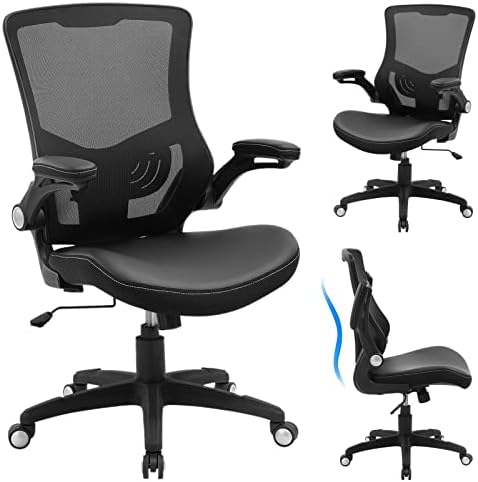
PU Leather and Mesh Task Chair
PU leather seat with a swivel mesh back and flip-up arms; the padded seat is the answer for people who find mesh seats too firm
The PU leather seat is the surface that wears first, and a pivoting armrest is the part most likely to develop wobble
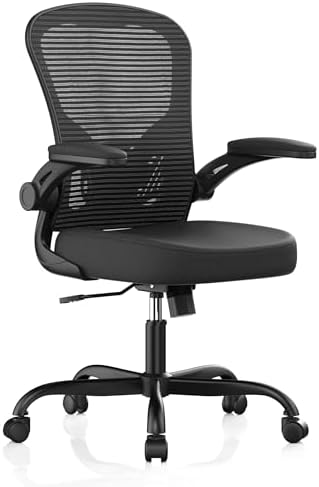
330 lb High Back Mesh Chair
A stated 330 lb capacity, a high back mesh shell, flip-up armrests, and adjustable lumbar support in one package
A tall back invites you to lean back, and if tilt tension is set loose you will spend the afternoon reclining instead of working
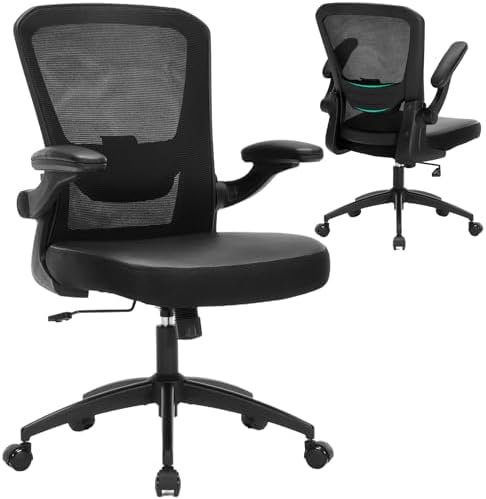
400 lb PU Leather and Mesh Chair
The highest weight rating of the group at 400 lb, with PU leather and mesh combined, flip-up arms, adjustable height, and swivel wheels
A higher-rated frame usually means a heavier base and a wider footprint, so measure the space under your desk first
Prices and availability were captured from Amazon Creators API and may change.
What I check before I recommend any chair
Four things, in this order.
Lumbar support that adjusts in place. A pad that only slides up and down the back frame is a rail, not support. The real test is whether the shape presses into the inward curve of your lower back and stays there under load. A chair that looks adjustable and drifts is worse than a fixed chair with a good curve, because you stop noticing it.
Seat depth. The front edge should leave about two or three fingers of space behind your knee. Too long and the edge digs into the back of your leg and cuts off circulation; too short and your thighs hang with nothing under them. This is the single most common fit problem I fix in client offices, and it is almost never mentioned in the marketing copy.
Armrests that hold position. Floating elbows are how you get the shoulder pain I treat every single week. Put your full weight down on an armrest through your hand and see if it gives. Armrests that fold out of the way are useful, but only if they still lock hard when they are down.
The base and the gas cylinder. A five-star base, casters that roll on your actual floor, and a lift that does not creep downward over the course of a day. A cylinder that dies in fourteen months turns a good chair into a stool.
One boundary I hold: I am not going to call any chair doctor recommended. I am a PT, I know the rules, and no chair is one size fits all. What I can tell you is which adjustments each chair gives you and which body it fits.
The four chairs, one at a time
TRALT Office Chair
This is the one I would start with. It is described as an ergonomic desk chair with adjustable lumbar support and a mesh back, styled as an executive task chair for a home office, in black. That is the exact combination I recommend to most first-time buyers: mesh on the back so you are not cooking against a padded panel by mid afternoon, and a lumbar adjustment you can move without tools.
Where it falls short is information. There is no published weight capacity and no seat material called out, so if you are a heavier sitter you have to either test it yourself or move to one of the two chairs below that state a rating. For an average build and a normal eight-hour day, this is the least complicated answer in the group.
PU Leather and Mesh Task Chair
This chair pairs a PU leather seat with a swivel mesh back, adjustable lumbar support, and flip-up arms. The PU leather seat is the entire point: plenty of people cannot get comfortable on a mesh seat because they feel the frame through it, or because they want a surface that distributes pressure instead of suspending them.
The trade-off is honest and predictable. PU leather is the surface that wears first, especially where your thighs and the front edge meet, and it holds heat in a warm room. The flip-up arms are useful for tucking the chair under a desk, but any pivoting armrest has a joint, and joints are where wobble starts. If you want padding under you and mesh behind you, this is the pick.
330 lb High Back Mesh Chair
Here you get a stated 330 lb capacity, a high back mesh shell, flip-up armrests, adjustable lumbar support, and a rolling base. The capacity number is the interesting part: that rating is about more than the sitter, it tells you the cylinder, base, and casters were specified for more load than a generic frame.
The high back is a genuine benefit for anyone who works reclined, since it supports the upper back and shoulders, not just the lumbar area. My caution is tilt tension. A tall back makes leaning feel good, and a loose tilt turns a working chair into a recliner. Set the tension so the chair holds you, not so it flops.
400 lb PU Leather and Mesh Chair
The highest rating in the group at 400 lb, with PU leather and mesh combined, lumbar support, flip-up arms, swivel wheels, and adjustable height. In practical terms, a 400 lb rating usually means a heavier, wider base and a thicker cylinder, which is exactly what a larger sitter needs and exactly what makes a chair feel planted instead of tippy.
That weight and width are also the downside. A heavier base is not something you want to drag across a hardwood floor every morning, and the footprint may not clear the arms of a small desk. Measure before you buy, and check current Amazon price, because this tier moves.
Mesh back versus PU leather
The honest answer is that mesh is not automatically breathable and PU leather is not automatically hot. Cheap mesh that is not tensioned properly sags within a couple of years, and a sagging mesh back becomes a hammock for your tailbone, which is worse than no support at all. Good mesh holds a curve and lets air move. Bad mesh gives you the marketing language without the engineering.
PU leather behaves the opposite way. It does not breathe, so in a warm room it holds heat against your legs, but it spreads pressure more evenly than mesh and it does not punish you for sitting slightly off center. If you run warm, favor the mesh backs. If you find mesh seats unforgiving, the PU leather seat on the second chair and the fourth chair is the right call.
Flip-up armrests and the shoulder problem
Three of these four chairs offer flip-up arms, and I understand the appeal: you fold them down and the chair slides under a desk that would otherwise be too low. Do not buy the feature for the folding. Buy it for the position.
An armrest only helps if it holds your forearm at roughly desk height with your shoulders relaxed and your elbows near ninety degrees. If the armrest folds but drops below that line when you lean on it, you are back to floating elbows and the shoulder pain that comes with them. Set the chair height first, then check whether the armrests land under your forearms without lifting your shoulders. If they do not, no amount of folding makes up for it.
Weight capacity is a build signal
Two of these chairs publish a rating and two do not, and that asymmetry tells you something. A stated 330 lb or 400 lb capacity means someone specified a cylinder and a base for that load. A chair with no stated rating may be perfectly fine for a 150 lb sitter, but you have no way to know what margin you are getting.
My rule for clients: if you are anywhere near 200 lb, buy a chair that publishes a rating above your weight. Not because the chair will collapse, but because the parts that fail first, the gas lift, the base welds, and the casters, are the parts the rating covers. Margin here is not paranoia, it is the difference between a chair that lasts five years and one that starts sinking in year two.
Who should buy which
Buy the TRALT office chair if you are an average build, this is your first real desk chair, and you want adjustable lumbar support with a mesh back without a pile of levers you will never touch.
Buy the PU leather and mesh task chair if you have tried mesh seats and hated them, or if you want a padded seat surface with mesh ventilation behind you and arms you can fold away.
Buy the 330 lb high back mesh chair if you are tall, you lean back while you work, and you want a backrest that reaches your shoulders along with a published rating for margin.
Buy the 400 lb PU leather and mesh chair if you need the highest weight rating here, want the leather and mesh combination, and have the floor space for a heavier, wider base.
If none of these fit, that is information too. A chair is a five-year purchase, and the cheapest chair that dies in eighteen months was never cheap.
The bottom line
The label on the box says ergonomic. What matters is whether the lumbar support adjusts in place, whether the seat depth matches your leg length, and whether the armrests hold your forearms without making your shoulders climb. On those three tests, the TRALT office chair covers the most people, the 330 lb high back chair covers the tallest sitters, and the 400 lb PU leather and mesh chair covers the heaviest.
Everything else in this tier is a comfort preference, and comfort preferences are real. Mesh or padded, folding arms or fixed, high back or mid back. Pick the chair whose adjustments match your body rather than the one with the longest feature list, spend three days in it before the return window closes, and notice where your weight actually lands by hour six. That is the review that counts, and you are the only one who can run it.