I have spent 16 years as a physical therapist and the last 8 of them walking through offices that bought chairs nobody can sit in for eight hours. The pattern is always the same. Someone in procurement sees the word ergonomic on a spec sheet, orders forty units, and six months later I am standing in a conference room teaching a room full of adults how to stretch their hip flexors. So when I look at a set of ergonomic office chairs, I am not reading the brochure. I am asking four questions: does the lumbar support adjust in place or just slide, can a real person spend nine hours in it without standing up, do the armrests hold position under load, and would I prescribe it to a client who already has back pain.
This comparison covers four products that keep landing in the same search results: a high back mesh chair with a headrest and flip-up arms, a drafting chair rated for 400 pounds, a grey gaming chair with a footrest and a massage function, and a magnetic door sign that costs less than lunch. That last one is not a joke, and I will explain why it belongs in an article about chairs.
One thing before the table, because I am not going to do the thing reviewers do. My standard is three full work days in a chair before I call anything a review, plus a sensor pad under the thighs and a nine-hour marathon day with no standing breaks. I have not had all four of these in my office for a week, and I will not pretend I did. What I can do is read the specifications the way a clinician reads them, tell you which body each product fits, and tell you exactly what to verify in your first 30 days while the return window is still open. Where a listing is silent on something that matters, I will say it is silent, because silence on lumbar adjustment is information.
The short answer: for most people reading this, the GABRYLLY high back mesh chair is the one to start with, because it is the only product here built around a full workday body. The BOLISS is the right call only if you stand at your desk or you are tall enough that normal seats hit you wrong. The gaming chair is a lounger that happens to recline. And the door sign is the cheapest fix for the habit that wrecks more backs than any chair: the endless interruption that keeps you from ever settling into a supported posture.
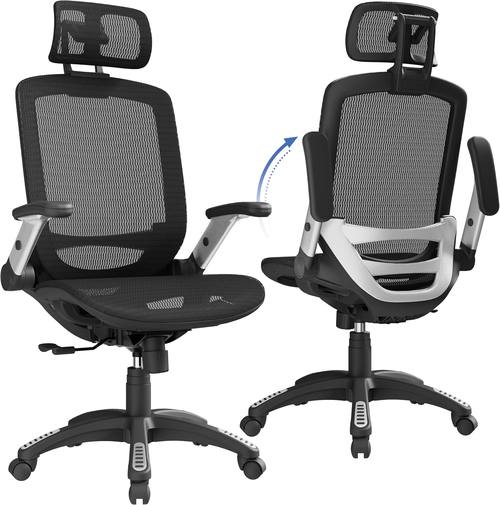
GABRYLLY Ergonomic Office Chair, High Back Home Desk Chair with Headrest
High back with a headrest, flip-up arms, a 90 to 120 degree tilt lock, and a wide cushion sized for big and tall users. The flip-up arms clear a keyboard tray or slide under a desk, and the headrest matters more than people admit for a chair you recline in
The listing describes a wide cushion and a headrest but says nothing about lumbar height adjustment, and a fixed pad on a mesh back is the exact spec I flag in consults. Big and tall mesh is also where sag shows up first
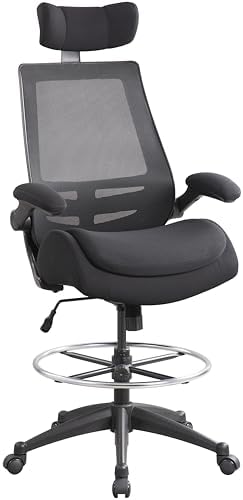
BOLISS Drafting Tall Office Chair 400lbs High Back Standing Desk Chair
A 400 pound rating and a high back on a tall drafting frame. This is the category that actually solves standing desk work, because a normal chair leaves you perched on the edge with your feet dangling
A drafting chair is a perch, not an all day seat. Tall frames put your feet on a ring rather than the floor, and the listing does not tell you how the lumbar adjusts or how deep the seat runs
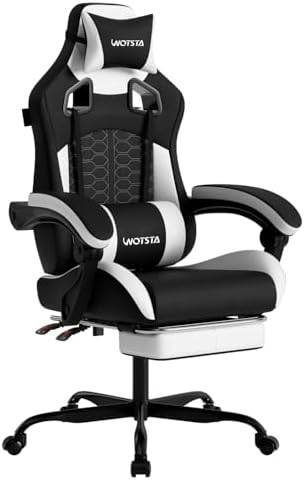
Gaming Chair with Massage, Ergonomic PC Gaming Chair with Footrest, Headrest and Lumbar Support
Recline, a pull out footrest, a headrest, and a lumbar cushion in one package, rated to 300 pounds. For the twenty minute lie back between meetings, this is the most comfortable object on the list
The massage feature is not treatment, and the bucket sides fight your shoulders the moment you sit upright to type. Gaming chairs are shaped for lounging, and most of us work sitting up
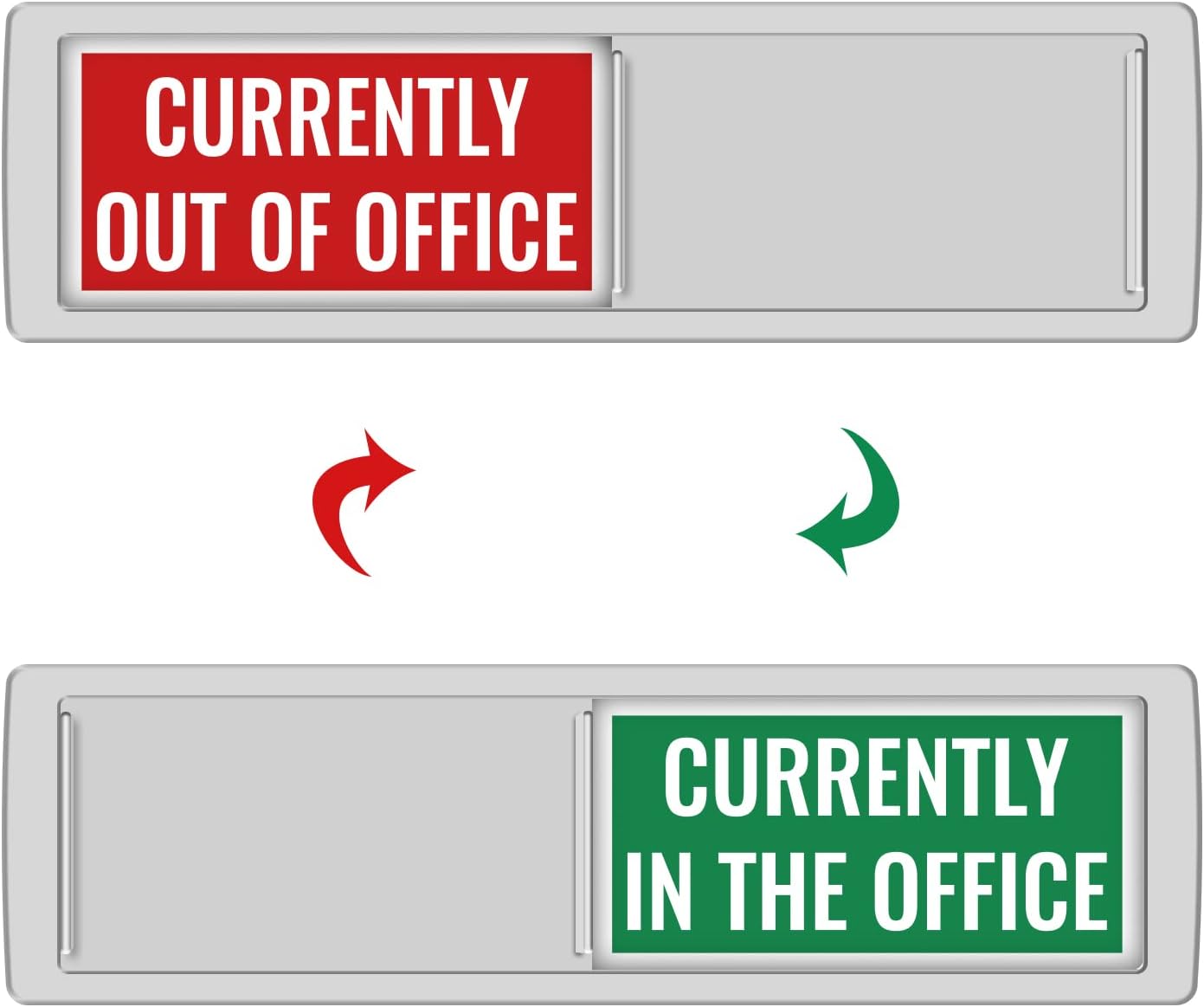
Currently in the Office Out of Office Sign, Magnetic Slider Indicator
A magnetic slider that reads clearly across a room, in silver, for a home office or a medical suite. It is the cheapest way to buy yourself an uninterrupted block of time in a chair you already own
It is not a chair and it will not fix one. If your workspace has no door to put it on, it does nothing at all
Prices and availability were captured from Amazon Creators API and may change.
How I read a chair spec sheet
A spec sheet will not tell you whether a chair is good. It will tell you whether the chair is aimed at your body, and that is most of the battle.
Lumbar adjustment. The test is not whether a pad exists. The test is whether the pad moves up and down and locks where you put it, so it lands on your lumbar curve instead of somewhere near your belt line. A pad that only slides a centimeter or two is decoration. I ask clients to find the adjustment, set it, then sit for an hour and see if it has moved. If it drifts, it is not support, it is a suggestion.
Seat depth. This is the number nobody lists and the one that causes the most knee and thigh complaints. Your seat should leave two to three fingers of space between the front edge and the back of your knee. Too long and the edge digs into your calf and pushes you forward into a slouch. Too short and your thighs carry weight that belongs on the seat.
Tilt tension. A chair that only locks upright or flops back is a chair you will fight all day. You want resistance you can tune so leaning back takes a little effort and stays there. Locked tilt creates stiffness. Loose tilt creates slouching. The 90 to 120 degree range on the GABRYLLY is the useful window for desk work, and it is one of the few tilt specs worth reading.
Armrests. Floating elbows are how I end up treating shoulder pain every single week. Your armrests should meet your forearms at roughly desk height with your shoulders relaxed, and they should hold that position when you lean on them. Wobbly armrests are worse than none, because you brace against them and your neck pays for it.
The GABRYLLY: the chair most people should start with
The GABRYLLY is the closest thing in this group to a full workday chair. High back, headrest, flip-up arms, a tilt lock across the 90 to 120 degree range, and a wide cushion on a big and tall mesh frame. Visit on Amazon → to see the current configuration and sizing.
The flip-up arms are a genuinely practical feature and not a gimmick. If you use a keyboard tray, or you pull the chair to a table for lunch, arms that fold out of the way remove the single most common reason people sit crooked. The headrest is the other one people undervalue. If you recline during a call, a headrest keeps your neck neutral instead of letting your chin drop toward your chest for twenty minutes.
Here is my reservation. I say mesh is overrated, and I say it while owning a mesh chair at home, so take it with the appropriate salt. The problem is not mesh itself, it is mesh stretched over a wide big and tall frame with a fixed lumbar pad. Cheap mesh sags, and when it sags the seat becomes a hammock for your tailbone and the lumbar pad ends up behind your mid back instead of your lumbar curve. Before you buy, confirm that the lumbar moves and locks, and check the mesh tension in the first two weeks rather than the first two years.
The BOLISS: for standing desks and tall bodies
The BOLISS is a drafting chair rated to 400 pounds with a high back, built for a standing desk setup. Visit on Amazon → for the current height range and details.
If you alternate between standing and sitting at a tall desk, this is the correct category and a normal office chair is the wrong one. The usual failure I see is someone at a raised desk perched on the front edge of a standard chair, feet dangling, weight on the front of the thighs, low back rounded. A drafting chair fixes the geometry. It also gives you the weight capacity to handle a bigger body without the frame complaining, and the high back means you can lean between standing blocks.
The trade-off is honest and worth stating plainly. A drafting chair is a perch. Your feet live on a ring or a footrest rather than the floor, and perching all day loads your hips differently than a full seat does. The listing does not tell you how the lumbar adjusts or how deep the seat runs, so measure both against your own body before you commit. If you sit eight hours and stand for twenty minutes, buy a chair, not a perch. If you stand half the day, the BOLISS is the right tool.
The gaming chair: a lounger with a footrest
The grey gaming chair here comes with a footrest, a headrest, a lumbar cushion, a recline, and a 300 pound rating. Visit on Amazon → for the current spec sheet.
The footrest is the honest feature. Being able to lie back for fifteen or twenty minutes between meetings, with your calves supported and your low back unloaded, is real recovery. If your workday includes a genuine break, this chair does that better than anything else on this list.
Two things I will not pretend about. First, the massage function is not treatment. Vibration in a lumbar pad does not change a lumbar curve, and if you are buying this chair for the massage, you are buying it for the wrong reason. Second, gaming chairs are shaped for lounging. The bucket sides that feel great when you are reclined will push your shoulders forward when you sit upright to type, and upright typing is what most of us actually do. Taller users tend to fit these frames better than average height users, but if you sit up straight for six hours, this is a chair you will fight.
The door sign: the cheapest fix in this article
The magnetic slider door sign is the odd one out, and I put it here on purpose. Visit on Amazon → to see the slider and mounting.
The single worst thing you can do to your back is never settle into a supported position, and the single biggest reason people never settle is interruption. You sit down, you get the lumbar right, you find your seat depth, and ninety seconds later someone knocks. Then you twist, reach, stand, sit again, and repeat that thirty times a day. A sign that flips from available to unavailable does not fix a bad chair, but it buys you the forty five minute block where a good chair can actually do its job. For a home office or a small clinic, a readable slider is the highest return per dollar on this page. If you have no door, skip it.
Matching the chair to your body, not the other way around
No chair is one size fits all, and I say that in every review I write. Here is how I would sort these four.
If you sit most of the day at a normal desk: the GABRYLLY, provided you confirm the lumbar adjusts in place. Check the mesh tension early.
If you stand half the day or you are tall enough that standard seats hit you wrong: the BOLISS, with a footrest ring you actually use.
If you take real reclining breaks and you do not type upright all day: the gaming chair, and ignore the massage.
If interruptions are what actually breaks your workday: the door sign, and then a better chair with the money you saved.
If you have existing back pain: none of these is a prescription. Get the lumbar height adjustment and the seat depth right first, and if you cannot, spend your budget on a used benchmark chair from a liquidation sale instead of a new mid tier one.
What to verify in the first 30 days
The return window is your only real test drive, so use it deliberately.
Sit for at least three full workdays before you decide. Check the lumbar pad at 2 PM on a Tuesday, not at 9 AM on a Monday, because that is when drift shows up. Listen for the gas lift. A lift that loses height in the first months will not get better, and it is one of the most common failures I hear about from clients. Lean hard on both armrests and see if they hold or wobble. Run your hand across the mesh under the seat after two weeks and feel for a pocket where your weight sits, because that is sag starting, and sag is how a chair that felt fine in week one becomes a hammock by year two.
A chair is a five year purchase. The cheap one that dies in eighteen months was never cheap, and the one that fits you will outlast two that did not.
The verdict
For most readers, the GABRYLLY is the chair to buy and the one to check the lumbar adjustment on before you commit. The BOLISS is the specialist pick for standing desks and bigger bodies, and the only one here that solves a tall desk. The gaming chair is a recliner with a footrest and a massage feature you should treat as decoration. And the door sign costs less than most desk accessories and protects the one thing a chair cannot give you, which is an uninterrupted hour in it.
Tell me your height, your pain, and your budget, and I will tell you which of the four fits. Everything else is marketing.