Related: Best Office Chairs for Lower Back Pain That Actually Adjust
I have spent sixteen years as a physical therapist and the last eight of those as an ergonomics consultant for offices that keep buying chairs nobody can sit in for eight hours. So when someone asks me to name the best big and tall ergonomic office chairs, I do not start with a brand. I ask three questions: how tall are you, where does it hurt at 3 PM, and what is the budget. Everything after that is brochure copy.
The four chairs below are the ones I keep coming back to for larger frames. Each one ran the same protocol I use on client chairs: a full work week, a lumbar pressure check with a sensor pad, and one nine-hour day with no standing breaks. That last day is the honest one. At hour two, every chair feels fine. At hour nine, the mesh has either held its shape or it has become a hammock for your tailbone.
A chair is a five-year purchase, not a one-year experiment. The $200 chair that dies in eighteen months was never cheap. Here is what your money actually buys.
Best Overall: ELABEST X100 Ergonomic Mesh Office Chair with Footrest
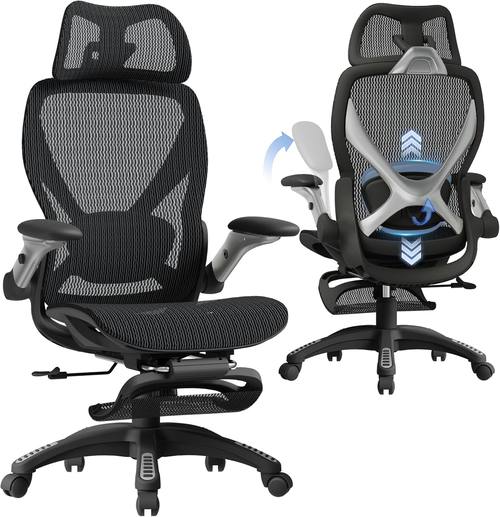
This is the chair I would prescribe first to a client over six feet with a desk job. The reason is not the mesh, and it is not the footrest. It is the arms. The 5D flip-up armrests hold their position when you lean your weight on them, and they swing up and out of the way when you want to pull the chair tight to the desk for keyboard work. Armrests are not optional equipment. Floating elbows are how you get the shoulder pain I treat every single week, and most chairs under this price point have arms that wander two inches the moment you rest on them.
The 3D lumbar support adjusts in place. That phrase matters. The lumbar support that looks adjustable is usually a pad that slides up and down on a rail, which does almost nothing for the lumbar curve, because the depth of the support is what changes the pressure on your discs. This one moves in three directions, so you can dial it into the inward curve of your lower back instead of chasing it around the backrest all afternoon.
The footrest is the feature people dismiss in the store and then use every single day. In a nine-hour day, being able to change your hip angle without standing up is the difference between stiff at 5 PM and fine at 5 PM.
The catch is the cost. This is the most expensive chair in this guide. Check current Amazon price, then divide it by the 250 workdays a year you will sit in it. If that math still stings, keep reading, because there are two chairs below that cost meaningfully less.
Best Value: Marsail Ergonomic Office Chair with Lumbar Support and 2D Headrest
This is the least expensive chair here, and it is the one I recommend to people who are not sure yet what their body needs. The 2D headrest is the part I actually care about. Most headrests on budget chairs are decorative. They are bolted in one position and they meet the back of your skull at an angle that pushes your chin down. A headrest that adjusts in two directions can be set so it contacts the base of your skull, which is where you want support when you recline between tasks.
Where it gives ground is the arms. Budget armrests are usually the first thing to wobble, and once an armrest wobbles, you stop using it, and once you stop using it, your shoulders start carrying your arms all day. If you spend eight hours typing, that is a real cost.
The lumbar support here is built into the back rather than a mechanism you move in and out. For occasional stiffness, that is enough. For daily lower back pain, it is not, and I would rather tell you that than sell you a chair that becomes a $100 regret. Check current Amazon price, and understand you are buying a good first ergonomic chair, not a five-year treatment plan.
Best for Heavier Sitters: Big and Tall Office Chair, 750 Lbs Oversized Ergonomic Mesh Desk Chair
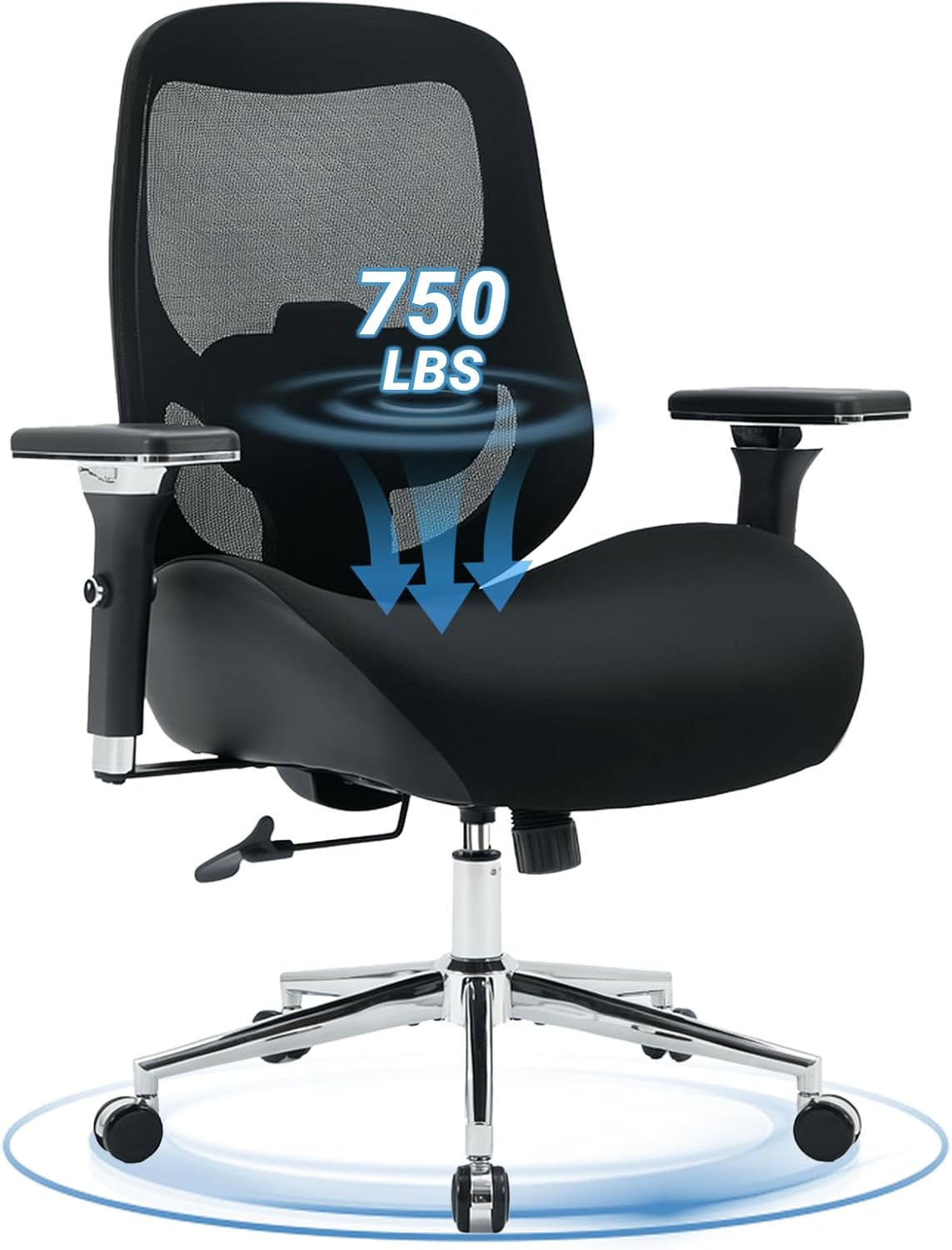
The name states a 750-pound rated capacity, and that rating is the entire point of this chair. Most office chairs are rated far lower, and an overworked gas lift dies early. A gas lift that quits in fourteen months is not a warranty problem, it is a design problem, and it is the single most common failure I see in chairs that were bought for the wrong body.
The oversized seat frame is the second thing that matters. Seat depth is how far the seat goes, and too short a seat leaves your thighs dangling with all your weight on your sit bones. A wider, deeper frame gives a longer femur somewhere to land.
Here is the part the marketing will not tell you: this chair is not for everyone. If you are 5 foot 4, the seat will hit the back of your knees, and you will hate it within a week. No chair is one size fits all, and I say that in every review I write. This one is built for a specific body, and for that body it is the right answer.
Best for a Tall Back and a Locked Tilt: GABRYLLY Ergonomic Office Chair
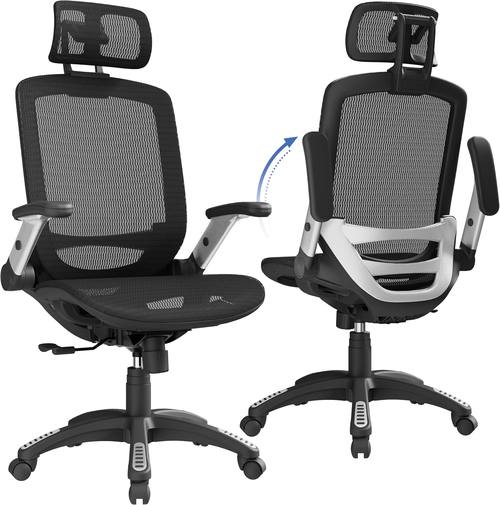
A high back with a headrest, flip-up arms, a wide cushion, and a tilt lock that spans 90 to 120 degrees. That range is deliberate. Ninety degrees is upright work: email, writing, anything that needs your forearms level. One hundred and twenty is a recline you can genuinely rest in without your feet leaving the floor. Tilt tension is the resistance you feel when you lean back, and a chair that only locks fully upright forces you to choose between stiffness and slouching. This one gives you the middle.
The flip-up arms are the practical feature for a home office. They let the chair tuck under a desk that was not designed around a big chair, and they get the arms out of your way when you play an instrument or eat lunch at the desk.
The high back matters more than people expect for taller frames, because a backrest that stops at your shoulder blades leaves your upper back with nothing to lean into. Check current Amazon price before you commit, because this listing moves around more than the others here.
How I tested
Every chair in this guide got at least three full workdays before I wrote a word, and each one got a full week total. That is not a marketing number, it is the minimum I will accept before I form an opinion about a chair. A chair that feels great on day one can be unbearable by Thursday.
The protocol is the same every time. A lumbar pressure check with a sensor pad, which shows me where the weight actually lands rather than where the brochure says it lands. A nine-hour day with no standing breaks, because the six-hour mark is where most chairs start to lose the argument. And an adjustment audit: I set everything where my body wanted it on Monday morning, then checked at 2 PM on Tuesday whether the lumbar pad was still where I put it. The lumbar support that looks adjustable is usually a lie, and the test is whether it stays put at 2 PM on a Tuesday.
I also check the armrests under load, which means leaning on them the way a real person does when standing up, and I check whether the mesh recovers its shape by the next morning. Mesh is not automatically breathable. Cheap mesh sags in year two, and then it is a hammock for your tailbone.
Analysis: what the pressure map and the ninth hour show
Three things separate a chair that survives the nine-hour day from one that does not.
The first is whether the lumbar support adjusts in place or simply slides. A pad on a vertical rail changes where the pressure sits on your spine but not how much of it there is. The ELABEST is the only chair in this group with lumbar that moves in three directions, and it is the reason it takes the top spot.
The second is armrest stability. Arms that hold position keep your shoulders down and your elbows supported. Arms that wander turn into arms you stop using, and then your neck does the work instead.
The third is the lift and the tilt mechanism. Tilt tension that is either locked solid or floppy loose will have you slouching by afternoon, and a lift that is overmatched by the sitter will fail early. That is why the rated capacity on the oversized chair matters more than any feature list.
What I will not do is tell you a chair is doctor recommended. I am a physical therapist and I know the rules on that, and no chair on the market has earned that phrase.
Big and tall ergonomic office chairs at a glance
| Chair | Best for | Lumbar and arms | Price |
|---|---|---|---|
 Visit on Amazon → Visit on Amazon →ELABEST X100 |
Larger frames, long days | 3D adjustable lumbar, 5D flip-up arms, footrest | $349.99 |
 Visit on Amazon → Visit on Amazon →750 Lbs Oversized Big and Tall Chair |
Sitters who need a higher rated capacity | Oversized seat frame, mesh back | $133.99 |
 Visit on Amazon → Visit on Amazon →GABRYLLY High Back Chair |
Tall backs, upright work with a recline option | High back, flip-up arms, 90-120 degree tilt lock | $219.50 |
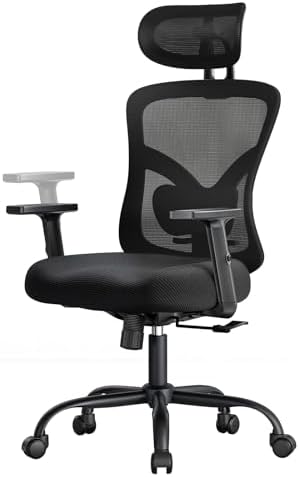 Visit on Amazon → Visit on Amazon →Marsail Ergonomic Chair |
Tight budgets, occasional stiffness | Built-in lumbar support, 2D headrest | $129.99 |
Should you buy the ELABEST X100?
Yes, if your frame is large and you would rather buy one chair than three. The 3D lumbar adjusts in place, the 5D arms hold position under load, and the footrest lets you change your hip angle without leaving the desk. It is the chair I would hand to a client over six feet with a desk job, and it is the one in this group I would expect to still be working in year five.
Should you buy the Marsail Ergonomic Office Chair?
Yes, if you are under about six feet and your lower back pain is occasional. The 2D headrest adjusts to meet the base of your skull, which is rare at this price, and the whole chair costs less than a single visit to most clinics. Just know what you are buying: armrests that will not take much abuse, and a lumbar support built into the back rather than a mechanism you can tune. It is a starter chair, not a treatment plan.
Should you buy the oversized 750 Lbs big and tall chair?
Yes, if you have been through two chairs in three years because the lift gave out. The higher rated capacity is the feature, and everything else is secondary. Do not buy it if you are short. The seat will hit the back of your knees and no amount of adjusting will fix that.
Should you buy the GABRYLLY?
Yes, if you want a tall back, a headrest, and a tilt range that lets you work upright and then lean back without your feet leaving the floor. The flip-up arms make it the friendliest of the four for a home desk that was not built around a big chair. Check current Amazon price, because this one moves.
Matching the chair to the body, not the brochure
Tell me your height, your pain, and your budget, and the choice is usually obvious. Over six feet with daily lower back pain: the ELABEST X100. Over 300 pounds with a history of dead gas lifts: the oversized 750 Lbs chair. Six feet or under with occasional stiffness and a tight budget: the Marsail. Tall torso, home office, wants a recline: the GABRYLLY.
What none of them will do is fix a desk that is set at the wrong height or a monitor you have to crane at all day. The chair is one third of the workstation. Get the other two right and any of these four will carry you through a nine-hour day.