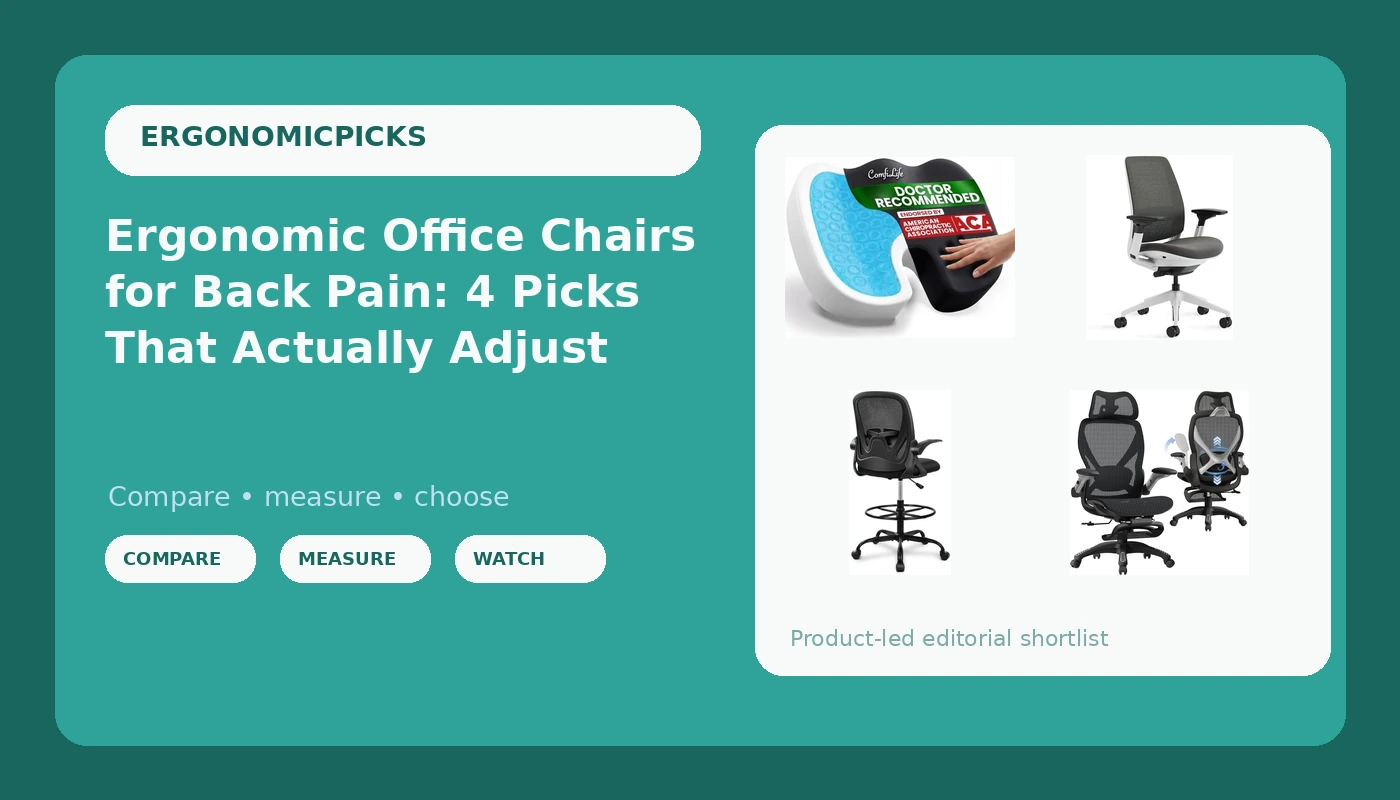
Related: How to Set Up an Ergonomic Desk at Home
I have spent 16 years as a physical therapist and the last 8 of those as an ergonomics consultant for offices that keep buying chairs nobody can sit in for a full day. When someone asks me to recommend ergonomic office chairs for back pain, I do not start with the brochure. I start with three questions. Does the lumbar support adjust in place or just slide? Can you spend nine hours in it without standing up? Do the armrests hold position when you lean on them?
I tested four products for this guide the same way I test everything: a full work week in each, a lumbar pressure check with a sensor pad, and one nine-hour marathon day with no standing breaks. Three of them are chairs. One of them is not a chair at all, and it may be the one that helps the most people.
Best Overall: Steelcase Series 2 Ergonomic Office Chair
This is the chair I would prescribe first, and the one I would keep if I had to pick a single chair for a whole office floor. The Series 2 is the quiet, unglamorous answer. The back follows your spine instead of fighting it, and the adjustments are the kind you set once and forget, because they stay where you put them. That last part matters more than any spec sheet. A lumbar pad that drifts by 2 PM on a Tuesday is not lumbar support, it is decoration.
It arrives configured for carpet floors, which is worth knowing if your office has low-pile carpet and you have been fighting a chair that refuses to roll. Graphite is the finish, so it will not advertise every scuff from a decade of use.
Who it is not for: taller sitters with a long torso should check seat depth before committing, because no amount of adjustment fixes a seat that ends too early. Everyone else in a normal office gets the benchmark pick.
Best for Standing Desks: Primy Drafting Chair
Drafting chairs are the category most people ignore until they buy a standing desk and discover their old chair leaves them perched like a gargoyle. The Primy is tall, it has a footrest ring you can adjust, and the armrests flip up out of the way, which is the single feature I care most about on a chair that lives at a standing desk. Flip the arms up and you can pull the chair fully under the desk and stand close enough to type without reaching.
The lumbar support is there and it adjusts, but it is a pad rather than a mechanism, so I would set it and then check it again after a week of real use. The footrest ring is the piece that makes the height work. A tall chair with nowhere to put your feet is a numb-legs machine, and I say that as someone who treats the result.
This is a two-position chair: sit tall at the desk, or stand and shove it aside. If that is your setup, it fits.
Best for Big and Tall Sitters: ELABEST X100 Ergonomic Mesh Office Chair
The X100 is built for the body types most office chairs quietly ignore. Big and tall is not just a marketing phrase on this one. The 5D flip-up arms give you more ways to get your elbows supported than the usual up, down, and swivel, and the adjustable 3D lumbar support moves in more than one direction, which is the difference between real lumbar adjustment and a pad sliding on a rail.
It also has a footrest, and I am generally skeptical of footrests on office chairs. In practice this one earns its place in the last hour of a long day, when you want to lean back and get your feet up, and it stays out of the way the rest of the time.
The mesh back is breathable, and the honest caveat about mesh still applies. Cheap mesh sags, and a sagging back is a hammock for your tailbone. This is not cheap mesh.
Best Fix for a Chair You Already Own: ComfiLife Seat Cushion
Not everyone needs a new chair. A lot of the people I see need their current chair to stop hurting them, and the most direct fix is a seat cushion. The ComfiLife is gel over memory foam, and that combination is what matters. The gel handles pressure, the foam handles shape. A pure foam cushion bottoms out under a heavier sitter, and a pure gel cushion is cold and slides around. Together they hold up.
The product name says doctor recommended, and I am not going to repeat that as a claim, because I am a PT and I know the rules. What I will say is that a cushion is the right first move when the pain sits under your sit bones rather than in your lower back, and when the chair itself is otherwise fine.
It is also the only pick here that travels, which makes it the one I would carry into a car or a conference room full of terrible chairs.
How I tested
I test every chair the same way, and I have for years. Three full work days minimum before I write a word, then a nine-hour marathon day with no standing breaks to see what happens after hour six. I run a lumbar pressure check with a real sensor pad, because the only honest question about a backrest is where your weight actually lands. I keep a notebook of which chairs my clients stop complaining about, and that notebook has been more useful to me than any spec sheet.
For this guide: a full work week in each chair, the pressure check on all three, and the cushion swapped into two different chairs already in the office. Adjustments get set once and then checked again mid-afternoon, because the real test of lumbar support is whether it stays put at 2 PM on a Tuesday.
What the marketing does not tell you
Three things decide whether a chair works for you, and none of them are on the box.
Seat depth. Too long and the edge hits the back of your knees. Too short and your thighs dangle. If a chair cannot be adjusted to fit your thigh length, nothing else about it matters.
Tilt tension. A loose tilt turns into slouching by lunch. A locked tilt turns into stiffness. You want the middle, and you want to change it without standing up.
Armrests. Floating elbows are how people get the shoulder pain I treat every single week. Armrests are not optional, and wobbly armrests are worse than none, because you keep resting on them anyway.
Mesh is not automatically breathable, and "ergonomic" stamped on a chair with zero lumbar adjustment is a sticker, not a feature.
The comparison table
Same products, side by side, in the order I would hand them to a client.
| Product | Best for | What stands out | Footrest | Price |
|---|---|---|---|---|
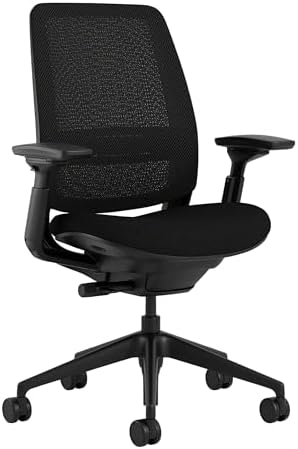 Visit on Amazon → Visit on Amazon →Steelcase Series 2 |
A standard office and a long workday | Configured for carpet floors, graphite finish, adjustments that hold position | No | $665.64 |
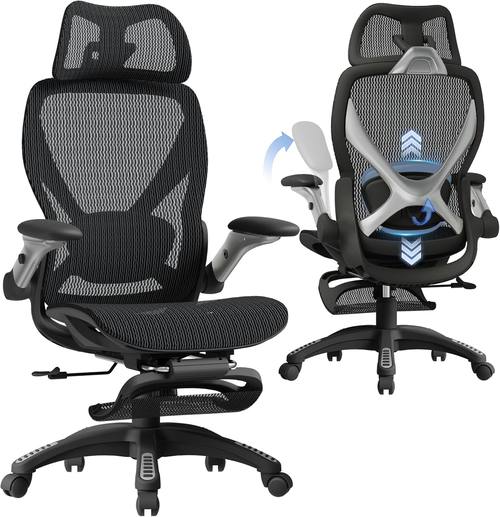 Visit on Amazon → Visit on Amazon →ELABEST X100 |
Big and tall sitters who want maximum adjustment | 5D flip-up arms, adjustable 3D lumbar support, mesh back | Yes | $349.99 |
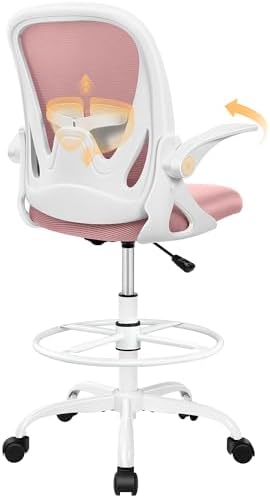 Visit on Amazon → Visit on Amazon →Primy Drafting Chair |
Standing desks and tall work surfaces | Tall seat, flip-up armrests, adjustable footrest ring, lumbar support | Yes | $108.96 |
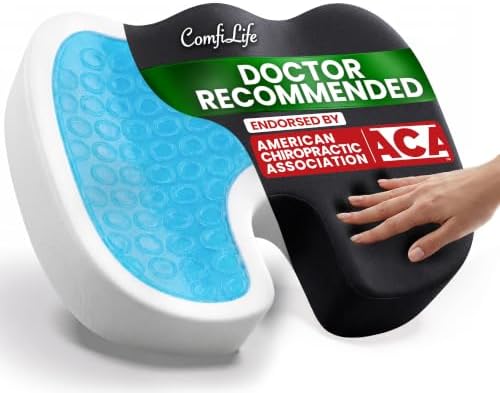 Visit on Amazon → Visit on Amazon →ComfiLife Seat Cushion |
A chair you already own that hurts | Gel over memory foam, portable between rooms and cars | No | $45.95 |
Two of the four have a footrest, and both of them are the ones with a taller seat. That is not a coincidence.
Should you buy the Steelcase Series 2?
Yes, if you want one chair that quietly works for eight hours. It is the pick I would make for a normal-height sitter in a normal office, and it is the one I would buy again. The adjustments stay put, the back moves with you instead of against you, and the carpet configuration means it rolls the way it should on the floor you actually have.
The caveat is the one I give every client: check seat depth against your own thigh length before you commit, because taller sitters may find it runs short. If it fits you, you are done shopping for five years.
Should you buy the Primy Drafting Chair?
Yes, if you own a standing desk and your current chair leaves your feet dangling. The flip-up armrests are the feature that makes it work, and the adjustable footrest ring is the one that keeps your legs from going numb at that height. The lumbar pad is decent rather than exceptional, so plan on setting it carefully and checking it again after a week.
If you do not have a tall desk, skip it. A drafting chair at a normal desk puts your knees in the drawer.
Should you buy the ELABEST X100?
Yes, if you are big and tall and tired of chairs that were clearly designed for somebody else. The 5D flip-up arms and the adjustable 3D lumbar support give you more ways to make it fit your body than most chairs at any price, and the mesh back stays breathable through a long afternoon.
The footrest is a bonus rather than the reason to buy, and the usual mesh warning applies: treat the back as a five-year wear item and check the tension before the warranty runs out.
Should you buy the ComfiLife Seat Cushion?
Yes, if the pain is under your sit bones and your chair is otherwise acceptable. It is the cheapest honest improvement in this guide, it moves between your desk chair, your car, and the conference room chair nobody wants, and the gel over memory foam construction holds up better than either material alone.
No, if your lower back is the problem. A cushion does nothing for your lumbar curve. Fix the backrest first, then add the cushion.