I have spent sixteen years as a physical therapist and eight of them as an ergonomics consultant for offices that keep buying chairs nobody can sit in past lunch. So when someone asks me to compare ergonomic mesh office chairs, I do not start with the color or the warranty length. I start with one question: does the lumbar panel adjust in place, or does it only slide up and down a track and call that support?
The four chairs in this comparison cover the range I see most often in real offices. One is a stripped-down mesh chair with a fixed lumbar panel. One is a loaded mesh model with adjustable lumbar, 4D flip-up arms, a 3D headrest, and a 400 lb weight rating. One is a gaming chair with a pocket spring cushion and a footrest. One is a leather executive chair with a footrest and a recliner mechanism. They are built for four different people, and matching the chair to the person is the whole job.
Related: Office Chair Lumbar Support: What Actually Adjusts
For most people who sit eight or more hours a day, the CAPOT ergonomic mesh office chair is the one I would prescribe first, because it is the only chair here with lumbar support that adjusts rather than slides. The 330 lb capacity mesh chair is the honest budget pick. The GTPLAYER makes sense if you recline and put your feet up more than you sit upright. The ERGOSEAT leather executive chair is for the person who wants a home office to look like an office, and who runs warm enough that leather is not a dealbreaker.
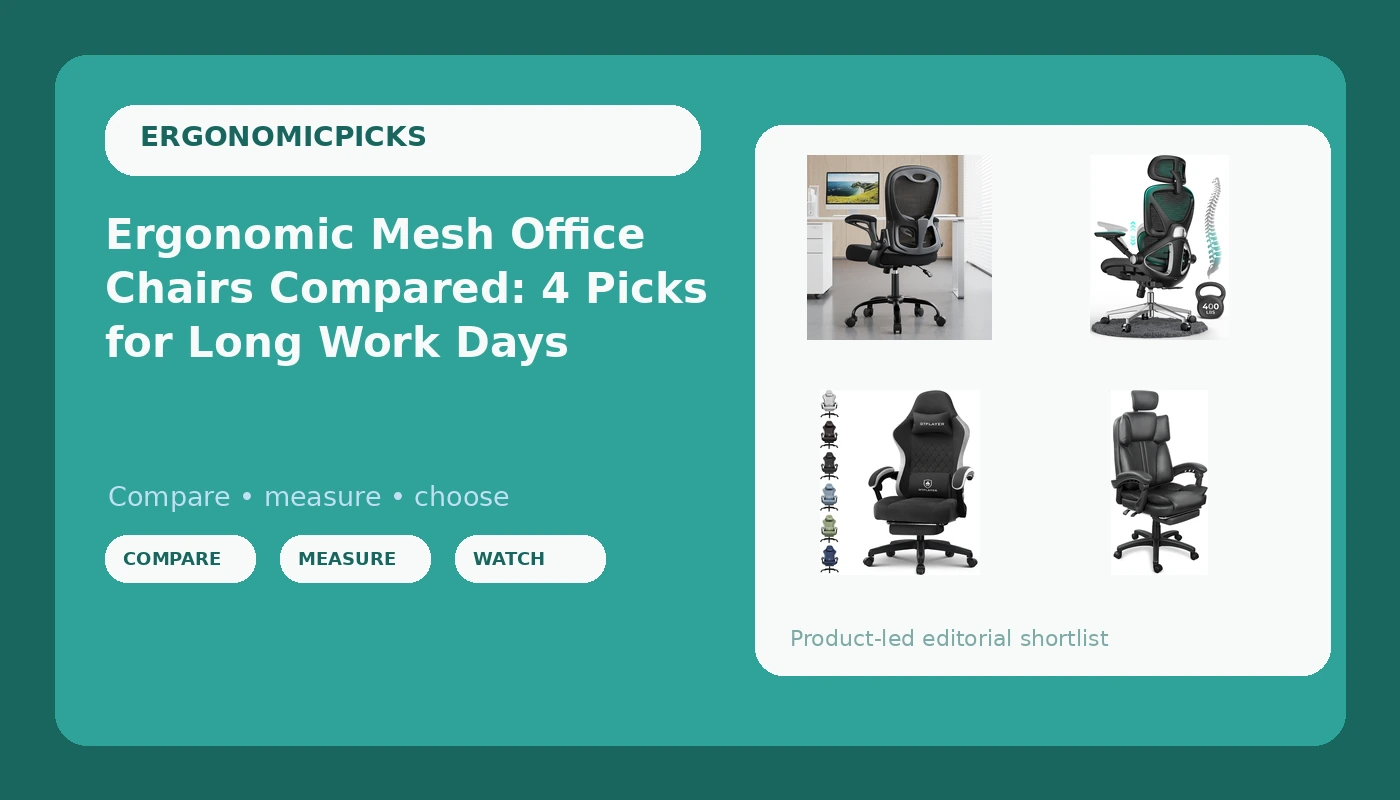
Office Chair 330 lbs Capacity, Ergonomic Mesh Desk Chair with Lumbar Support & Flip-Up Armrest
Flip-up armrests get out of the way for close desk work, mesh back breathes, 330 lb capacity at the budget end
The lumbar panel is fixed, so it fits one back shape well and everyone else approximately
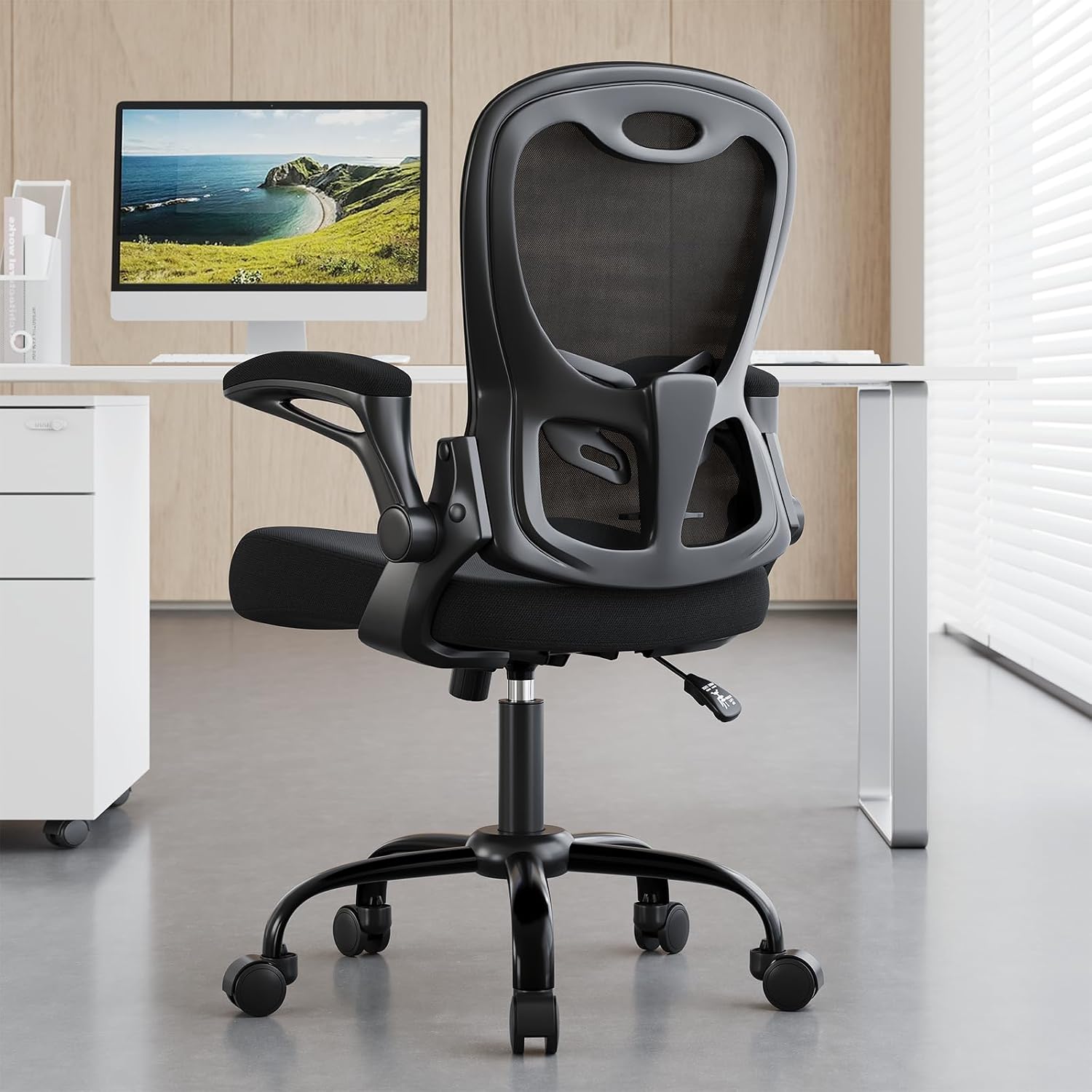
CAPOT Ergonomic Mesh Office Chair, Adjustable Lumbar High Back Desk Chair 400lbs, 4D Flip-up Arms, 3 Tilt Backrest, 3D Headrest, PU Wheels
The only chair here with adjustable lumbar, plus 4D arms, a 3D headrest, three tilt positions, and a 400 lb rating
Costs the most of the four, and a full mesh seat is not for everyone
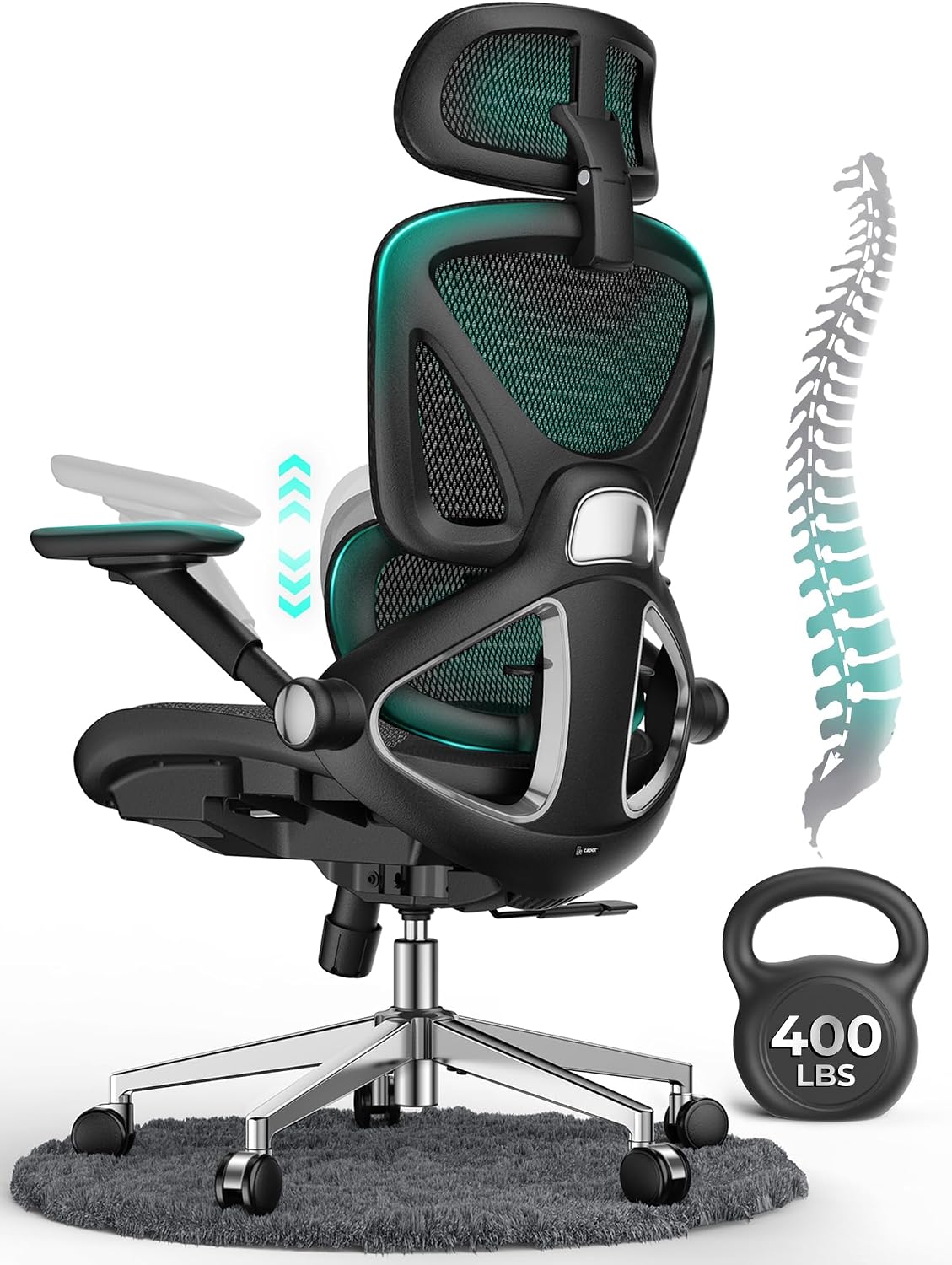
GTPLAYER Gaming Chair, Computer Office Chair with Pocket Spring Cushion, Linkage Armrests and Footrest
Pocket spring cushioning, a footrest, and a deep recline make it the best chair here for leaning back and thinking
Linkage armrests move with the backrest, which is the wrong behavior for upright keyboard work
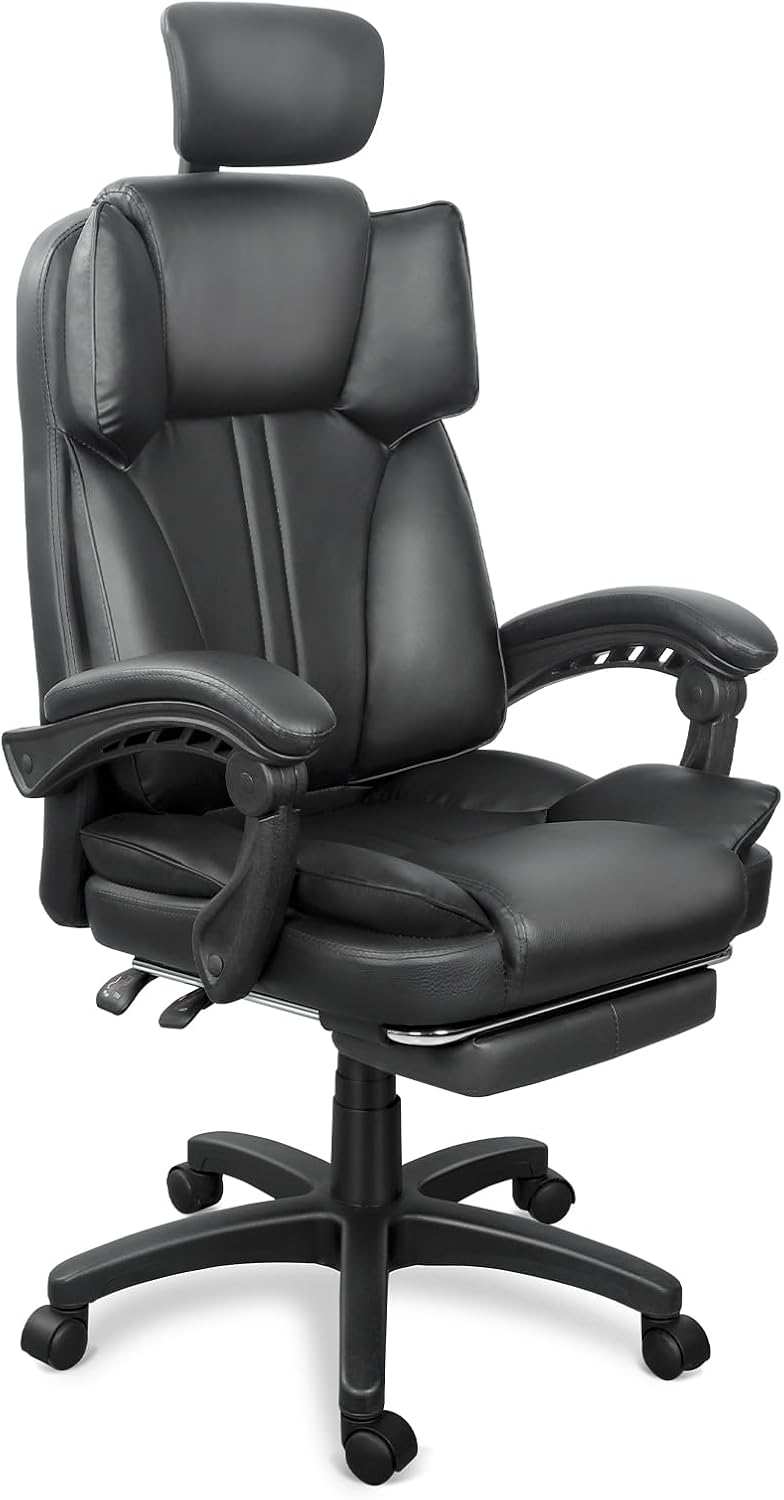
ERGOSEAT Leather Office Chair with Footrest, Executive Chair (Black)
Leather looks the part on camera, the footrest and recline are genuinely useful for breaks
Leather holds heat, and executive frames like this usually give you a lumbar pad rather than a lumbar adjustment
Prices and availability were captured from Amazon Creators API and may change.
A note on how I work, because it matters for how you read this. My rule is that I do not call a chair tested until I have logged at least three full work days in it, and I have not done that with every chair on this list. What I can do here is compare what each specification actually promises against the patterns I see in clients who sit nine hours a day, and tell you which features to verify in the first week while the box is still in the garage.
What I check before I trust a lumbar panel
The word ergonomic on a product page tells you nothing. The lumbar curve is the inward curve of your lower back, and a chair supports it only if the support meets that curve at your height and stays there. Two tests separate real support from decoration.
First, does the panel adjust in place? A pad that slides up and down a single track changes height but not depth. If it cannot move forward and back, it cannot follow the curve of a spine that is deeper or shallower than the brochure model. The CAPOT chair here lists adjustable lumbar, which is the language I want to see. The 330 lb capacity mesh chair lists lumbar support without the word adjustable, which usually means a fixed panel at one depth. That is not a scam, it is a fit limitation, and it is why I would not put a client with an exaggerated lumbar curve in that chair without trying it first.
Second, does it hold at hour six? Every chair feels supportive at 9 a.m. The failure I treat most often is a support that creeps, meaning the panel drifts down or the tilt tension loosens as the day goes on, and by mid afternoon you are sitting in a slump you did not choose. That is why I care about a mechanism that locks, not just one that moves.
Armrests are the other thing people underrate. Floating elbows are how you get the shoulder pain I treat every single week. Both mesh chairs here have flip-up arms, which is the right call for a desk you need to get close to, and the CAPOT adds 4D adjustment, meaning the arms move in more directions than just up and down. The GTPLAYER uses linkage armrests, which move with the backrest. That is fine when you recline and terrible when you type, because leaning back drags your elbows with you.
The budget mesh pick: 330 lb capacity office chair
This is the chair I would hand to someone setting up a second desk, a teenager doing homework, or a home office where the chair is not the center of the day. The mesh back breathes, the high back covers your shoulder blades, the flip-up armrests clear the way when you want to sit close, and the 330 lb capacity rating means the frame and gas lift are specified for a real adult rather than a child.
What it does not have is adjustment. There is no mention of adjustable lumbar, no headrest, and no tilt customization beyond what the mechanism gives you. That is the trade: you get breathability and a weight rating, and you give up the ability to tune the chair to your spine.
My honest read is that this is a fine chair for someone who sits four hours a day and gets up often. It is the wrong chair for someone who already has lower back pain and needs the support to match their curve. If that is you, spend the extra on the CAPOT and skip the intermediate step. The cheap chair that you replace in a year was never cheap.
The CAPOT mesh chair: the one I would prescribe most often
This is the only chair in the group that reads like someone sat in it and fixed things. The lumbar support is listed as adjustable, which is the single most important line on this page. The arms are 4D and flip up, so you can set elbow height for typing and swing them out of the way for guitar, drawing, or eating lunch at the desk. The backrest has three tilt positions, which matters more than people think, because a locked tilt forces stiffness and a loose tilt invites slouching. Three stops give you somewhere honest to land. The 3D headrest is the feature I did not expect at this level, and it is genuinely useful for the ten minutes a day you lean back between meetings. The PU wheels are a small thing that becomes a big thing if you work above a downstairs neighbor or on hardwood you care about.
The 400 lb capacity is the highest rating here, which tells you the cylinder and base are specified for heavier users, and that is a group badly served by most budget chairs.
The trade is price and seat feel. This is the most expensive chair of the four, and the seat is mesh, which some people love and some people cannot tolerate for nine hours because there is no cushioning under the thighs. If you have ever sat in a mesh seat and felt the front edge dig in, this is a chair to try with a return policy in hand, not a chair to order blind.
For a client with back pain, a desk job, and a budget that allows one good purchase, this is the chair I would start the conversation with. It is not the most expensive chair on the market, and it does not need to be. It needs to adjust to your body, and this one does.
The GTPLAYER gaming chair: right for recliners, wrong for typists
I make fun of gaming ergonomic marketing, and I still review gaming chairs, because a lot of people own them and a lot of people sit in them for work. So here is the fair version.
The GTPLAYER has a pocket spring cushion, which is the same idea as a mattress with springs instead of a slab of foam. It distributes pressure better than a flat foam seat and it is the most comfortable seat in this group for long sitting. The footrest and the deep recline make it the best chair here for the way people actually use a chair at 9 p.m., which is leaned back with their feet up. If your day includes real breaks where you recline and read, that is a genuine advantage.
The problem is the linkage armrests. Linkage means the armrests are tied to the backrest, so when you lean back, your arms travel with it. For reclining, that is comfortable. For upright typing, it is wrong, because your elbows should stay planted at desk height while your torso moves independently. If you sit upright for most of your work, this chair will quietly pull your shoulders forward all day.
The second issue is the shape. Gaming chairs tend to have a taller, narrower back with side bolsters. Tall people often love that. People who sit upright and move their shoulders a lot tend to fight it. If you are over six feet and you recline often, this is a reasonable pick. If you are average height and you type for a living, the CAPOT is the better tool.
The ERGOSEAT leather executive chair: for the camera, with caveats
The ERGOSEAT is the one that looks like an office. Leather, a high back, a footrest, and a recline mechanism. If your job involves video calls and you want the background to say something other than gaming chair, this does that job well, and the footrest means you can actually use the recline instead of just owning it.
The caveats are the same ones I give every client who asks about leather. Leather does not breathe. If you run warm, you will notice it by hour two and resent it by hour five. And executive frames at this level usually give you a lumbar pad rather than a lumbar adjustment, which means the support sits where the designer put it, not where your spine is. For some backs that is fine. For a client with lower back pain, it is the first thing I would check before buying.
The other thing to know about leather executive chairs is that they are often heavier and wider than mesh chairs. That is stable and comfortable, and it also means this is not the chair for a small apartment or a narrow desk nook.
My verdict: buy it if the look matters, you recline during the day, and you do not run hot. Do not buy it if you sweat through your shirt in a mesh chair and expect leather to fix that, because it will make it worse.
How to match the chair to your body
Tell me your height, your pain, and your budget, and everything else is marketing. That is not a slogan, it is the actual order of operations. Here is how the four chairs here sort out.
If you are short, seat depth is your first spec. A seat that is too long hits the back of your knees and pushes you forward until your lumbar curve leaves the support entirely. Mesh chairs with a fixed seat depth are a gamble for anyone under about five foot four, and this is the number one reason I tell shorter clients to try before they keep.
If you are tall, look at back height and headrest. The CAPOT high back with the 3D headrest and the GTPLAYER high back are both friendlier to long torsos than the executive frame. The 400 lb capacity on the CAPOT also means a wider seat and a stronger cylinder, which taller and heavier users both benefit from.
If you have existing lower back pain, adjustable lumbar is non-negotiable. That eliminates the budget mesh chair and puts a question mark on the ERGOSEAT until you confirm how the pad is mounted. The CAPOT is the only chair here where the spec sheet answers the question without a phone call.
If you get up and move constantly, armrest behavior is your spec. Flip-up arms and independent arms win. Linkage arms lose, because they punish you for changing posture.
If you want one chair for work and evening reclining, the GTPLAYER and the ERGOSEAT both have footrests, and the CAPOT wins on upright support. There is no chair here that does both jobs perfectly, which is the honest answer to most of these comparisons.
What I would not compromise on
Three things, in order. The lumbar support has to hold position through a full day, not just at the start of one. The armrests have to be adjustable enough that your elbows rest at desk height without your shoulders hiking up. And the chair has to be specified for your weight, which is where the 330 lb, 400 lb, and heavier ratings actually matter, because an underspecified gas lift is how you end up with a chair that sinks by month fourteen.
Everything else, including mesh versus leather, headrest or no headrest, and whether the wheels are PU or plastic, is a preference you can live with or work around.
One last practical note. Whichever of these you order, keep the packaging for at least two weeks and assemble it in a room you can move around in. The first week is when you learn whether the lumbar panel sits where your back actually curves, and the answer is easier to act on while the return window is still open. A chair is a five year purchase. Spending an hour getting the fit right is the cheapest ergonomic intervention I know.
What I am watching next
I am partway through a run of 2026 ergonomic chairs in the budget tier, with a pressure sensor pad and a full week of client work in each. The pattern I keep seeing is that the marketing is getting worse while the good mechanisms are getting cheaper, which is good news for anyone willing to read a spec sheet instead of a badge. The CAPOT already sits in the category I would call genuinely adjustable rather than adjustable in name only. I will have more on the rest of that group soon.