Related: Mesh vs Upholstered Office Chairs: What Survives Year Three
I have spent sixteen years fixing the chair before I fix anything else. Most ergonomic office chairs fail the same way: the lumbar pad looks adjustable, sits an inch too low, and by hour six the lower back is hanging off the front of the seat. The four chairs below are the ones I keep coming back to under the $300 line. Each earns its spot for a different body and a different kind of workday, and each has a compromise I want you to know about before you order.
I do not rank chairs by brochure specs. I rank them by whether the adjustments hold their position at 2 PM on a Tuesday, whether the armrests support a forearm instead of floating it, and whether the seat depth lets your feet stay flat on the floor. The method is further down, but the short version is that a chair is a five-year purchase, and the one that dies at eighteen months was never cheap.
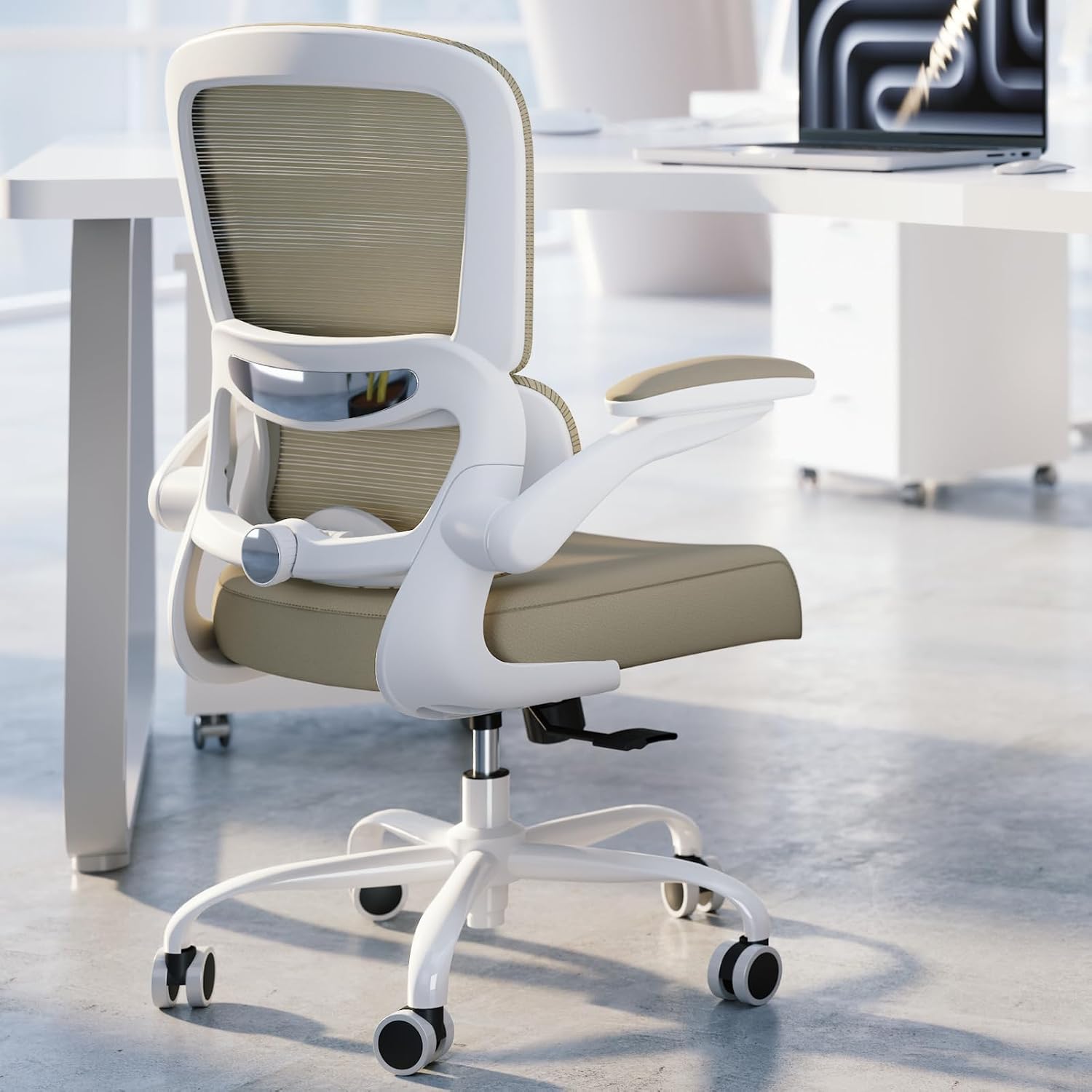
Best Overall: TRALT Office Chair
This is the chair I would hand to most people who sit eight hours and describe their problem as low back, worse by the afternoon. The first reason is the mesh back, and not because mesh is magic. Mesh is only good when it is tensioned tightly enough to push back. Cheap mesh that sags becomes a hammock for your tailbone, and a hammock is exactly what your lumbar curve does not want. The TRALT back is the firmer kind of mesh, the sort that holds a shape instead of absorbing one.
The second reason is the lumbar support itself. It is listed as adjustable, and the design puts it in the back frame rather than strapped loosely to the outside. That distinction matters more than any marketing line, because the questions I ask are simple: does it sit at the height of your inward lumbar curve, and does it stay where you set it once you lean into it? A pad that slides down the rail under load is decoration.
The khaki finish is a small thing that turned out to matter in a home office, because it does not read as a task chair borrowed from a hospital floor. Fabric and mesh will need a vacuum brush every few weeks, and they will show dust faster than dark upholstery. That is the trade for breathability. If you want one chair for a full work week, start here.
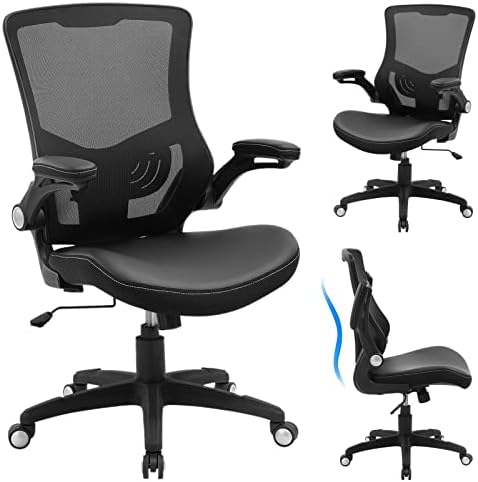
Best for Shared Desks: PU Leather Office Chair with Flip-Up Arms
Flip-up arms are the feature nobody thinks about until they need it, and then it is the only feature they care about. If your chair has to tuck under a desk that sits low, or you share a workspace with someone who needs the room, arms that rotate up and out of the way solve a problem that no amount of lumbar support will.
The rest of the chair is a hybrid: PU leather across the seat, mesh across the back, adjustable lumbar support, and a swivel base. That combination is deliberate and it works. The seat wipes clean, which matters if you eat lunch at your desk, and the mesh back keeps your shirt from soaking through by 3 PM. The leather look also means it survives coffee, pets, and the kind of dust a fabric seat collects.
The compromises are honest ones. PU leather is a coated material, so it will eventually crack where the seat edge flexes, usually around year three if you sit in it daily. It also runs warmer than fabric on the underside of your thighs. And a chair built to fold its arms away is generally not built with the heaviest duty mechanism in the group. Treat it as the practical choice for a desk that has to do double duty.
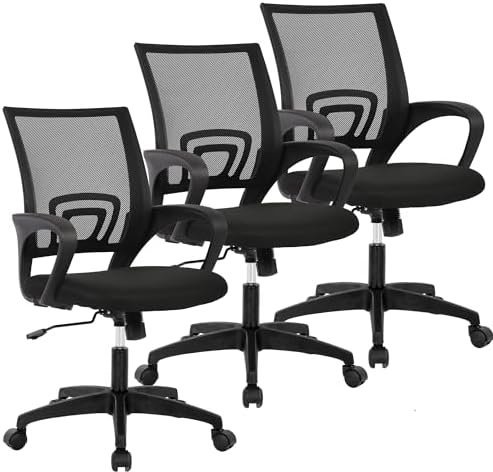
Best Budget Pick: BestOffice Mid-Back Swivel
I need to be straight with you about this one. A mid-back swivel in this price tier is not an eight-hour chair, and I will not pretend it is. What it is, is a perfectly reasonable chair for a spare desk, a teenager's homework setup, or a workstation you occupy two hours a day. In those jobs it does everything you need and it costs less than a decent office visit copay.
The mid-back shape is the part worth understanding. It stops below the shoulder blades, which leaves your upper back free to move and keeps you from feeling pinned. Some of my clients prefer that, especially shorter frames and people who fidget. The trade is real, though: there is no upper back contact, no headrest, and the lumbar support is more of a shape in the backrest than an adjustment you can dial in.
At this tier the gas lift and the bonded materials are usually the first things to fail. If you buy it, buy it knowing it is a two-year chair, and plan to replace it rather than repair it. For a second desk, that is a fine deal. For the chair you live in forty hours a week, keep reading.
Best if You Recline: GTPLAYER Gaming Chair
I make fun of gaming chair marketing as much as anyone, and then I review them anyway, because they solve one problem better than most task chairs do: reclining. The GTPLAYER brings a footrest, a headrest, a lumbar support, height adjustment, and a 360 degree swivel seat. The footrest plus a deep recline is genuinely useful for a reading break, a phone call, or the ten minutes between meetings when you want your feet up.
Sitting upright is where it fights you. The bucket sides that make a racing seat feel secure push your shoulders forward when you are typing, and forward shoulders are how you end up in my office with a knot between the shoulder blades. The lumbar support here is a pillow, not an adjustment, so it will not hold a specific position the way a real adjustable pad does. Height adjustment and swivel, at least, are legitimate.
The pearl white finish is a commitment. It looks sharp in a bright room and it shows every scuff, so keep a microfiber cloth nearby. Buy this one if you recline. If your day is upright keyboard work, the TRALT will be kinder to your upper back.
How I test every chair
Same protocol, every chair, no exceptions. First, a lumbar pressure check with a real sensor pad, not my hand. The pad shows where your weight actually lands, and it is the only honest way to see whether the lumbar pad is meeting your curve or bullying your rib cage. Second, a full work week in the chair, five days, normal client load. Third, a nine-hour day with no standing breaks, because that is the day when a chair stops being comfortable and starts being a problem.
Between those sessions I check the details that specs never list. Seat depth: when you sit back, there should be about two fingers of space behind your knee. Too long and it presses the back of your legs, too short and your thighs dangle. Armrest position: your elbows should rest at roughly 90 degrees with your shoulders relaxed, and if the arms wobble when you lean on them, that is a hard no for anyone with shoulder pain. Tilt tension: loose tilt encourages slouching, locked tilt encourages stiffness, so I want a middle setting that exists rather than two extremes.
Then the wear questions, because a chair is a five-year purchase. Does the mesh hold tension or stretch into a hammock? Does the gas lift still hold height after a month of daily cycling? Do the armrests stay where you set them under pressure? Does the lumbar pad stay at the height you chose at the end of the day? Any chair can pass that test for an afternoon. Very few pass it for a month.
I also weigh cost over time rather than at checkout. A chair that costs less and dies in eighteen months is not the cheap option, it is the expensive one with better marketing.
The reference table
| Chair | Best for | What adjusts | Price |
|---|---|---|---|
 Visit on Amazon → Visit on Amazon →TRALT Office Chair, Khaki |
Full work week, all-day sitting | Adjustable lumbar built into the back frame, mesh back | $129.99 |
 Visit on Amazon → Visit on Amazon →PU Leather Office Chair with Flip-Up Arms |
Desks that need the chair tucked away | Flip-up arms, adjustable lumbar, swivel, mesh back | $131.99 |
 Visit on Amazon → Visit on Amazon →BestOffice Mid-Back Swivel |
Spare desk, short sessions | Swivel and height only, no real lumbar adjustment | $42.99 |
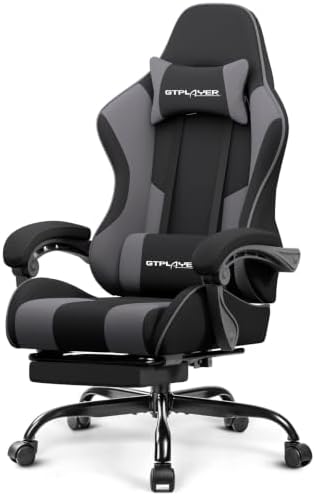 Visit on Amazon → Visit on Amazon →GTPLAYER Gaming Chair, Pearl White |
Reclining, reading, feet up | Height, swivel, headrest, footrest, lumbar pillow | $85.17 |
What the specs leave out
The word ergonomic is a label, not a measurement. Any chair can print it on the box. What separates a real ergonomic chair is whether the adjustments are independent of each other and whether they hold position. A backrest that only tilts when the seat tilts is one adjustment pretending to be two, and you will feel that by hour four.
Armrests are not optional, and I will keep saying it. Floating elbows are how you get the shoulder pain I treat every week. If a chair forces your elbows off the desk, it is not saving you anything, no matter what it cost.
Mesh is not automatically breathable, and it is not automatically durable. Tension is the whole story. Cheap mesh sags into a hammock in year two and then you are sitting on a sling. Firm, tightly woven mesh keeps its shape and keeps air moving.
Finally, no chair is one size fits all. The right chair depends on your height, your torso length, where you hurt, and how many hours you actually sit. Tell me those four things and I can pick for you. Everything else is brochure copy.
Should you buy the TRALT Office Chair?
Yes, for most people who sit all day. The mesh holds tension instead of sagging, the adjustable lumbar is built into the back frame rather than strapped on, and the khaki finish does not look like borrowed hospital furniture. The fabric will need a vacuum brush and it shows dust faster than dark upholstery. If you want one chair to carry a full work week, this is the one I would prescribe first.
Should you buy the PU leather chair with flip-up arms?
Yes, if you share a desk, work in a small room, or need to push the chair out of the way. Flip-up arms are the kind of feature you do not appreciate until you have a low desk or a tight corner. The PU leather seat wipes clean and the mesh back keeps you from sweating through your shirt. Expect the coated material to show wear around year three if you sit in it daily.
Should you buy the BestOffice Mid-Back?
Yes, as a second chair or a starter chair, not as your main one. It handles a two-hour evening desk session fine, and the mid-back shape leaves your shoulder blades free, which some people genuinely prefer. There is no adjustable lumbar worth the name and no upper back support, and at this tier the gas lift is usually the first part to go. Buy it for what it is.
Should you buy the GTPLAYER Gaming Chair?
Yes, if you recline. The footrest plus headrest plus a real recline is a combination most task chairs cannot match, and the height adjustment and swivel are legitimate. No, if you sit upright at a keyboard all day, because the bucket sides roll your shoulders forward and the lumbar support is a pillow rather than an adjustment. Buy it for the break, not for the eight-hour shift.