I have been a physical therapist for 16 years and an ergonomics consultant for the last eight, which means I spend my weeks in offices where somebody ordered 40 chairs off a catalog photo and now half the staff is rubbing their neck at 3 PM. This ergonomic office chair comparison comes out of that work. Four products come up in my client conversations over and over: a budget mid-back task chair, a gaming chair, the Herman Miller Embody, and the memory foam seat cushion that every person with tailbone pain asks me about.
Related: Lumbar Support Explained: Why Most Adjustable Backs Do Not Stay Put
The best chair in this group is the Herman Miller Embody, and for most people reading this it is still the wrong first purchase. The right first purchase is the one that fixes the specific thing hurting you, whether that is lumbar support, seat depth, or pressure under your tailbone. Spend the money on the adjustment that matches your body, not on the badge on the back.
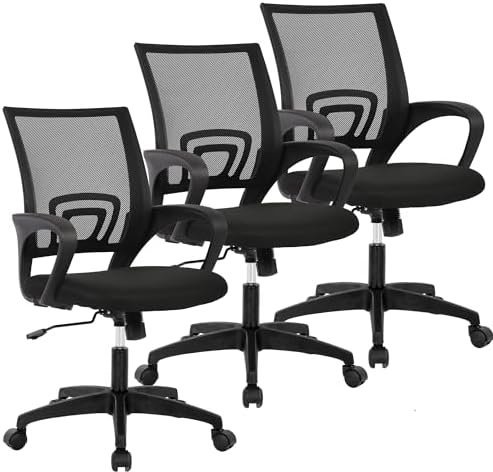
BestOffice Ergonomic Office Chair, Mid-Back Swivel Desk Chair
Cheapest way into a height-adjustable, swiveling task chair with a mid-back
Foam and gas lift are the weak points; lumbar support is thin
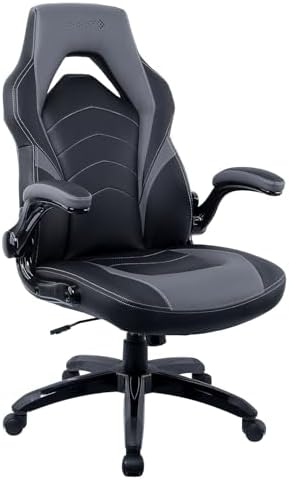
STAPLES Emerge Vortex Gaming Chair, Adjustable Height, Swivel Black
Tall back, reclines well, generous for long frames
Bucket bolsters and pillow headrest fight an upright eight-hour posture
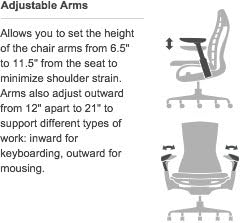
Herman Miller Embody Chair, Charcoal Rhythm
Spine-shaped back, genuinely adjustable, holds its settings
Highest cost here, and the seat and back take real getting used to
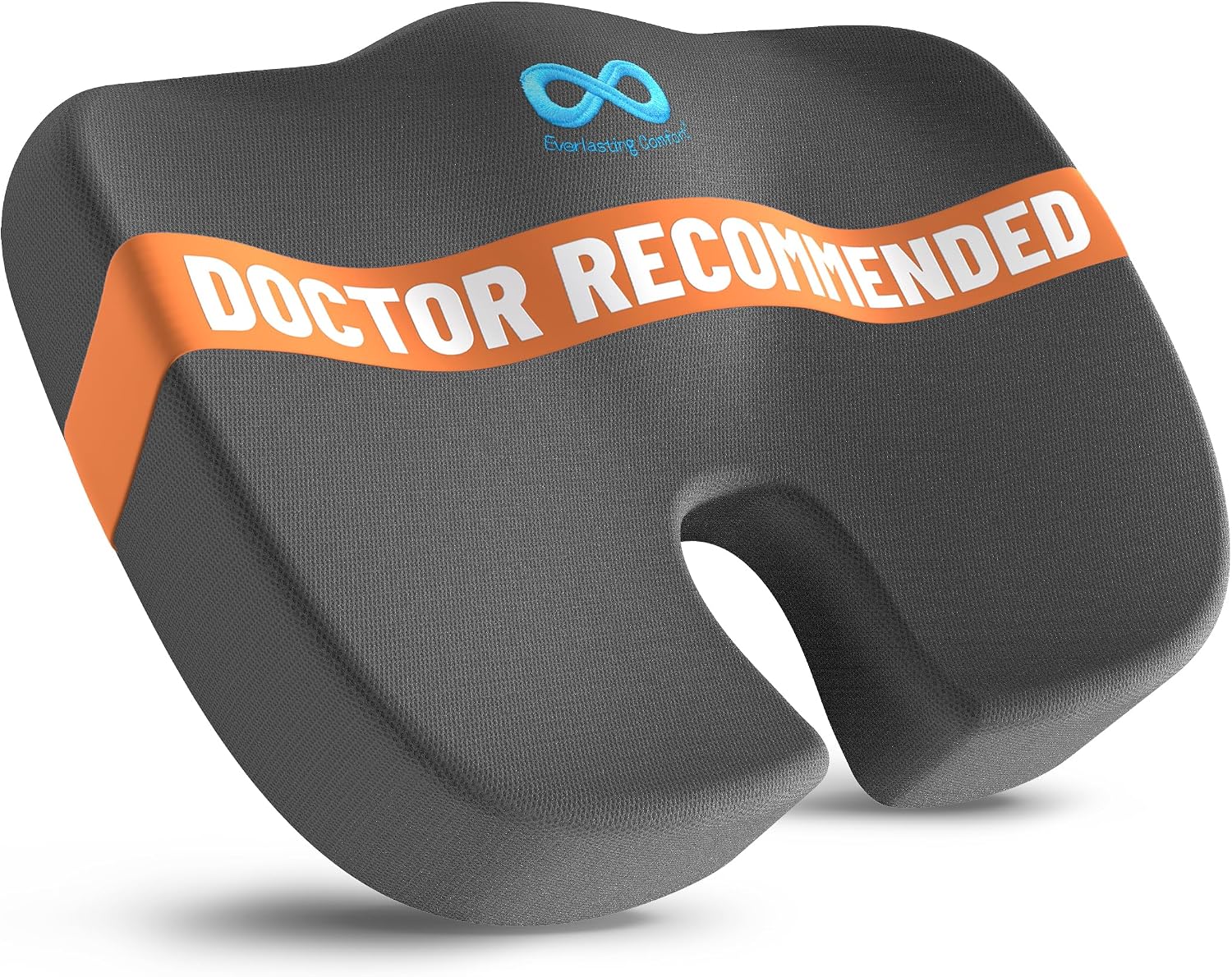
Everlasting Comfort Memory Foam Seat Cushion for Office Chairs and Car
Cheapest real change to tailbone pressure, and it works in any chair you already own
Not a chair; it adds height and does nothing for lumbar support
Prices and availability were captured from Amazon Creators API and may change.
How I judge a chair
I do not care what the brochure says about "ergonomic design." I care about four things, and I care about them in this order.
Lumbar support that adjusts in place. Plenty of chairs have a pad that slides up and down a rail. That is not adjustment, that is decoration. The test is whether the support can be pushed forward into your lower back and stay there. If the only movement is vertical, your lumbar curve gets whatever the manufacturer guessed for an average spine, and there is no average spine.
Seat depth. Sit all the way back. You want roughly two fingers of space between the front edge of the seat and the back of your knee. Too long and the edge digs into your calves, so you slide forward and lose your back support. Too short and your thighs hang, which puts all your weight on your sit bones.
Armrests that hold position. Floating elbows are how I end up treating shoulder pain every week. Armrests need to adjust up and down at minimum, and they need to stay where you put them when you lean on them. Wobbly armrests are worse than no armrests because they teach you to hold tension.
Tilt tension and lock. A chair that only locks upright will have you slouching by lunch. You want a recline you can set loose enough to move in and stiff enough that you are not folding in half.
Everything else, mesh, colors, headrest pillows, is marketing until those four are settled.
BestOffice Ergonomic Office Chair: the budget entry point
This is the chair I see in home offices where the budget was set before the chair was chosen. Mid-back, swivel base, adjustable height, dark black fabric. It does the basic job: your feet get to the floor, you can turn to reach a printer, and the back comes up to roughly mid-shoulder-blade height.
What you get at this tier is a chair that will not fight you for a year or two. What you do not get is a lumbar mechanism worth the name. Push on the back pad and you will feel how little it moves. If you buy this chair, plan to add a cushion behind your lower back from day one, and check the gas lift height range against your desk before you commit.
The failure points at this price are predictable: the foam flattens, the armrests loosen, and the gas lift is the first thing to quit. That is not a knock on this specific chair, it is the physics of the category. If your budget is genuinely at the bottom, buy it knowing it is a two-year chair, not a five-year one.
STAPLES Emerge Vortex Gaming Chair: built for reclining, not for Tuesday
Gaming chairs get mocked, and I do some of the mocking, but the geometry is not random. The Emerge Vortex has a tall back, a swivel base, adjustable height, and a shape designed for someone who leans back with a controller in their hands.
Here is the problem for office work. The side bolsters are there to hold you during a reclined racing position. Sit upright to type and those same bolsters press into your shoulder blades and push your arms forward, which rounds your upper back. The pillow behind your head does the same thing to your neck: it pushes your head forward of your shoulders, which is exactly the posture I spend my week undoing.
If you are tall and you like to recline between tasks, this chair can work, and the high back gives real support to a long torso. If you sit upright for eight hours, the bolsters are working against you. My honest advice for a gamer who also works at the same desk: pick a task chair with adjustable arms and keep the gaming chair for the console.
Herman Miller Embody Chair: the benchmark, with caveats
The Embody is the chair in this group that was designed around a spine instead of around a spec sheet. The back is a matrix of flexible segments that move with you rather than a shell you lean against, the seat edge is narrow so it does not cut into your thighs, and the arms adjust through a range that actually fits different bodies. Charcoal Rhythm is the textile, which is the version most offices order.
Two things I tell every client who asks about it. First, it takes a week or more to feel right. People who sit in one for ten minutes in a showroom and hate it often love it after a month, because their body is used to being propped up rather than supported. Second, the seat is not wide. If you are broad through the hips, sit in one before you buy, because no amount of adjustment fixes a seat that is too narrow.
The cost is the real caveat. This is the most expensive product in this comparison by a wide margin, and it is not four times the chair of a good mid-range task chair. It is a better chair, and for someone who lives in it nine hours a day, that gap is worth paying for. For someone who sits three hours a day, it is not. If the price is the obstacle, the refurbished market is where I send clients, and I would rather see you in a refurbished Embody than a new chair from a brand that will not sell you a replacement gas lift.
Everlasting Comfort Memory Foam Seat Cushion: the fix that is not a chair
The name on this one says doctor recommended. I am a physical therapist, and I do not use that phrase, because it does not mean anything specific and I know the rules around it. What I can tell you is that the shape is legitimate: contoured memory foam with a cutout at the rear so your tailbone sits in open space instead of pressing into a flat seat.
That cutout is the whole point. If you have coccyx pain or sciatica that flares when you sit, taking pressure off the tailbone is the first thing I would try, before I would tell you to spend four figures on a new chair. This cushion is the least expensive product here and it is the one I would try first for that specific complaint.
It has limits, and I want you to know them before you buy. A cushion does nothing for your lumbar curve. It sits under your pelvis, not behind it. It also raises you by an inch or more, which changes your seat depth and your knee angle, so you may need to raise your chair and possibly your desk to compensate. On a seat that is already too deep, a cushion can make the knee pressure worse. And on a chair with a worn, flattened seat, this cushion is a bandage, not a repair.
The trade-offs, side by side
The Embody wins on adjustability and durability, and it loses on price and on the fact that it is not for every body. The Emerge Vortex wins on recline comfort and height, and it loses on upright posture. The BestOffice wins on price and loses on everything that lasts. The Everlasting Comfort cushion wins on the one specific problem it solves and loses on everything a chair is supposed to do.
Think about cost per year instead of cost today. A chair is a five-year purchase. The cheap chair that dies in 18 months was never cheap, and the expensive chair that lasts 12 years was never expensive. Run the math that way and the ranking changes depending on how many hours a day you sit.
The other trade-off is effort. A cushion is a five-minute fix. A chair is a decision you research, sit in, and possibly return. If your pain is new and mild, start with the cheap fix and see if it holds. If you have been uncomfortable for a year, no cushion is going to solve a chair that is the wrong size for you.
Who should buy which
Buy the Everlasting Comfort seat cushion if your pain is at the tailbone, if it flares when you sit and eases when you stand, or if you want to test whether pressure is your problem before you spend more. It also travels to a car seat or a stadium bench, which no chair here does.
Buy the BestOffice Ergonomic Office Chair if your budget is fixed, your current chair is broken, and you need height adjustment and a swivel today. Add a lumbar roll and accept that you will replace it.
Buy the STAPLES Emerge Vortex Gaming Chair if you are tall, you recline, and the desk is a secondary use. Skip it if you type upright for a living.
Buy the Herman Miller Embody if you sit more than six hours a day, your back has opinions about it, and you can sit in one first. Buy it refurbished if the new price is out of reach.
What I am testing next
I have five budget "ergonomic" chairs from the current crop in the office right now, a pressure map sensor pad, and a week of real client work scheduled in each one. The marketing on the budget tier is getting worse every year, and I want numbers instead of adjectives. When that testing finishes, I will publish the pressure maps, including the ones that make the brands look bad.
For now, the rule stands. Fix the thing that hurts, then buy the chair that matches your body. The rest is brochure copy.