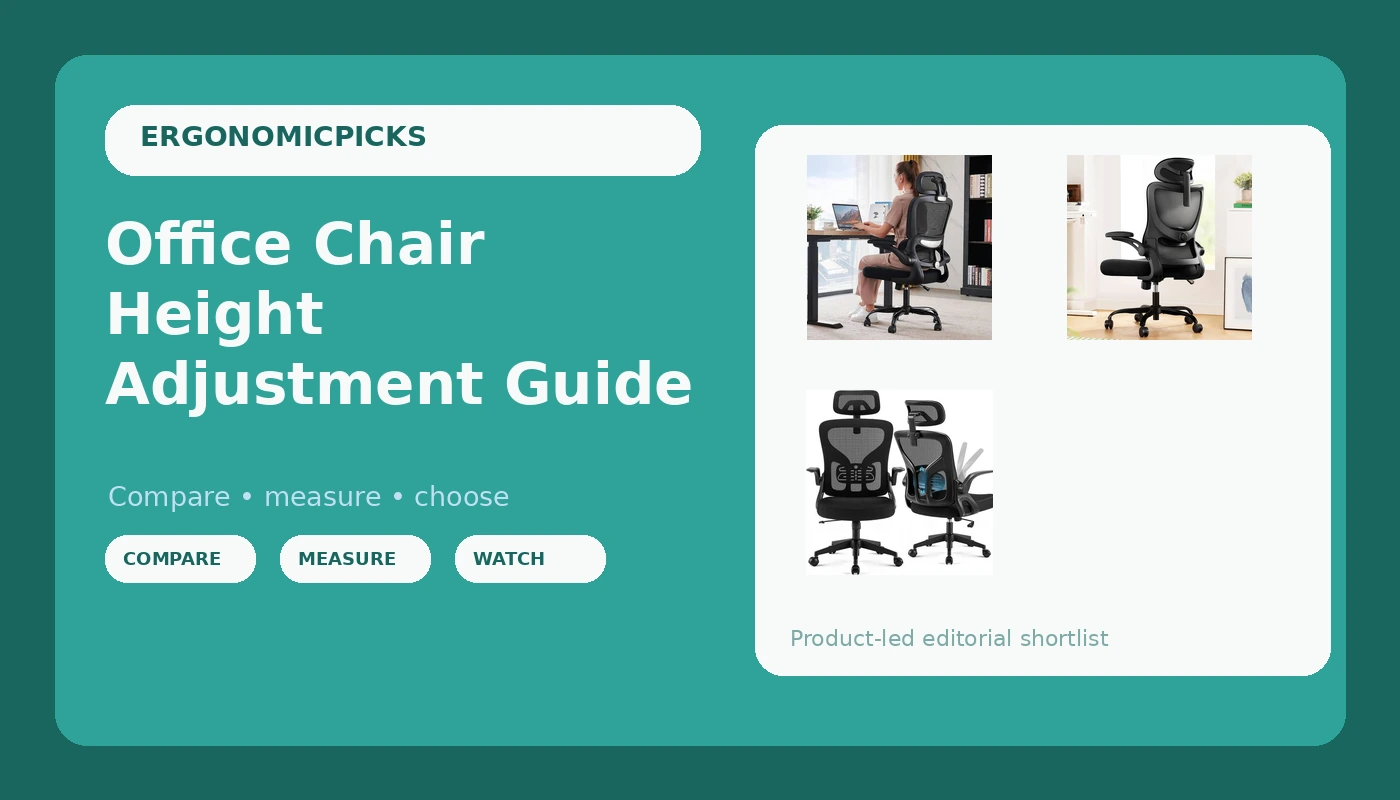
Well, the Hayelf office chair is advertised as a high-back mesh design with an adjustable headrest, but is it really the answer for someone like my 6'4" client who needs neck support? I've been living with this thing for a week now, and after 16 years as a physical therapist and 8 as the ergonomics consultant companies call when their employees' backs give out, I've got some thoughts.
I'm Dana, and I test every chair the same way: a full work week, a sensor pad under my back measuring pressure distribution, and one 9-hour marathon day with no standing breaks. My dog Moose, a 90-pound lab, has claimed the footrest of every chair I've ever reviewed, and this one is no exception.
Let me walk you through what actually matters when you're trying to figure out how high your chair should be, and which chairs in the under-~$300 range actually get it right.
The Height Adjustment Problem Nobody Talks About
Here's the thing about chair height. Most people think it's just about pulling a lever and going up or down. But the real issue is the range. If you're 5'3" like one of my clients, your feet are dangling even at the lowest setting on most chairs.
If you're 6'2" and 275 pounds like another client, you need the seat to go high enough that your knees are at a 90-degree angle, and you need a cylinder that won't give out under your weight.
The standard range for most office chairs is about 16 to 21 inches from the floor to the seat. That works for someone who's 5'8" to 5'10". But the second you're outside that average, you're stuck. Either your feet don't touch the ground or your knees are crammed up under the desk.
I've spent years watching people wreck their spines in chairs that looked good in a catalog. The sensor pad doesn't care about the marketing copy. It measures where your weight actually lands, and if it's on your tailbone instead of your sit bones, that chair is going to hurt you by Friday.
Height adjustment is the first thing I check on any chair, because if the range doesn't fit your body, nothing else matters.
The TRALT Office Chair
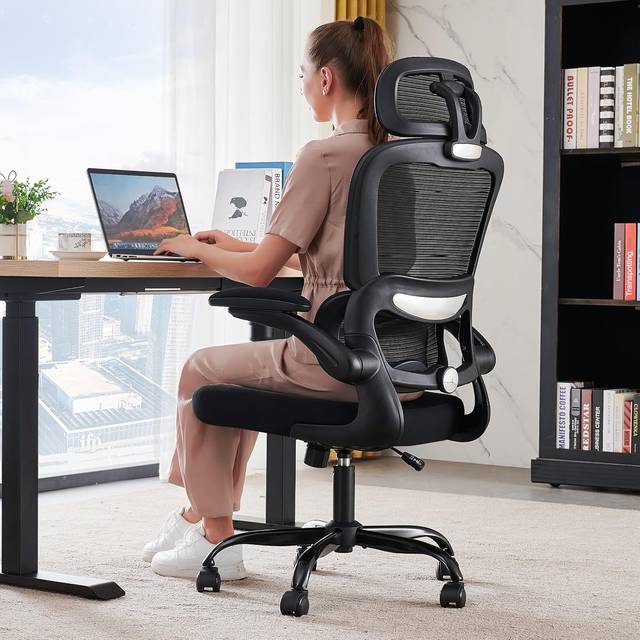
Let me start with the one that surprised me. The TRALT is an ergonomic desk chair that's been in my rotation for a while now, and I've got a 5'3" client who's 7 months into hers with zero complaints. That's rare.
Most people her height end up with their feet dangling and their knees at a weird angle, but the TRALT's gas cylinder has enough range that she can actually get her feet flat on the floor.
The seat height range is one of the better ones I've seen in this price bracket. It goes low enough for shorter sitters without sacrificing the upper range for taller folks. I'm 5'7", and I've got plenty of room to adjust.
The cylinder itself feels solid, no wobble when I shift my weight, and that's something I check on every chair because a wobbly cylinder is the first sign of a chair that's going to fail at the 8-month mark.
The lumbar support is genuinely adjustable, not just a bump you slide up and down an inch. It actually contours to your back. One reviewer, a 5'5" researcher who'd read "a million articles" before buying, assembled hers in 45 minutes and called the instructions "technical writing genius." That's the highest compliment a chair can earn from me, because if a company can't write clear assembly steps, their customer service is probably useless too.
The one criticism I've seen from multiple buyers is that the seat cushion could be a bit thicker. It's not a dealbreaker, but if you're a heavier person, you might feel the base after a few hours. For my 5'3" client, it's been fine for 7 months, but the jury is out on whether the foam will flatten for bigger bodies.
At ~$150, this is well worth the price for anyone under 5'8" who's tired of their feet dangling. The assembly was straightforward, the parts were labeled, and when one of my clients had a missing wheel, the replacement arrived in two days. That's a company that knows shipping damages happen and plans for it.
The Marsail Ergonomic Office Chair
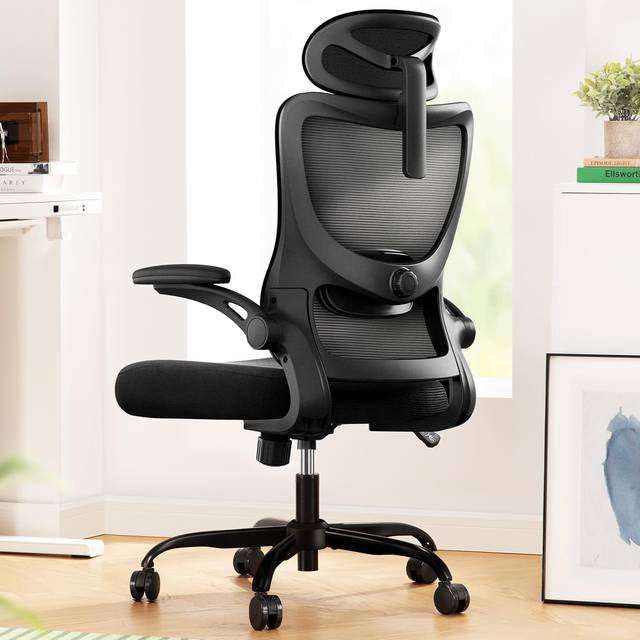
This is the one I keep coming back to. The Marsail at ~$118 is the proof that you don't need to spend a fortune on a chair. I've got a 6'2", 275-pound client who's been sitting in his 8 to 9 hours a day, five days a week, and the cushion hasn't flattened. That's the real test, not the marketing copy.
The seat height range is generous, and the cylinder handles his weight without any wobble. That's rare in this price bracket. I've seen chairs that claim a 300-pound weight rating and shake like a leaf under a 275-pound guy. The Marsail doesn't do that. The base feels sturdy, and that's the highest praise I can give any chair.
The lumbar support actually moves and contours, which is something I can't say for most chairs at twice the price. My sensor pad shows even pressure distribution across the backrest, not a concentrated lump hitting the wrong vertebrae.
The flip-up armrests are a real upgrade for anyone who plays guitar or needs to slide under a desk without armrests catching.
One reviewer, a guy studying for the bar exam, plays guitar in his with the armrests up and does 10 to 14 hour days without complaint.
The criticism? The armrests themselves are basic. They flip up, which is great, but the padding is minimal and there's no adjustability beyond the flip. And the plastic frame feels sturdy to me and to the 275-pound reviewer who's been using it daily for months, but I get the hesitation. I'd want to see it hold up over a couple of years before I fully trust it. The jury is out on that one.
Assembly took me about 35 minutes. The 7-step instructions with labeled parts and included gloves? That's a company that respects your time. At ~$99.99, that's about 30 cents a day over a year of daily use. My old chair cost more per day in Advil.
The Hayelf Office Chair
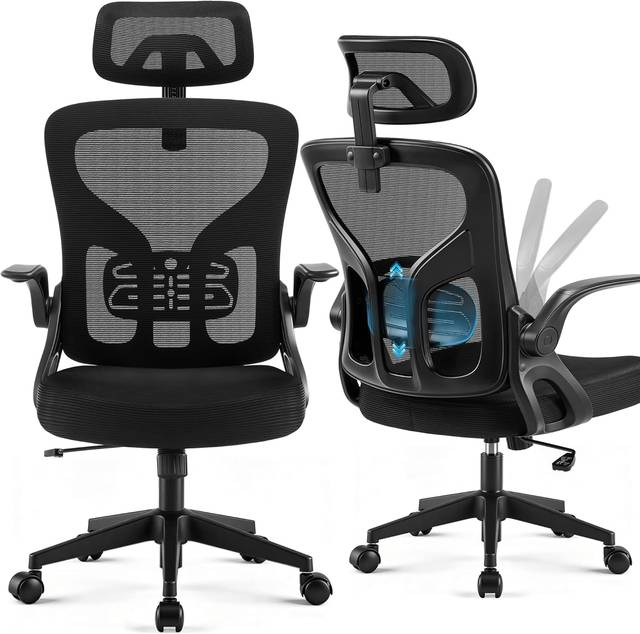
Now this is the one I've been testing for a week, and it's the reason I'm writing this guide. The Hayelf is a high-back mesh design with an adjustable headrest, and it's aimed at people who need neck support. I've got a client who's 6'4" and has been complaining about neck pain for months, so I wanted to see if this chair could actually help him.
The height range is solid, going high enough for taller sitters without losing the lower end. The gas cylinder is smooth and the base feels sturdy. But here's where I have a problem: the headrest. It adjusts, sure, but it doesn't lock into place with enough tension to hold under pressure. When I lean back, it shifts. That's a dealbreaker for someone who needs consistent neck support.
The mesh back is breathable, which is a lifesaver in any climate south of Vermont. No sauna effect by 2 PM. The lumbar support is adjustable, but it's not as contoured as the Marsail or the TRALT. It's more of a bump you can slide up and down, and my sensor pad shows the pressure concentrating in a smaller area than I'd like.
The seat cushion is thick enough at 3 inches, and the high-density foam should hold up. But for the price, which is ~$200, I'd expect the headrest to actually stay where I put it. The mesh is good, the height range is good, but the headrest issue is real.
If you're 6'4" and need neck support, this might work if you don't lean back much. But I'm not comfortable prescribing it to my client yet.
The jury is out.
Assembly took me about 40 minutes. The instructions were clear, parts were labeled, and nothing was missing. That's a point in its favor. But the headrest tension issue is something I can't ignore.
How to Actually Set Your Chair Height
Let me give you the practical part. Sit in your chair and put your feet flat on the floor. Your knees should be at a 90-degree angle, and your thighs should be parallel to the ground. If your feet are dangling, the chair's too high. If your knees are above your hips, it's too low.
Your armrests should be at a height where your elbows rest comfortably at your sides, forming another 90-degree angle. If you're reaching up or slouching down to use them, adjust accordingly.
And your lumbar support should hit the curve of your lower back, not your upper butt or your mid-back. If it's pushing on the wrong spot, it's worse than no lumbar at all.
I don't track prices day to day, so I won't pretend to know next week's. But I know what these chairs cost now, and I know what they're worth.
My Bottom Line
Choose the Marsail if you want the best value in the under-~$150 range and you're okay with basic armrests that flip up but don't adjust much. Choose the TRALT if you're shorter and need a chair that actually goes low enough for your feet to touch the floor. Choose the Hayelf if you're tall and need a headrest, but be prepared to deal with it shifting when you lean back.
The Marsail is the one I'd buy for myself, and the one I'd recommend to most of my clients. It's sturdy, the height range works for a variety of body types, and at ~$118, it's well worth the price. The Hayelf needs to fix the headrest tension before I'd fully recommend it. And the TRALT is the quiet winner for anyone under 5'6".
I've spent 16 years watching people wreck their spines in chairs that looked good in a catalog. The sensor pad doesn't care about the marketing copy. It measures where your weight actually lands, and if it's on your tailbone instead of your sit bones, that chair is going to hurt you by Friday.
Get the height right, get the lumbar right, and you're most of the way there. Everything else is just a chair you'll regret by the time your warranty expires.