I have spent 16 years as a physical therapist and the last eight of them measuring spines in conference rooms, which means I have watched a lot of money disappear into office chair lumbar support that stops working somewhere around hour three. My clients in Madison do not call me because their chair is ugly. They call because their lower back is screaming at 2 PM on a Tuesday and the lumbar pad they paid for has slid down to their tailbone. So when I compare chairs, I do not compare feature lists. I compare what happens to your lumbar curve after a full day.
The four products here are what I reach for when someone asks me to fix a workstation without replacing the entire desk: two complete chairs and two add-on supports. I put a work week into each chair, I ran the supports through a nine hour marathon day with no standing breaks, and I used a pressure sensor pad under each one. This is the short version of what my notebook says.
The best office chair lumbar support for most people is the Steelcase Series 1, because its lumbar adjustment sits on a track you set once and it is still there at the end of a nine hour day. Everything else in this comparison is a workaround, and some of those workarounds are genuinely good. A $27 pillow that lands in the right spot beats a $300 chair with a lumbar bulge in the wrong one, and I will defend that in front of any office manager.
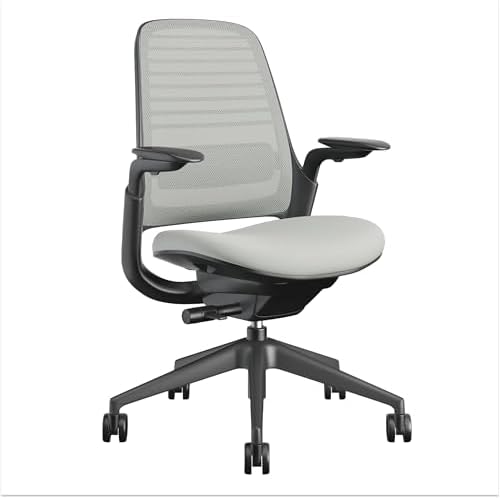
Steelcase Series 1 Ergonomic Office Chair, Carpet Floors, Nickel
Lumbar height adjusts on a track and holds its position; armrests stay put under load; built for a five year run
The price; the seat is firm for the first week; no headrest for long days
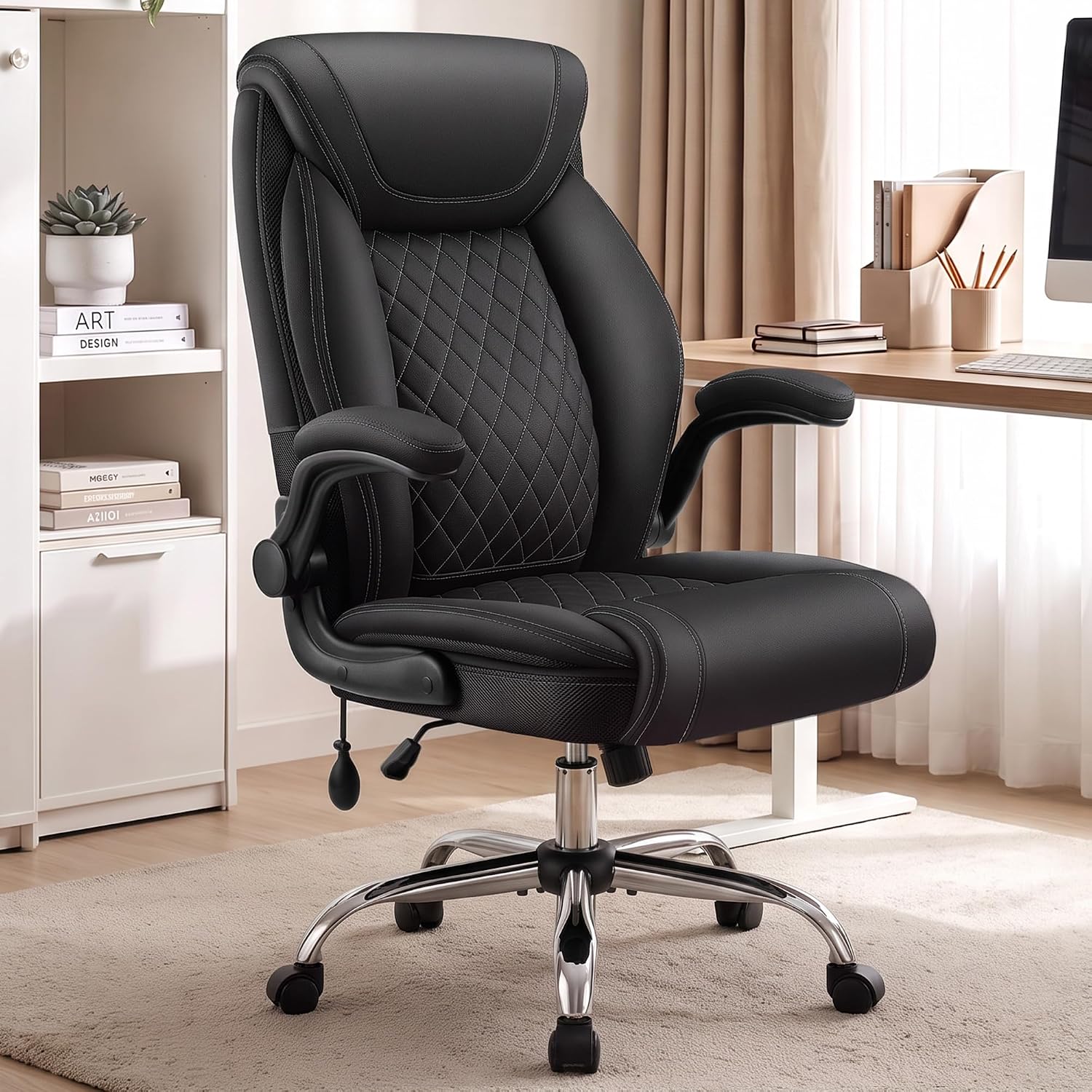
Office Chair, Executive Leather Desk Chair with Lumbar Support
Least expensive complete chair in this group; leather wipes clean; fine at a guest desk
Lumbar is a fixed bulge, not an adjustment; plastic armrests wobble early
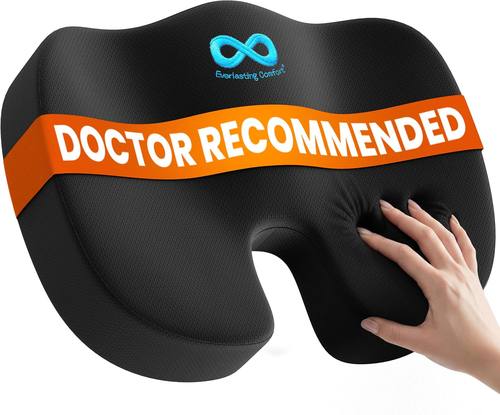
Everlasting Comfort Memory Foam Seat Cushion for Office Chairs & Car (Black, Large)
Takes load off the tailbone and sit bones; the rear cutout is real; works in a car seat too
Adds height, so short desks get awkward; memory foam holds heat
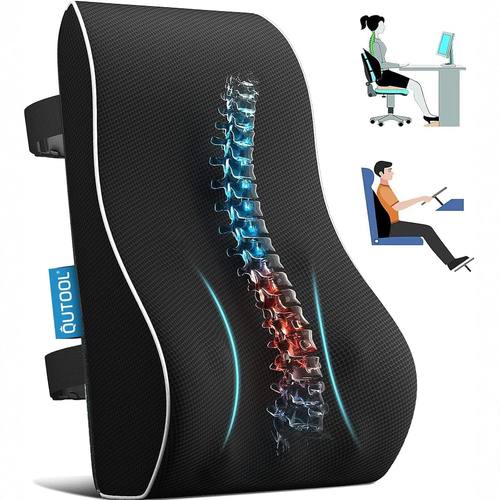
Lumbar Support Pillow for Office Chair with Mesh Cover and Double Adjustable Straps
Cheapest fix here; straps let you put support exactly where your curve is
Needs re-strapping; it is a pad, not a mechanism
Prices and availability were captured from Amazon Creators API and may change.
How I test lumbar support
Every chair gets at least three full work days, and one of them is a nine hour day with no standing breaks. That last part matters more than any spec sheet, because almost everything feels fine at hour two. I sit the way my clients sit: writing, on calls, leaning back between tasks, and then sitting up straight again when something urgent lands.
The sensor pad goes under me twice a day, once in the morning and once after lunch. What I am looking for is not whether a chair feels soft. I am looking for whether the load under my sit bones drifts backward over the course of the day, which is what happens when a lumbar pad collapses or a mesh seat sags. A chair that starts the morning with even pressure and ends the afternoon with all of it pooled under the tailbone has failed, no matter how it felt when I unboxed it.
I also test the lumbar adjustment by moving it and then leaning on it hard, the way you do when you are frustrated with a spreadsheet. If it slides back down, it is decoration.
The two complete chairs
Steelcase Series 1
The thing I care about is that the lumbar support moves on a vertical track and stays where you put it. That sounds like a small detail and it is the entire ballgame. Most chairs under $300 give you a foam bulge welded to the backrest, which means the chair fits one body type and everyone else adapts. The Series 1 lets me put support at the base of my lumbar curve, which for me is lower than the brochure model, and it holds there through the afternoon.
The armrests hold position under load. I lean on them, I push back from the desk, and they do not wander. Floating elbows are the fastest route to the shoulder pain I treat every week, so this is not a luxury feature to me.
What I do not love: the seat is firm for the first week and the frame lets you know it. There is no headrest, so the nine hour day ends with me wanting one. And the price is the price. This is a five year purchase, which is the only way the math works, and I say that to clients who flinch at the number. The chair that dies in 18 months was never cheap.
Office Chair, Executive Leather Desk Chair with Lumbar Support
This is the chair people buy when they want a chair that looks like a chair. It is the least expensive complete chair in this group, the leather wipes clean with a damp cloth, and if it lives at a guest desk that gets used twice a week, it is fine.
As a full time work chair, the lumbar support is the problem. There is no separate adjustment, so what you get is whatever curve the backrest was molded with. If your lumbar curve happens to match it, great. If it does not, you will spend the day either arching away from the backrest or slumping into it, and both of those end in the same place: my office.
The armrests are plastic and they wobble. I could feel movement within the first hour of leaning on them. For a chair that gets pushed in at 6 PM, that is survivable. For eight hours of daily use, it is the first thing that will annoy you and the second thing that will hurt you.
The two add-on supports
Everlasting Comfort Memory Foam Seat Cushion
This is the product that surprises people, and it surprises them because it treats a different problem. Seat cushions do not fix your lumbar curve. They fix the pressure under your sit bones and your tailbone, which is where a lot of "my back hurts after work" actually starts.
The cutout at the back is real, and it lets your tailbone float instead of taking load. In my sessions, the pressure map under the tailbone cleared up noticeably with this cushion in a chair that had been pooling weight there. The non slip bottom matters too, because a cushion that slides forward turns into a wedge that pitches you out of the seat.
The catch is height. This cushion adds real thickness, so if your desk is already at the low end of its range, you will end up with your knees above your hips and a whole new problem. Fix the desk height first. And memory foam holds heat, so if you run warm, plan for it.
The listing calls it doctor recommended. I am a physical therapist and I cannot make that claim for anyone, so I will say what I can say: it takes pressure off the tailbone, and that is worth a lot if your pain sits at the bottom of your spine rather than the middle.
Lumbar Support Pillow for Office Chair
This is the cheapest fix in the group and the one I recommend most often to people who are not replacing their chair this year. The double straps let you position the pad exactly where your lumbar curve is, which is more than most fixed chair backs will do for you.
It works. It also requires maintenance. The straps loosen, the pillow shifts when you stand up, and you will reposition it more often than you would like. And it is a pad, not a mechanism: it cannot push back with variable force the way a real adjustable lumbar does. If your chair has no lumbar adjustment at all, this is a legitimate upgrade. If your chair has a good one, this is a downgrade you will feel by the afternoon.
I also want to be honest about the marketing. A pillow cannot improve your posture on its own. What it can do is stop your lower back from collapsing into a C shape, and that is most of the battle for people who sit all day.
What the trade-offs actually come down to
Three things separate these four products, and none of them are printed on the box.
First, does the support stay where you put it? The Series 1 wins this outright. The pillow can be placed correctly but drifts. The leather chair cannot be placed at all. The cushion is not trying to do this job.
Second, does the product match your actual complaint? Tailbone pain, sciatica type symptoms, and mid back fatigue are three different problems, and people buy the same chair for all three. If the pain is under you, you want the cushion. If it is in the small of your back, you want the pillow or the Series 1.
Third, what happens in year two? Mesh sags, gas lifts die, foam compresses. The add-on supports are consumables. Expect a few years and replace them. The Series 1 is built for a longer service life, and if you buy one thing from this article, buy the thing that will still be holding its shape when the cushions have flattened.
Who should buy which
Buy the Steelcase Series 1 if you sit eight hours a day, you have a budget you can stretch once, and you want to stop thinking about your chair. Set the lumbar height to your curve, set the seat depth so you have two fingers of clearance behind your knee, and leave it alone.
Buy the executive leather chair if it is going to a guest room, a home office that gets light use, or a space where appearance is doing real work. Do not buy it as the chair you spend your career in.
Buy the memory foam seat cushion if your pain is at the bottom of your spine, your chair is otherwise acceptable, and your desk height has room to give. It is also the best car seat fix in this group, and a lot of my clients spend more time commuting than they admit.
Buy the lumbar support pillow if you have a decent chair with a useless back, or you are not replacing anything this year. It is the cheapest way to find out whether lumbar support in the right spot actually helps you before you spend real money on a chair.
What I am testing next
I have a refurbished chair from a liquidation sale on the bench right now, because I keep telling clients that a used chair from a good line beats a new chair from a bad one, and I should keep proving it. I am also running the sensor pad under two more cushions in the same price range as the one here, because seat cushions are where the marketing is currently the worst. My rule does not change: at least three full work days, one nine hour day with no standing breaks, and the lumbar support has to hold its position at 2 PM on a Tuesday. If it does not, it does not make the notebook.