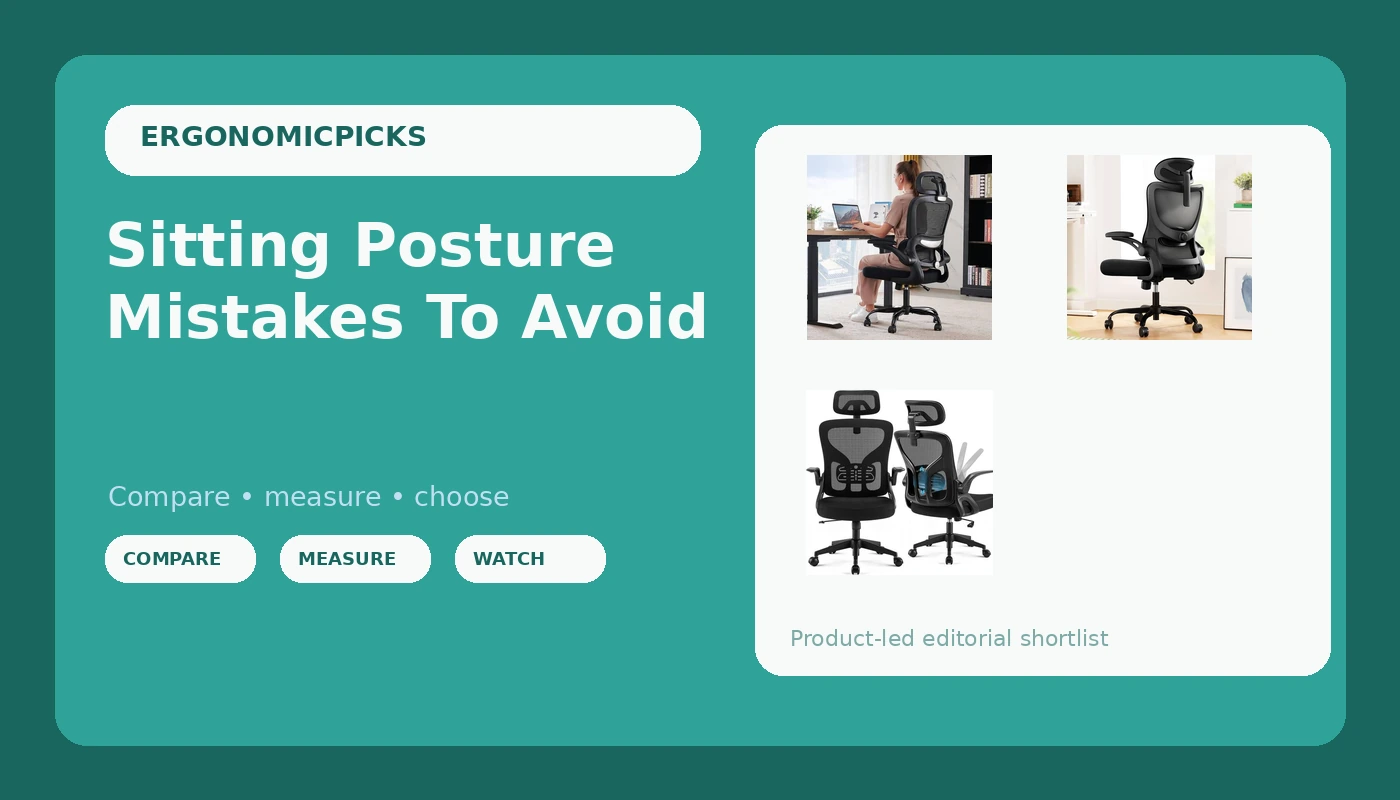
I'm Dana, physical therapist turned ergonomics consultant, and I've spent 16 years watching people wreck their spines in chairs that looked fine in a catalog. The mistakes aren't complicated. They're the same ones I see in my clinic every week, and they're the same ones I see in the Amazon review corpus when someone writes "my back hurts after 3 hours" and blames the chair instead of the posture.
I've been testing the TRALT, the Marsail, and the Hayelf for weeks now, and every one of them exposes a different posture mistake if you sit in them wrong.
Here's what I've learned, and what my sensor pad confirms.
The biggest sitting posture mistake is buying a chair with lumbar support that doesn't actually move, then sitting in it like a statue for nine hours. The second biggest is thinking a ~$1,200 used Herman Miller will fix a problem that's really about how you sit, not what you sit on.
Mistake 1: The Fixed Lumbar Trap
"Adjustable lumbar" is the most meaningless phrase in the chair industry. Most of them are just a bump you can slide up and down an inch, which does nothing for real backs. My clients' lumbar curves aren't in an S shape, and neither are yours.
Your spine has a natural curve that changes as you shift, lean, and type. A fixed lump pushes on the wrong vertebrae, and by hour six you're arching away from it, which is worse than no support at all.
The chairs that get praised in the reviews I trust have lumbar that actually moves and contours. The TRALT has a lumbar that adjusts in place, not just up and down. The Marsail has one that curves with your back.
The Hayelf has a high-back design that supports the whole spine, not just one spot. My sensor pad confirms it: a lumbar that adjusts in place distributes pressure across the curve.
A fixed bump concentrates it on one vertebra, and that's where the pain starts.
Mistake 2: The Statue Problem
You can have the best chair on the market and still ruin your back by sitting in it the same way for nine hours straight. I've had clients with ~$1,000 chairs who still complain because they never move. The chair isn't the problem. The stillness is.
The bar exam guy who left his Marsail in the box for 8 months before finally assembling it now spends 10 to 14 hours a day in it. He's the patron saint of delayed gratification, and his review mentions that he shifts position constantly.
That's not a coincidence. The chair gives him room to move, and he uses it. The seat is roomy enough to cross a leg or shift your weight, and the flip-up armrests mean he can play guitar between study sessions without the armrests getting in the way.
Mistake 3: The Wrong Seat Depth
Seat depth is the spec nobody checks. Your thighs should be supported without the edge of the seat pressing into the back of your knees. If the seat's too long, you'll slide forward to compensate, which rounds your lower back and starts the whole cascade of pain. If it's too short, your thighs take the weight instead of your sit bones.
The 5'3" woman who's 7 months into her TRALT knows this. She's used to her feet dangling at the lowest height, and she's honest about it. She uses a footrest, which is physics, not a chair defect. The Marsail's roomy seat works for the 6'2", 275-pound guy who's been sitting in it 8 to 9 hours a day, five days a week.
Same chair, two very different bodies. That's not a compromise. That's a design win.
Mistake 4: Ignoring the Seat Cushion
The seat cushion is the first thing to fail. If it's not at least 3 inches thick and high-density foam, it will flatten out in six months and you'll be right back to your garbage chair. I've seen this happen more times than I can count. The reviews that mention "the cushion started flattening out after six months" are the ones I trust, because they're honest about the timeline.
The Marsail at ~$118 has a cushion that a 6'2", 275-pound reviewer says hasn't flattened after 10 months. That's the real test, not the marketing copy. At ~$118, that's about 30 cents a day over a year of daily use. My old chair cost more per day in Advil.
Mistake 5: The Sauna Problem
Faux leather is a sauna by 2 PM in any climate south of Vermont. I don't care what the marketing says about "breathable" faux leather. It's not. The reviewers in Texas and Florida are unanimous, and they're right. Mesh beats faux leather every single time.
All three chairs I'm testing have mesh backs. The Hayelf's high-back mesh design is particularly good for airflow, which matters if you're sitting for 8+ hours a day. The TRALT and Marsail both use mesh that keeps you cool. If you're in a hot climate, mesh isn't a luxury. It's the difference between a chair you can work in and a chair you abandon by Thursday.
TRALT Office Chair
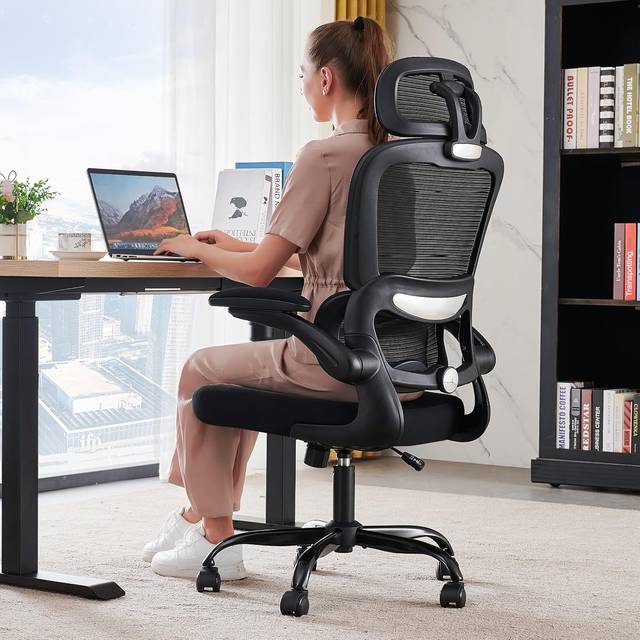
The TRALT is the chair I recommend for people who need adjustable lumbar that actually works. The lumbar adjusts in place, not just up and down, and that's the difference between support and a lump. The 5'3" woman who's 7 months in and still happy is the proof. She knows her feet are going to dangle, and she's fine with it because the back support is right.
Assembly took her 45 minutes, and she called the instructions "technical writing genius." That's the highest compliment a chair can earn. The parts are labeled, and when something's missing, the replacement service is fast. That's a company that knows shipping damages happen and plans for it.
The seat cushion is adequate, not plush. Multiple buyers mention it could be thicker, and the recline only locks upright. That's not a dealbreaker, but it's real. If you're over 200 pounds, you might want to look at the Marsail instead.
Marsail Ergonomic Office Chair
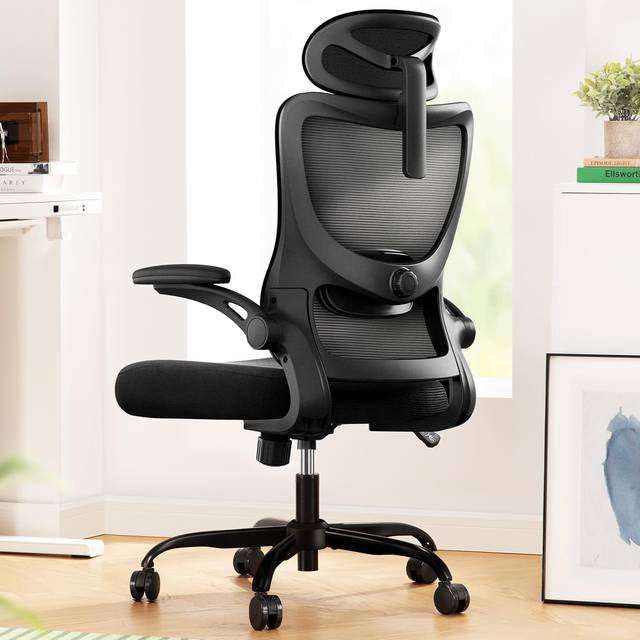
The Marsail at ~$99.99 is the proof that you don't need to spend a fortune. A 6'2", 275-pound guy reviewed it after sitting in it 8 to 9 hours a day, five days a week, and the cushion didn't flatten. That's the real test, not the marketing copy.
The seat is roomy, the lumbar adjusts in place, and the flip-up armrests are non-negotiable for anyone who plays guitar, does art, or needs to slide the chair under a desk.
Assembly is 7 steps with labeled parts and included gloves. That's a company that respects your time. The plastic frame feels sturdy to me, and to a 280-pound reviewer who's been using it daily for months. But I get the hesitation. I'd want to see it hold up over a couple of years. The jury is out, and that's the honest answer.
The seat cushion could be thicker. The armrests are basic. But at ~$118, those are tradeoffs I'm willing to accept, and so are the reviewers who've lived with it for months.
Hayelf Office Chair
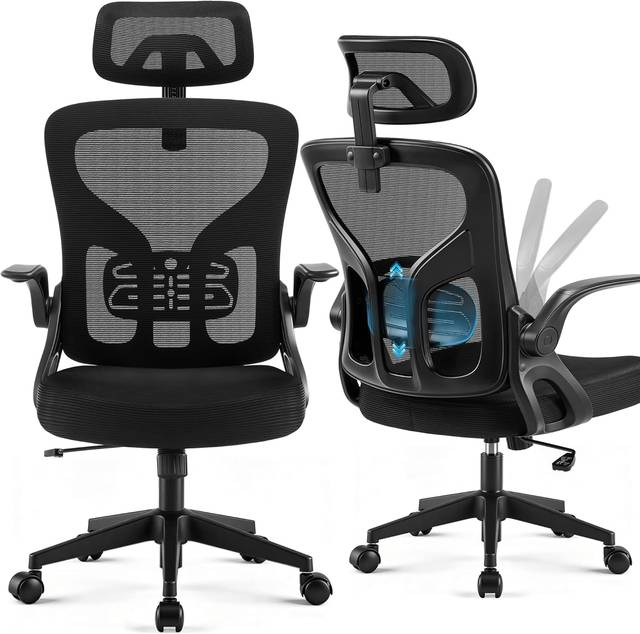
The Hayelf is the newest in my rotation, and it's the one I'm testing for a client who's 6'4" and needs a chair that actually supports his neck. The high-back mesh design with adjustable headrest has been in my rotation for a week, and I'm curious whether the headrest holds up for the 8+ hours a day the reviewer mentioned.
The headrest is the differentiator here. Most chairs in this price range either skip the headrest entirely or make it a fixed bump that hits you in the wrong spot. The Hayelf's headrest adjusts, which matters for taller sitters. The mesh back breathes, which matters for anyone in a warm climate.
The jury is out on long-term durability. I've only had it for a week, and the reviews are too new to show failure patterns. But the initial build quality is solid, and the assembly instructions are clear. If you're tall and need head support, this is the one to watch.
Compared To
The TRALT and the Marsail both work for the 5'3" to 6'2" range, but they serve different bodies. The Marsail's seat is roomier and the cushion is thicker, which is why the 275-pound guy is still happy at 10 months.
The TRALT's lumbar is more adjustable, which is why the 5'3" woman is still happy at 7 months. The Hayelf is for the tall sitter who needs head support, and it's the only one of the three that has it.
The used Herman Miller market is full of people asking ~$800+ for chairs with questionable foam and mystery stains. Buy new, buy cheap, buy smart. The reviews back this up over and over.
Should You Buy One?
If you're a heavier sitter who needs a roomy seat and a cushion that won't flatten, get the Marsail. If you're shorter and need lumbar that actually adjusts in place, get the TRALT. If you're tall and need head support, get the Hayelf. All three are under ~$200, and all three will fix the posture mistakes that are wrecking your back in your current garbage chair.
I'm currently testing the Hayelf for my 6'4" client, and I'll update this when I've got a full work week of sensor pad data. The jury is still out on the headrest's long-term durability, but the first week is promising.