Related: How to Set Seat Depth So Your Knees Stop Hurting
Most people shopping for ergonomic office chairs ask me the same question: which one is best? I have been a physical therapist for 16 years and an ergonomics consultant for eight of them, and I can tell you the best chair does not exist. There is only the chair that matches your body and the way you actually sit.
I have measured more spines than most orthopedists. I test every chair the same way: a full work week, a lumbar pressure check with a real sensor pad, and a nine-hour marathon day with no standing breaks. I keep a notebook of which chairs my clients stop complaining about, and that notebook is more honest than any spec sheet.
This guide covers four chairs that land in the same search results and get treated as if they were interchangeable. They are not. One is a standard mesh task chair, one is built for big and tall frames, one is a drafting chair meant to pair with a standing desk, and one is a gaming chair with a footrest. Matching the wrong one to your body is how you end up in my office.
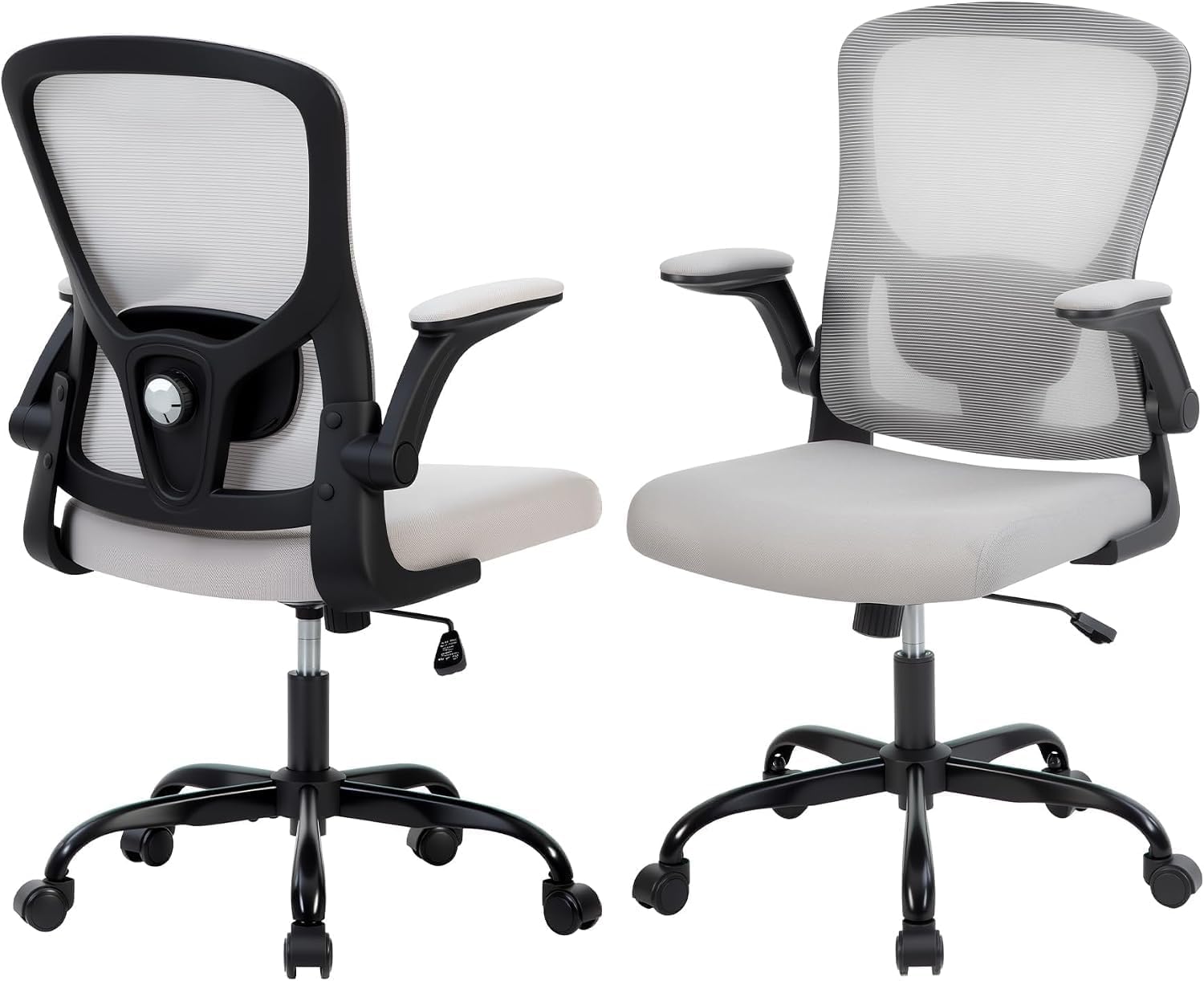
Best Overall: Garvee Ergonomic Mesh Office Chair
If you want the most conventional of the four, this is it: a mesh back office chair with lumbar support and a home office footprint that slides under most desks. Mesh is the right call for a lot of people, and I will say the unpopular part out loud. Mesh is not automatically breathable. Cheap mesh sags in year two and then it is a hammock for your tailbone. The question with any mesh chair is tension, not the word mesh on the listing.
What I would check first: does the lumbar support adjust in place, or does it just slide up and down the back frame? A pad that only slides is the one that ends up in the wrong spot by 2 PM on a Tuesday. Second, seat depth. Too long and the front edge hits the back of your knees, which pushes you forward and dumps your weight onto your tailbone. Too short and your thighs dangle.
Third, armrests. Armrests are not optional. Floating elbows are how you get the shoulder pain I treat every single week. If the armrests wobble when you press down on them, they will be useless inside a month.
At this price the parts that fail first are the gas lift and the mesh tension, so keep the packaging and know your return window before you commit to a five-year relationship.
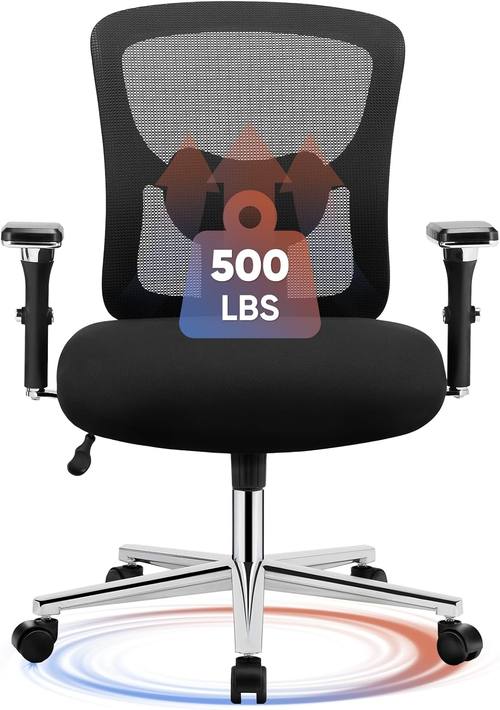
Best for Big and Tall: DUMOS Big and Tall Office Desk Chair
The heavy duty rating is the entire point of this one. A chair rated for 500 pounds is not just a stronger seat. It usually means a heavier gas cylinder, a wider base, and a frame that does not flex when you shift your weight. If you are over roughly 6 feet or 230 pounds, most standard task chairs start arguing with you by hour three.
Mesh makes sense here because it does not hold heat the way foam and bonded leather do, and a wide seat pan can otherwise trap a lot of it. Two things to check before you buy. First, seat depth. A wide chair is often a deep chair, and a deep seat hits the back of your knees and forces you to slide forward, which flattens your lumbar curve. Second, the top of the height range. Tall sitters need the seat high enough that the thighs are level or sloping slightly down with the feet flat. If the cylinder tops out too low, no lumbar pad will save your lower back.
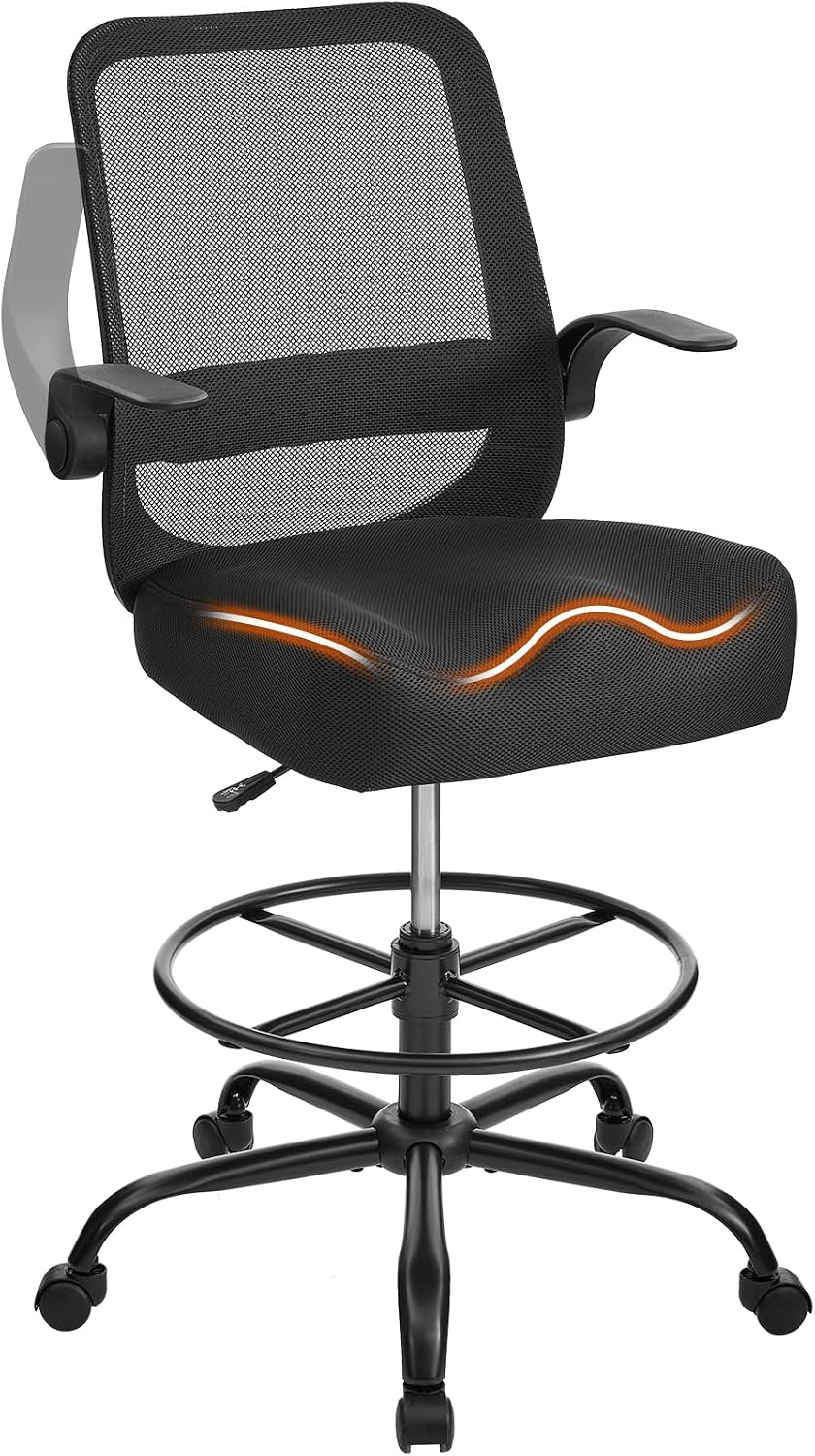
Best for Standing Desks: Drafting Chair for Standing Desks
A drafting chair is the most misunderstood chair in this group. It is not a taller office chair for the sake of being taller. It is a perch, and paired with a standing desk it lets you alternate between standing, perching, and sitting without moving furniture or dropping the desk 20 inches.
The foot ring is the feature that matters most and the one people ignore. When you sit high, your feet dangle, and a dangling foot pulls the pelvis forward and flattens the lumbar curve. That is the exact posture I spend my week correcting. A foot ring gives your feet somewhere to land so the lower back can stay neutral.
Flip-up armrests are genuinely useful if you move between typing and drawing or writing by hand, because you can pull closer to the desk when you need to. The thick curved seat is comfortable for a perch. Just be honest about the limits: perch sitting is not all-day sitting, and two hours at a stretch is where most people should rotate back to standing or to a task chair.
Best for Legs-Up Work: N-GEN GAMING Gaming Chair
I make fun of gaming ergonomic marketing, and I still review gaming chairs, because a lot of people own them and a lot of people sit in them for eight hours. This one is a high-back chair with lumbar support and a footrest in carbon black.
Gaming chairs are built around a reclined position. The high back and the footrest make sense when you are leaned back on a call, reading, or taking a break with your legs up. What that geometry does not do well is hold you upright for a full day of keyboard work. The side bolsters fight your shoulders when you sit up straight, and that is how you end up with your arms pushed forward and your upper back rounded.
If you want a gaming chair for work, use the footrest for breaks, not as your default posture. Sit up, set the seat height so your feet are flat, and check that the lumbar cushion lands in your lower back instead of across your mid-back. That cushion placement is the difference between a chair that helps and a chair that just looks supportive.
How I test a chair
Three full work days is my minimum before I form an opinion, and I do not call a chair reviewed until it has survived a nine-hour day with no standing breaks. That is the day the truth comes out.
I use a pressure map pad to see where weight actually lands. The only honest test is whether the seat and back spread load across your sit bones and your whole back instead of concentrating it under your tailbone or in one spot near your shoulder blades.
Then the small tests, which are the ones that predict whether you will still like the chair in year two.
Does the lumbar support stay where I put it after a full afternoon, or does it creep? Do the armrests hold position when I lean on them? Does the gas lift hold height, or does it sink through the afternoon? Does the mesh recover its tension when I stand up, or does it stay stretched?
Finally, the notebook. I track which chairs my clients stop complaining about after a month. A chair that looks unremarkable on a spec sheet and disappears from complaints is a better chair than one that wins a feature comparison.
What the listings leave out
Four things decide whether a chair works for you, and none of them are in the bullet points.
Seat depth. Measure from the back of your knee to the back of your butt, then subtract two or three inches. That is roughly the seat depth you want. Most listings do not publish seat depth at all.
Lumbar adjustment. Adjustable in place is worth more than a thick pad. A pad that slides on a rail is a start. A support that moves in and out is what actually changes the curve.
Armrest height and wobble. Height-adjustable armrests that hold position are the most underrated feature on an office chair.
Tilt tension. Loose tilt means slouching, locked tilt means stiffness. You want a tension you can adjust through the day so leaning back does not feel like falling.
A chair is a five-year purchase. The chair that dies in 18 months was never cheap, and a chair that fits you badly is expensive no matter what it cost.
The chair reference table
This is how I sort these four when a client asks. Match the row to your body and your desk before you look at anything else.
| Chair | Best for | Key details | Price |
|---|---|---|---|
 Visit on Amazon → Garvee Ergonomic Mesh Office Chair |
Standard desk work, first ergonomic chair | Mesh back, lumbar support, home office footprint | $95.99 |
 Visit on Amazon → DUMOS Big and Tall Office Desk Chair |
Big and tall frames, heavier sitters | 500 lbs heavy duty rating, mesh back, wider build | $159.99 |
 Visit on Amazon → Drafting Chair for Standing Desks |
Standing desks, perch work, drafting tables | Adjustable height, foot ring, flip-up armrests, thick curved seat | Visit on Amazon → |
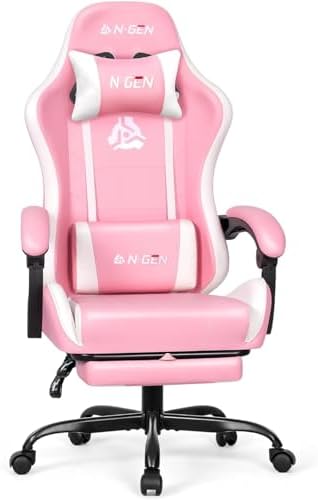 Visit on Amazon → N-GEN GAMING Gaming Chair |
Reclined sitting, legs-up breaks | High back, lumbar support, footrest, carbon black finish | Visit on Amazon → |
Should you buy the Garvee mesh chair?
Yes, if you want a conventional ergonomic office chair with a mesh back and lumbar support and you are roughly average height. Check the lumbar adjustment first, measure the seat depth against your own leg measurement, and keep the box until you have spent a full week in it. The mesh tension is the part to watch in year two.
Should you buy the DUMOS big and tall chair?
Yes, if your current chair flexes, sinks, or feels narrow under you. The heavy duty rating and the wider build are the reasons to pick it over the other three. Confirm the seat depth and the top of the height range before you commit, because those are the two things that decide whether a big and tall chair actually fits you.
Should you buy the drafting chair?
Yes, if you own a standing desk and want to alternate between standing and perching. No, if you plan to sit eight hours a day, because a perch is not a task chair. The foot ring is non-negotiable, and flip-up armrests make the perch far more usable for drawing and handwriting.
Should you buy the N-GEN gaming chair?
Only if you actually want to recline. The footrest and the high back are real selling points, and they hold up for breaks and long calls. If you sit upright at a keyboard all day, one of the mesh chairs here will treat your shoulders better. No chair is one size fits all, and this one is the clearest example of that.
Tell me your height, your pain, and your budget. Everything else is marketing.