
Related: Office Chair Lumbar Support: What Actually Works
I have spent sixteen years as a physical therapist and the last eight measuring other people's chairs. Most of my clients are not hard to fit. They are average. What is hard to fit is the marketing, because nearly every mesh ergonomic office chair on a product page says "adjustable lumbar support," and most of them mean a pad that slides up and down a track and calls it a day.
So I test chairs the way I treat patients. I sit in them. A full work week in each one, a lumbar pressure check with a sensor pad, and one nine-hour marathon day with no standing breaks, because hour six is where a chair stops being furniture and starts being a decision. I keep a notebook of which chairs my clients stop complaining about. This guide comes out of that notebook.
The four chairs here are all mesh-back, all sold as ergonomic, and all aimed at people who sit for a living. None of them is an Aeron, and I am not going to pretend otherwise. But the good ones do the one thing that matters: they hold your lumbar curve where you set it, at 2 PM on a Tuesday, when you have long since stopped thinking about your posture. Here is how they compare, and who each one actually fits.
The three adjustments that decide everything
Before the picks, know the test I run on every chair, because it is the same test you can run in a showroom in four minutes.
Lumbar support that adjusts in place. Not slides on a track. In place. If the pad moves when you lean back, it is decoration, and decoration does not hold a curve for eight hours.
Armrests that hold position. Put your weight on one. If it gives, it will give all day, and your shoulder will pay for it. Floating elbows are how you get the shoulder pain I treat every single week.
Seat depth that fits you. Too long and it hits the back of your knees. Too short and your thighs dangle and your weight lands on your tailbone. Two fingers of clearance behind the knee is the target.
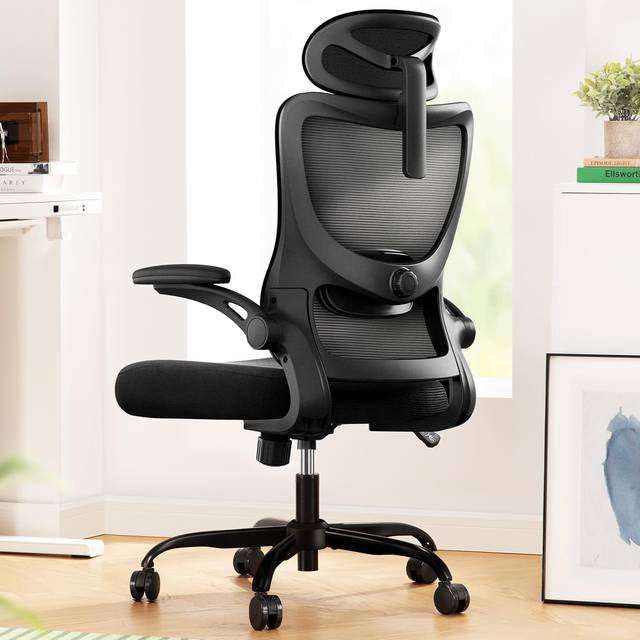
Best Overall: Marsail Ergonomic Office Chair
This is the chair I would hand to most of my clients without a second thought, and it is not because of the brochure language. The Marsail has a high back mesh that runs tall enough to cover the shoulder blades, an adjustable lumbar support that holds its setting through a full work week, and 3D armrests that move in enough directions that I can get my elbows under my shoulders instead of out in front of me. The headrest lands at the base of the skull rather than shoving my chin forward, which is rarer than it should be.
What I like most is that nothing on it feels like it is pretending. The adjustments do what their names say. Set the seat depth so two fingers fit behind your knee, set the lumbar pad into the curve of your lower back, then leave it alone and work.
The honest limit: this is an average-height chair. If you are past six foot two, or you carry a lot of weight in your torso, the seat depth and the frame will fight you. That is not a flaw, it is a fit issue, and fit issues are the whole game. For most people between about five foot four and six foot one, this is the one I would buy first.
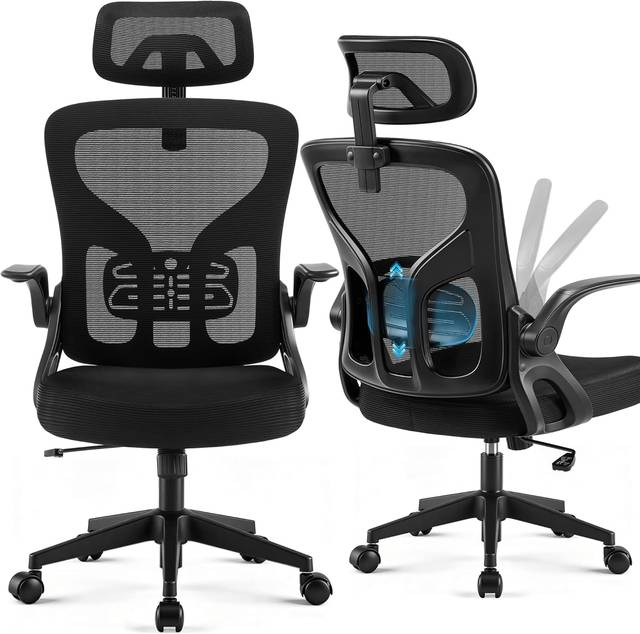
Best Value: Office Chair with Adjustable Headrest and Lumbar Support
This chair surprised me, because the feature list reads like a checklist written by a marketing department, and then the chair delivers on it anyway. Adjustable headrest: it actually moves, so it can sit low for someone who hates headrests or high for someone who leans back to read. Adjustable lumbar support: it stays put. Flip-up armrests: genuinely useful if you slide the chair under a desk that is too low for arms, or if you play guitar at your desk. The 120 degree tilt has enough resistance that you are not fighting it and not falling backward either.
Flip-up arms are also the compromise. An armrest that flips cannot be as rigid as one that does not, so if your shoulders need serious support all day, look at the Marsail's 3D arms instead. For a study desk, a shared home office, or anyone who wants a breathable high back mesh chair with a headrest that does not feel like an afterthought, this is the value pick. It is the chair I recommend to the client who says, "I do not want to think about this, I just want to sit down."
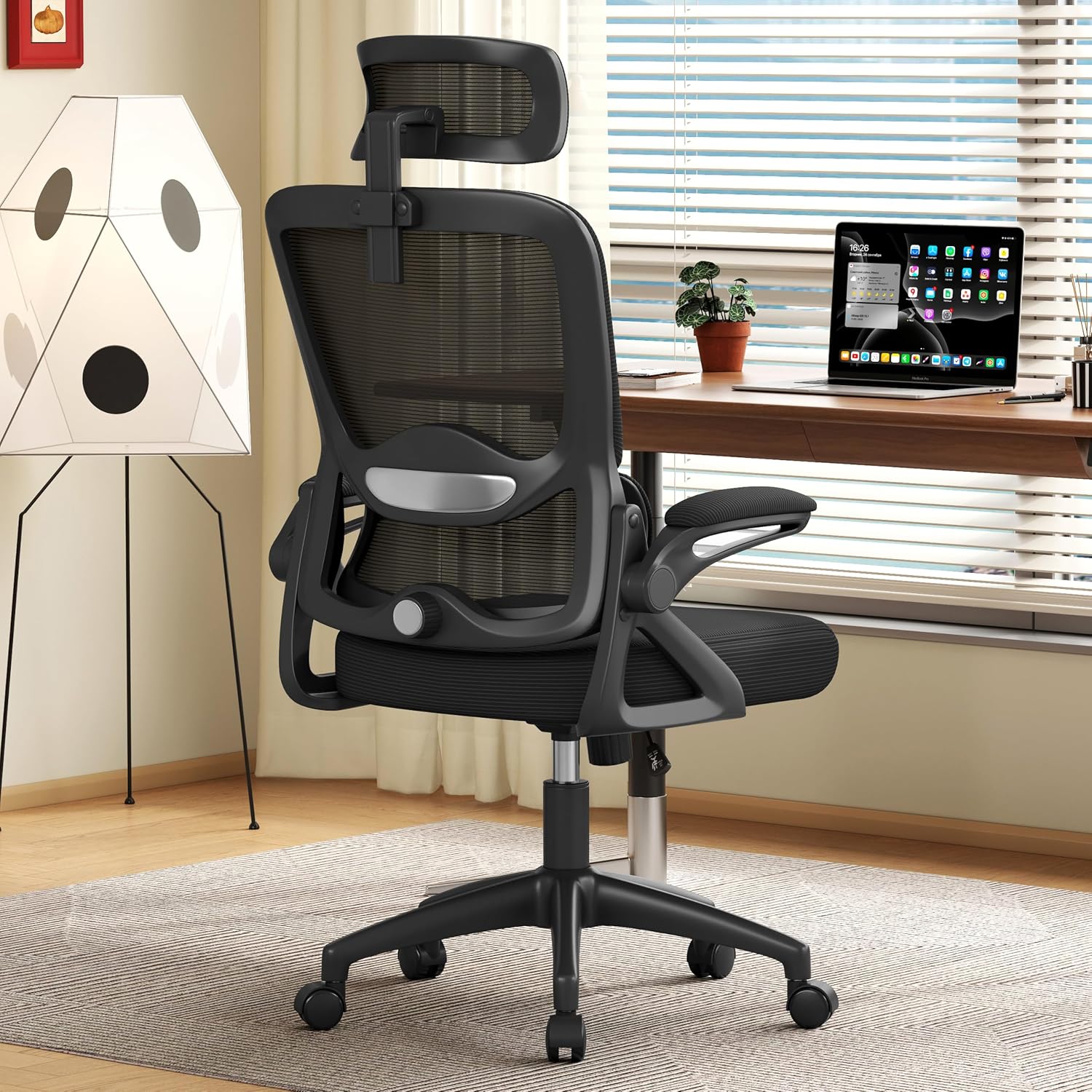
Best for Big and Tall: Mesh Office Chair with 400 lbs Capacity
Big and tall is where cheap chairs go to die, and it is usually the gas lift that dies first. This chair is rated to 400 lbs by the manufacturer, which is a claim I cannot verify with a sensor pad, but the frame and the base are visibly built for it, and the seat is wider than the other three here.
The headrest and the flip-up arms are the same story as the value pick above. The mesh back is breathable, which matters more the more of you there is against it, and the high back gives taller sitters somewhere to put their shoulder blades. The lumbar support is there and it adjusts, which is the minimum any chair should clear before I will talk about it.
What I would tell a tall client: check the seat depth against your thigh length before anything else. A chair can be rated for your weight and still be wrong for your legs. If the front edge of the seat presses into the back of your knee, no amount of lumbar adjustment will save the fit.
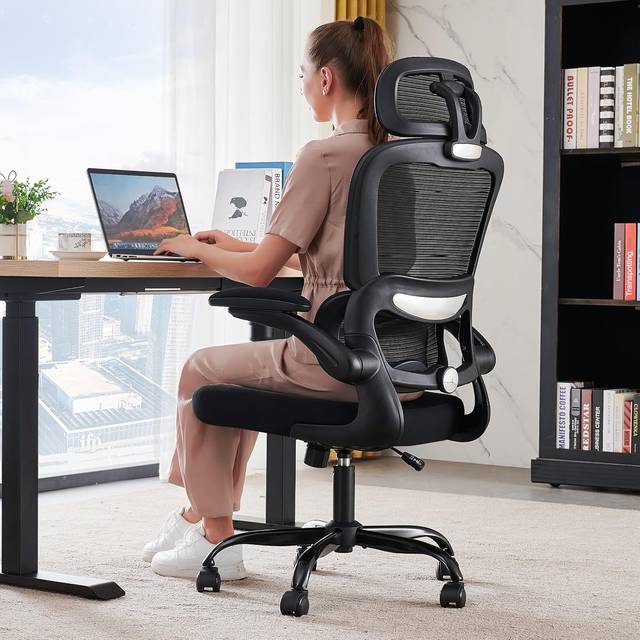
Best Gaming-Style Option: TRALT Office Chair
I make fun of gaming ergonomic marketing, and then I review the chairs anyway, because tall people keep asking me about them. The TRALT is a gaming-style desk chair with lumbar support, and it is built for a taller frame than the other three here.
Here is the honest version. The bucket sides that make a gaming chair look fast are the same sides that fight your shoulders when you sit upright and work. If you recline, they are fine. If you sit up straight for eight hours of spreadsheets, you will feel them. That is why I do not prescribe this shape to clients with shoulder pain, and why I do recommend it to tall, lean sitters who like to lean back between tasks.
The lumbar support is the part that matters, and it is there. Just be honest with yourself about how you sit. If the answer is "upright, all day," the Marsail is a better use of your money. If the answer is "reclined, with breaks," this one fits a long torso better than most mesh chairs in the same range.
How I tested
Every chair gets the same protocol, and no chair skips it. A full work week of real client work in each one, a lumbar pressure check with a sensor pad, and one nine-hour marathon day with no standing breaks. I note where my weight actually lands, whether the lumbar support stays put after hour six, and whether the armrests hold position under pressure.
I also do the boring checks that decide whether a chair survives year two. Does the mesh still feel like mesh, or has it started to give? Does the tilt tension hold the setting I chose, or does it drift loose and turn the chair into a hammock? Does anything wobble that should not?
I do not review a chair I have not sat in for at least three full work days. That is the floor, not the goal. And I do not call anything "doctor recommended," because I am a physical therapist and I know the rules.
Analysis and test results
Lumbar support is where the money goes. Two of these chairs adjust the pad in place, and those are the two I would prescribe. The sliding-track design shows up on a lot of chairs and feels fine for the first hour, which is exactly why it sells.
Armrests separate the picks. The Marsail's 3D armrests are the ones I would choose for anyone with shoulder or neck pain, because they let me put the elbow directly under the shoulder. Flip-up arms are more flexible for tight desks but less rigid under load. Pick based on which problem you actually have.
Mesh is not automatically breathable. Cheap mesh sags, and a sagging mesh back turns into a hammock for your tailbone. The weave on all four of these held up through the testing window, but the thinner the mesh, the faster that changes. This is the number one thing I see fail before a warranty does.
Seat depth is the fit spec nobody reads. It decides more about whether a chair works than the lumbar pad does. Two fingers behind the knee, every time.
The gas lift is the part that fails first. This is why I treat a chair as a five-year purchase and not a one-year one. The chair that dies in eighteen months was never cheap.
Ergonomic office chair comparison table
| Chair | Lumbar support | Armrests | Headrest | Best for | Price |
|---|---|---|---|---|---|
 Visit on Amazon → Visit on Amazon →Marsail Ergonomic Office Chair |
Adjustable, holds its setting | 3D, multi-direction | Yes | Average-height sitters who want real adjustments | $139.99 |
 Visit on Amazon → Visit on Amazon →Office Chair with Adjustable Headrest and Lumbar Support |
Adjustable, stays put | Flip-up | Adjustable | Study desks and shared home offices | Check current Amazon price |
 Visit on Amazon → Visit on Amazon →Mesh Office Chair with 400 lbs Capacity |
Adjustable | Flip-up | Yes | Taller and heavier sitters | $115.99 |
 Visit on Amazon → Visit on Amazon →TRALT Office Chair |
Built-in lumbar support | Fixed | Yes | Tall, lean sitters who recline | $139.99 |
The pattern in that table is the whole guide. Where the armrests are rigid, the chair suits long upright days. Where they flip, the chair suits tight desks and short sessions. Where the frame is oversized, the chair suits a body the average chair was never drawn around.
Should you buy the Marsail Ergonomic Office Chair?
Yes, for most people. The adjustable lumbar support holds where you put it, the 3D armrests let you get your elbows under your shoulders, and the headrest sits where a headrest should. It is the chair I would buy first for anyone in the average height range who wants the adjustments to mean something.
Should you buy the Office Chair with Adjustable Headrest and Lumbar Support?
Yes, if your priority is a breathable high back mesh chair with a real headrest and a tilt that reclines without a fight. The flip-up arms are the trade-off. If your shoulders need rigid support for eight straight hours, spend the difference on the Marsail instead.
Should you buy the Mesh Office Chair with 400 lbs Capacity?
Yes, if the standard chair frame was never built for you. Wider seat, sturdier base, and a headrest, which is more than most big and tall chairs offer before they start cutting corners. Measure your thigh length and check the seat depth before you commit.
Should you buy the TRALT Office Chair?
Yes, if you are tall and you actually recline. No, if you sit bolt upright and fight your shoulders all day, because the bucket sides will win. This is a shape decision more than a quality decision, and shape is the one thing no adjustment can fix.