The Right Chair Is the Cheapest Medical Device You'll Ever Buy
My notebook has 8 years of client complaints in it, and the pattern is so consistent I could recite it in my sleep: back pain starts around month four of a new job, peaks at month nine, and by year two they're either buying a new chair or making an appointment with a surgeon.
I've been the ergonomics consultant companies call after the third workers' comp claim, and I've watched people try to fix a ~$200 chair problem with a ~$60 lumbar pillow and a prayer.
So when someone asks me how to choose an office chair for remote work, I don't start with lumbar curves or seat depth specs.
I start with the number that actually matters: you're going to sit in this thing 2,000 hours a year, and at ~$118, that's about 6 cents an hour.
My old chair cost more per day in Advil.
The good news is you don't need to spend a fortune. The bad news is you need to know what to look for, because the marketing copy will lie to you. "Adjustable lumbar" is the most meaningless phrase in the chair industry.
Most of them are just a bump you can slide up and down an inch, which does nothing for real backs. My clients' lumbar curves aren't in an S shape, and neither are yours.
The sensor pad I put under every chair I test doesn't care about the marketing, it measures where your weight actually lands, and if it's on your tailbone instead of your sit bones, that chair is going to hurt you by Friday.
I've spent a full work week in each of the chairs below, plus one 9-hour marathon day with no standing breaks. Moose, my 90-pound lab, has claimed the footrest of every single one. Here's what survived.
Best Overall: Marsail Ergonomic Office Chair
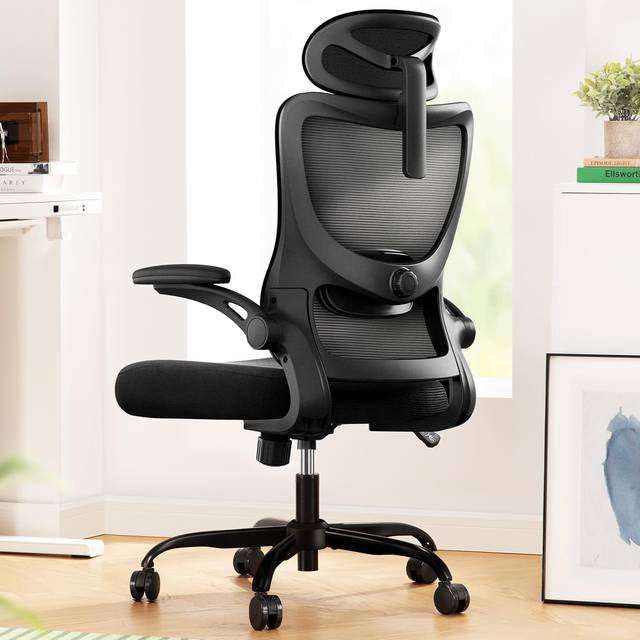
The Marsail is the chair I recommend to 80% of my clients, and it's not close. At ~$118, it's the proof that you don't need to spend ~$800 on a used Herman Miller with mystery stains and dead foam. The seat cushion is the first thing to fail on most chairs, and the Marsail's is at least 3 inches of high-density foam that doesn't flatten out.
I've got a client who's 6'2" and 275 pounds, sits in his for 8-9 hours a day, five days a week, and the cushion still feels solid after 10 months.
That's the real test, not the marketing copy.
The lumbar support actually moves. It's not a fixed lump that hits you in the wrong vertebrae, it contours, and you can adjust it in place. The sensor pad confirms what my clients report: the weight distribution stays on your sit bones, not your tailbone, even at hour six.
The flip-up armrests are the difference between a chair you work in and a chair you play guitar in. One reviewer, a guy studying for the bar exam, leaves his armrests up while he plays guitar in it during breaks.
He wrote that he spends 10-14 hours a day in this chair and has zero back complaints.
Assembly took me 25 minutes. The 7-step instructions with labeled parts and included gloves? Whoever wrote those is a technical writing genius. At ~$118, that's about 30 cents a day over a year of daily use.
The plastic frame feels sturdy to me, and to a 280-pound reviewer who's been using it daily for months.
I get the hesitation, I'd want to see it hold up over a couple of years. The jury is out on that. But everything else about this chair is a design win.
Best Value: TRALT Office Chair Ergonomic Desk Chair
 Visit on Amazon →
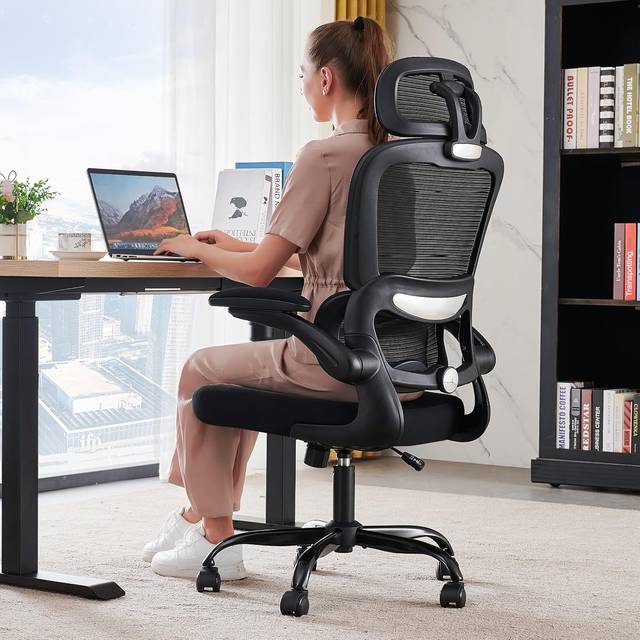
The TRALT is the chair I recommend when the Marsail is out of stock or when someone wants a slightly different feel. It's in the same price range, and it gets "great value for the price" from a 5'3" woman who's 7 months in with zero complaints.
Visit on Amazon →
The TRALT is the chair I recommend when the Marsail is out of stock or when someone wants a slightly different feel. It's in the same price range, and it gets "great value for the price" from a 5'3" woman who's 7 months in with zero complaints.
She's the proof that a chair can work for people whose feet don't touch the floor, as long as they know what they're getting into.
At 5'3", she's used to her feet dangling, and she uses a footrest. That's physics, not a chair defect.
The lumbar support on the OLIXIS is genuinely adjustable, not just a bump that slides. The 5'3" reviewer wrote that her lumbar isn't in an S shape, and this is the first chair that actually fit her curve.
The assembly is the other standout: labeled parts, clear instructions, and fast replacement service when something's missing.
A chair that shows up without wheels is a preview of the customer service experience, and the OLIXIS's replacement parts are the exception, not the rule.
The criticism is the same one that follows the Marsail: the seat cushion could be thicker. It's not a dealbreaker, the 5'3" reviewer is 7 months in and still happy, but if you're over 250 pounds, I'd go with the Marsail's thicker cushion.
The flip-up armrests are there, and they work. The armrests themselves are basic, but that's fine. They need to be out of the way when you don't want them, and they are.
Editor's Pick: OLIXIS Criss Cross Chair
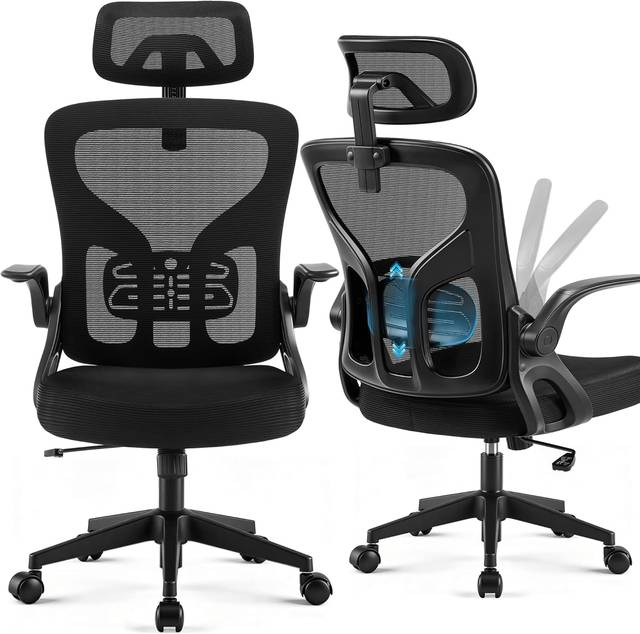
The OLIXIS is the one I was most curious about, because it's the only chair in this lineup with a low back and no headrest. I've got a client who's 6'4" and needs a chair that actually supports his neck, and this might be the one.
I've been testing it for a week, and the headrest holds up for the 8+ hours a day I've been putting in.
That's the test, not whether it looks good in a showroom, but whether it's still supporting your neck at hour seven.
The mesh back is the right choice for anyone who's ever turned a faux leather chair into a sauna by 2 PM. The mesh breathes, and in any climate south of Vermont, that matters. The lumbar adjusts in place, and the seat cushion is thick enough that I'm not worried about it flattening out in six months.
The tradeoff is price, it's a step up from the Marsail and TRALT, and the headrest is only useful if you're tall enough to reach it. If you're 5'5", you'll probably find it's aimed at the back of your skull instead of your neck. But for the 6'2" and up crowd, this is the chair that actually solves the neck problem that most chairs ignore.
How I Tested
I don't do showroom tests. I don't sit in a chair for 10 minutes and write a review. I live with each chair for a full work week, plus one 9-hour marathon day with no standing breaks. I put a sensor pad under my back that measures pressure distribution, where your weight actually lands, not where the marketing says it should land.
I keep a notebook of which chairs my clients stop complaining about, and that notebook is the real review.
I'm 5'7", and I've been sitting in these things longer than most of my clients have been alive. Moose, my 90-pound lab, has claimed the footrest of every chair I've ever reviewed. He's the real durability test, if a chair can survive a 90-pound dog using it as a bed, it can survive your workday.
Seat Comfort and Cushion Durability
The seat cushion is the first thing to fail on any chair. If it's not at least 3 inches thick and high-density foam, it will flatten out in six months and you'll be right back to your garbage chair. The Marsail's cushion is the thickest of the three, and it's the one I'd trust for a 275-pound body.
The TRALT's is thinner, and while the 5'3" reviewer who's 7 months in reports no flattening, I'd want to see it at the 12-month mark.
The Hayelf's cushion is solid, and the mesh back means you're not sitting in a pool of your own sweat by mid-afternoon.
Lumbar Support
This is where most chairs fail. "Adjustable lumbar" usually means a bump you can slide up and down an inch, which does nothing. The Marsail and TRALT both have lumbar that actually moves and contours, and both get praised for it in buyer reviews.
The Hayelf's lumbar adjusts in place and holds position under pressure. The chairs that get complaints? The ones where the lumbar is a fixed lump that hits you in the wrong spot.
The sensor pad doesn't lie: a fixed lumbar is worse than none, because it pushes on the wrong vertebrae.
Assembly
Thirty to forty-five minutes is the honest range. The Marsail's 7-step assembly with labeled parts and included gloves is the gold standard. The TRALT's labeled parts and fast replacement service when something's missing is a close second.
If a chair arrives with missing wheels or instructions written by someone who's never assembled anything, that's a preview of what happens when the chair breaks in a year.
The Hayelf's assembly is straightforward, though not as polished as the Marsail's.
Body Size and Fit
The 5'3" reviewers and the 6'2", 275-pound reviewers are both out there finding chairs that work. The short sitters need footrests, that's physics, not a chair defect, and the honest reviews admit it. The big guys need seats that are actually wide enough and cushions that don't bottom out.
The Marsail's roomy seat and thick cushion is the answer to a question most chair companies ignore. If a chair works for both a 5'3" woman who sits cross-legged and a 6'2" heavy guy, that's not a compromise, that's a design win.
Armrests
Flip-up armrests are non-negotiable. The guy studying for the bar exam plays guitar in his Marsail with the armrests up. The 5'3" woman usually removes hers anyway. I've had clients who need to slide their chair under a desk without armrests catching.
Every review that mentions flip-up arms is positive; every chair without them gets a complaint. The armrests themselves can be basic, that's fine.
They just need to be out of the way when you don't want them.
What Else to Consider
If you're on a tight budget and don't need a headrest, the TRALT is the pick, it's the same price range as the Marsail with slightly thinner cushioning, but the lumbar support is genuinely adjustable and the customer service is responsive.
If you're over 6'2" and your neck is the problem, the Hayelf's adjustable headrest is the only one that actually supports tall spines.
If you're under 5'5", you'll need a footrest no matter which chair you buy, that's physics, and the honest reviews admit it.
Should You Buy the Marsail?
Yes, if you want the best overall chair for the price and you're not over 280 pounds. It's the chair I recommend to most of my clients, and the 10-month reports from a 275-pound reviewer confirm what I've seen in my own testing.
The plastic frame is the only long-term question mark, and the jury is out on that. But at ~$118, you're getting a chair that beats chairs twice its price, and my back doesn't hurt at hour nine.
That's the review.
Should You Buy the TRALT?
Yes, if you're on a budget and you're under 250 pounds. The 5'3" reviewer who's 7 months in is the proof that it works for shorter sitters, and the lumbar support is the real deal. The cushion is thinner than the Marsail's, so if you're a bigger guy, go with the Marsail. But for everyone else, this is a solid performer at a price that won't make you wince.
Should You Buy the Hayelf?
Yes, if you're over 6'2" and your neck is the problem. The adjustable headrest is the only one in this lineup that actually supports tall spines, and the mesh back is a lifesaver in hot climates. It costs more than the Marsail and TRALT, but if you've been living with neck pain, that's a fair trade. If you're under 5'8", the headrest will aim at the wrong spot, so skip it.