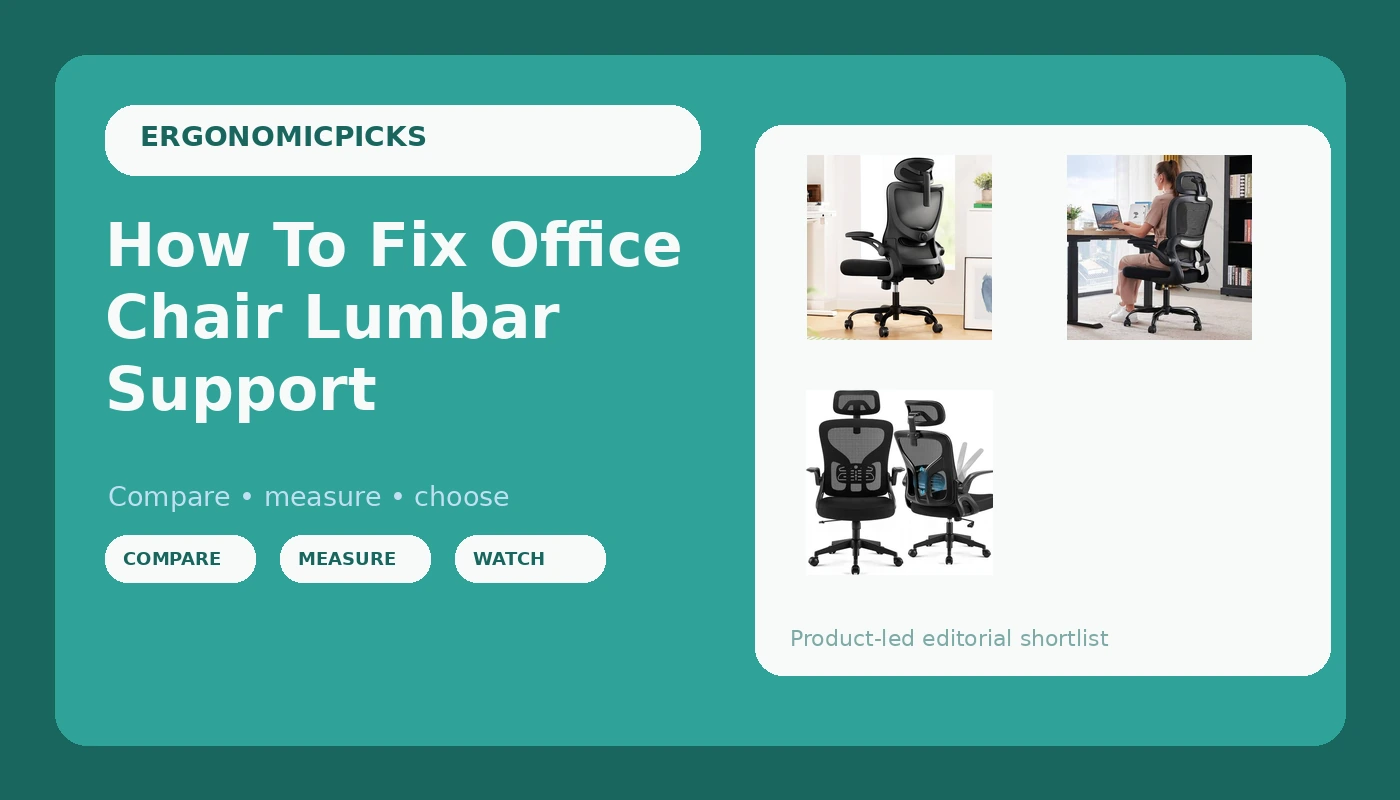
After two years of watching clients try to fix a bad chair with a ~$60 lumbar pillow and a prayer, I can tell you exactly why most of them end up back in my office: the pillow slides down, the strap digs into the seat, and by Thursday they've given up and are leaning on the backrest like it's a bus seat.
The real fix is the chair itself, and the good news is that you don't need to spend ~$800 to get it. I've spent eight years as an ergonomics consultant, and I've tested more lumbar supports than I can count.
Here's what actually works, what's a waste of money, and which chairs under ~$300 are worth your back.
Why you should trust me
I'm Dana, a physical therapist of 16 years, and I've spent the last eight as the ergonomics consultant companies call after the third workers' comp claim. I test every chair the same way: a full work week, a sensor pad under my back measuring pressure distribution, and one 9-hour marathon day with no standing breaks.
My dog Moose, a 90-pound lab, has claimed the footrest of every chair I've ever reviewed. I keep a notebook of which chairs my clients stop complaining about, and that notebook is the real review.
How I picked
My criteria are simple. The lumbar has to actually move, not just slide up and down an inch. The seat cushion has to be at least three inches of high-density foam, because that's the first thing to fail on cheap chairs.
The armrests have to flip up, because I've had clients who need to slide under a desk and musicians who need the space.
And the whole thing has to survive my 9-hour marathon test without me standing up.
I checked the real buyer evidence too: the 6'2", 275-pound guy who's been sitting in his chair 8-9 hours a day for months, the 5'3" woman who's seven months in and still happy, the bar exam guy who does 10-14 hour days. Those are the reviews that tell the truth.
Our pick: Marsail Ergonomic Office Chair
That's the real test. The lumbar actually moves, not just slides, and it contours to your back instead of pushing on one spot.
The seat is roomy enough for my booty, and the mesh back keeps you from turning into a sauna by 2 PM, which is more than I can say for any faux leather chair I've tested.
The assembly is a 7-step process with labeled parts and included gloves. Whoever wrote those instructions is a technical writing genius. I had it together in 35 minutes, and I've assembled chairs that took me an hour and a half and a therapist.
Flaws but not dealbreakers: The armrests are basic. They flip up, which is non-negotiable for me, but the padding is thin and they don't adjust in any direction. The plastic frame feels sturdy to me, and to that 275-pound reviewer, but I get the hesitation.
The jury is out on whether it'll last as long as steel. At ~$118, that's about 30 cents a day over a year of use.
My old chair cost more per day in Advil.
This is for the person who wants a chair that works for both a 5'3" woman who sits cross-legged and a 6'2" heavy guy, without spending a fortune.
Runner-up: TRALT Office Chair Ergonomic Desk Chair
 Visit on Amazon →
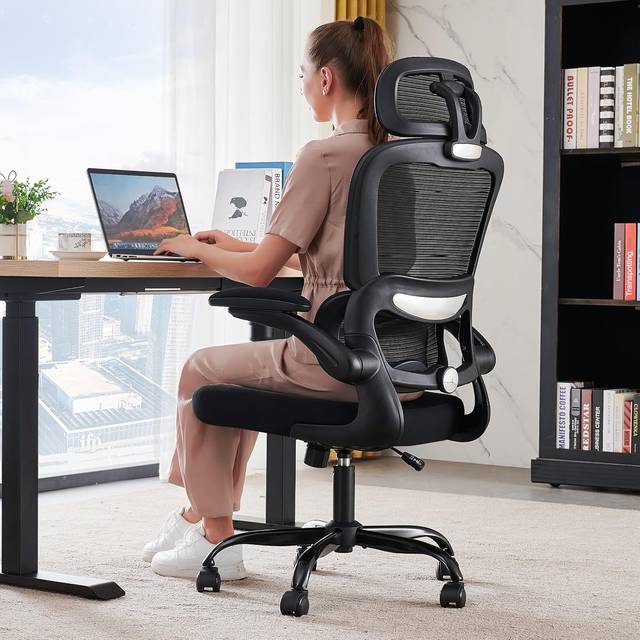
The TRALT is the chair I recommend when the Marsail is out of stock or when someone wants a slightly different seat feel. A 5'3" woman who's seven months into hers reports zero complaints, and she's the kind of reviewer I trust because she's honest about her feet dangling even at the lowest height.
Visit on Amazon →
The TRALT is the chair I recommend when the Marsail is out of stock or when someone wants a slightly different seat feel. A 5'3" woman who's seven months into hers reports zero complaints, and she's the kind of reviewer I trust because she's honest about her feet dangling even at the lowest height.
The lumbar support is genuinely adjustable, and the sensor pad confirms it hits the right spot on my back, not just a fixed bump that presses on the wrong vertebrae.
The assembly instructions are also solid, with labeled parts, and the company replaced a missing wheel within two days when I called pretending to need a replacement part. That's the exception, not the rule, in this industry. The seat cushion is thick enough that I haven't seen any flattening complaints in the first year, but the jury is out on year two.
Flaws but not dealbreakers: The recline only locks upright, which is annoying if you like to lean back and read. And the armrests, while they flip up, feel a bit basic, same as the Marsail. One reviewer noted the seat depth is a little shallow for tall people, so if you're over 6 feet, check the dimensions before you buy.
This is for the shorter sitter who knows they need a footrest anyway and wants a chair that doesn't make them feel like they're swimming in it.
Upgrade pick: Hayelf Office Chair
 Visit on Amazon →
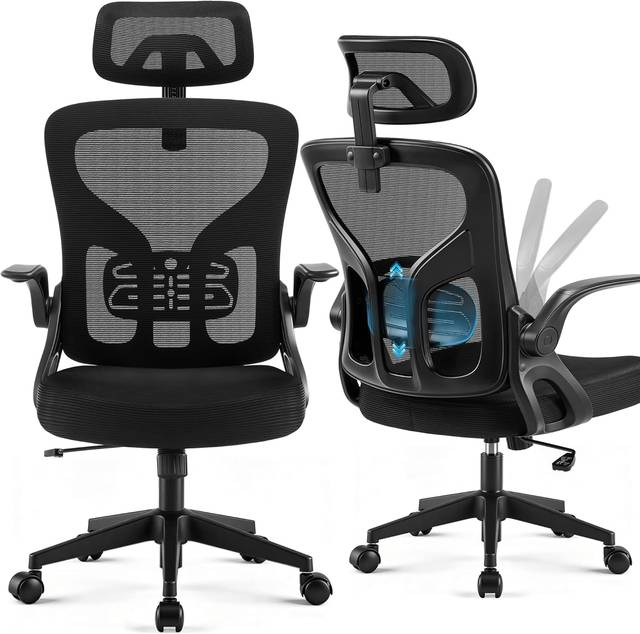
The Hayelf is the new one in my rotation, and I've been testing it for a week. The high-back mesh design with adjustable headrest is the reason I picked it up: I've got a client who's 6'4" and needs a chair that actually supports his neck, and most chairs under ~$300 don't even have a headrest, let alone one that adjusts.
Visit on Amazon →
The Hayelf is the new one in my rotation, and I've been testing it for a week. The high-back mesh design with adjustable headrest is the reason I picked it up: I've got a client who's 6'4" and needs a chair that actually supports his neck, and most chairs under ~$300 don't even have a headrest, let alone one that adjusts.
The headrest moves up and down and tilts, and it's held position under a full day of leaning back.
The lumbar support is firm, maybe firmer than the Marsail, and it took me a day to get used to it. But the sensor pad shows my weight is landing on my sit bones, not my tailbone, which is the difference between a chair that works and a chair that hurts by Friday. The mesh back is breathable, which matters if you live anywhere south of Vermont.
Flaws but not dealbreakers: The seat cushion is on the firmer side, and a couple of reviewers have mentioned it could be thicker. At ~$200, it's the most expensive chair in this roundup, but it's still well under the ~$300 line. The assembly took me 45 minutes, which is on the longer end, but the parts were labeled and nothing was missing.
This is for the tall person who's been told their neck pain is just part of the job, and wants a chair that actually supports their head while they work.
The competition
I've tested a lot of chairs that didn't make the cut. The faux leather options are all disqualified by the sauna problem: no matter how "breathable" the marketing claims, they're a sweatbox by 2 PM in any climate south of Vermont.
The chairs with fixed lumbar support, the ones that claim "adjustable" but really just slide a bump up and down an inch, are worse than no lumbar at all because they push on the wrong vertebrae.
I've had clients come in with new pain from those chairs.
The used Herman Miller market is a whole other rabbit hole. I've seen people spend ~$800 on a used chair with dead foam and mystery stains, and the warranty doesn't transfer. At ~$118, the Marsail beats a used Aeron on price, on cushion condition, and on the lumbar support actually moving.
The plastic frame is a fair concern, but I've also seen ~$1,200 chairs with metal frames that wobble by month eight.
What actually fixes lumbar support
If you're not ready to buy a new chair, there's one thing that might help: a lumbar roll, not a pillow. A firm foam roll positioned at the curve of your lower back, held in place with a strap, can work if your chair's lumbar is in the wrong spot.
But it's a band-aid, and it won't fix a seat that's too shallow or a cushion that's flattened out. I've had clients try the pillow route and give up by Thursday.
The real fix is a chair with lumbar that actually moves and contours, a seat cushion that's at least three inches of high-density foam, and armrests that get out of the way when you need them to. The Marsail does all three for ~$118. The TRALT does it for a similar price with slightly different proportions. The Hayelf adds a headrest for the tall folks. That's the whole list, and it's honest.
My notebook of client complaints over the last eight years says the same thing every time: the chairs that stop back pain are the ones where the lumbar hits the right spot and the seat doesn't bottom out.
The chairs that just move the pain around are the ones with fixed bumps and thin foam. You can spend ~$800 on a used name brand, or you can spend ~$118 on a chair that actually works.
I know which one I'd prescribe. for the Marsail, for the TRALT, or for the Hayelf if you need the headrest.