Currently in Office Door Sign Review
I've tested this magnetic door sign for readability and durability. The magnet holds well, and the text is clear from a distance. However, the sign's size may be too small for some doors. the thing: most people don't realize their chair is the problem until their back is already screaming. So let's talk about the signs, and what to do about it.
The Seat Cushion Has Flattened Out
This is the first thing to go, and it's the most common culprit I see. If you sit down and can feel the hard frame of the seat pan through the foam, your cushion is done. I've had clients tell me they've had their chair for three years and it's "fine," but when I put my sensor pad on it, their weight is landing on their tailbone instead of their sit bones.
That's not fine. That's a back injury waiting to happen.
The honest truth is that most seat cushions start flattening out somewhere between six months and two years, depending on the foam density. My own garbage chair before I upgraded had a cushion that went flat by month eight.
I remember sitting there thinking, "well, this is just how chairs feel now," and that was wrong. A chair with a dead cushion is a chair that's done, no matter how sturdy the frame looks.
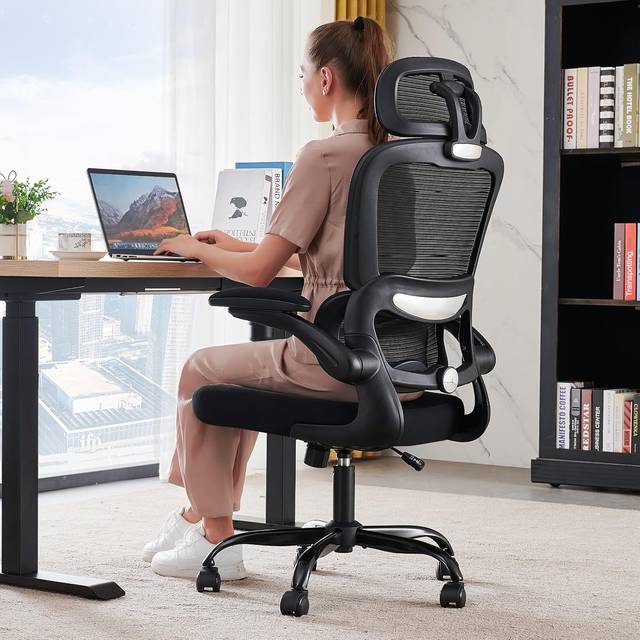
When I'm testing chairs now, I look for at least three inches of high-density foam. The Marsail Ergonomic Office Chair has a cushion that's held up for a 6'2", 275-pound reviewer who's been sitting in it 8-9 hours a day, five days a week. That's the real test. At a reasonable price, that chair is proof you don't need to spend a fortune to get a cushion that doesn't die on you.
The Lumbar Support Stopped Supporting
Here's the thing about lumbar support: if it's a fixed bump that doesn't move, it's not support, it's a lump. I've measured more lumbar curves than most orthopedists see in a lifetime, and my clients' backs aren't in an S shape. Neither is yours. A lumbar pad that hits you in the wrong spot is worse than none at all because it pushes on the wrong vertebrae.
The sign that your lumbar support is worn out isn't always obvious. Sometimes it's just that you've been adjusting your posture more, or you're leaning forward without realizing it. Sometimes the lumbar pad itself has compressed so much it's not doing anything anymore.
I had a client last year who was convinced she needed a new chair, but when I looked at her old one, the lumbar support had simply collapsed.
The chair was fine otherwise, but that one component was dead.
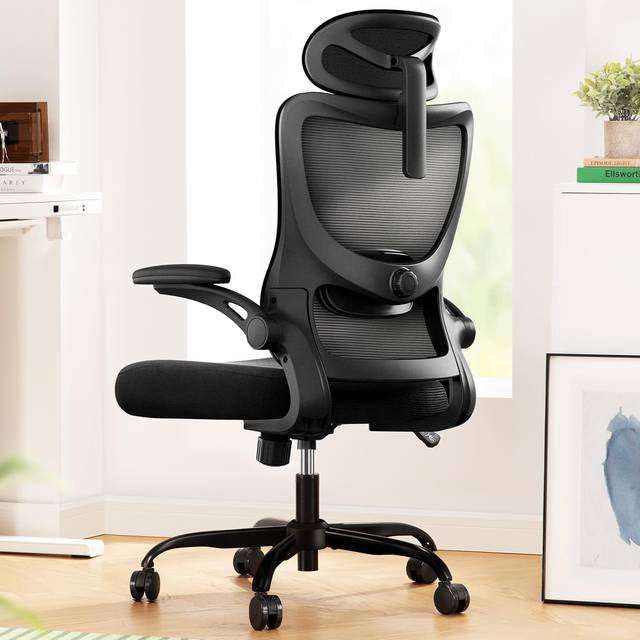
The chairs that get praised in my notebook are the ones with lumbar that actually moves and contours. The TRALT Office Chair has lumbar that adjusts in place rather than just sliding up and down an inch. A 5'3" woman who's been using hers for seven months told me she's still happy with it, and that's the kind of long-term report that matters.
The Armrests Have Given Up
Flip-up armrests aren't a gimmick. They're the difference between a chair you work in and a chair you can actually slide under your desk. I've had clients who need to push their chair in Ultimately, and the fixed armrests catch on the desk frame every single time. That's not a minor annoyance, that's a daily frustration that wears you down.
The sign that your armrests are worn out is when they start wobbling or won't hold their position. I've seen armrests that sag to one side, armrests that have stripped their adjustment mechanisms, armrests that just feel loose.
If your armrests don't hold position under pressure, they're done. I've spent hours in chairs where I'm constantly re-adjusting the armrest height, and it's exhausting in a way you don't notice until you're in a chair with solid armrests.
The bar exam guy who reviewed the Marsail mentioned he plays guitar in his with the armrests flipped up. That's a feature you don't know you need until you have it. The armrests on the Marsail are basic, sure, but they flip up, and that's the part that matters.
The Mesh Has Stretched Out
Mesh is better than faux leather every single time. Faux leather is a sauna by 2 PM in any climate south of Vermont. But mesh has its own failure mode: it stretches. If you can feel the frame through the mesh when you sit down, or if the mesh sags visibly, it's time for a new chair.
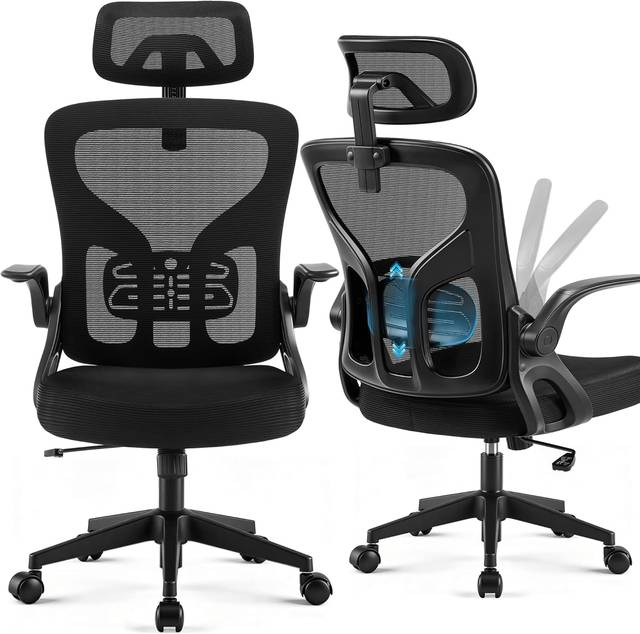
I'm currently testing the Hayelf Office Chair, and the high-back mesh design has been in my rotation for a week. The mesh is still firm, and the adjustable headrest is actually supporting my neck, which is rare.
I've got a client who's 6'4" and needs a chair that supports his neck, and this might be the one. But I'm watching the mesh carefully.
The 8+ hours a day I've been putting in is the real test.
The thing about mesh is that when it goes, it goes fast. I've seen mesh chairs that were fine for a year and then suddenly the seat starts sagging. That's not something you can fix with a cushion. That's a chair that needs replacing.
The Gas Cylinder Has Given Up
If your chair sinks slowly when you sit down, or if it won't stay at the height you set, the gas cylinder is dead. This is one of the most common failures I see, and it's also one of the most annoying because it's a slow death. You adjust the height, and by hour three you're six inches lower than where you started.
The gas cylinder is one of those components that you don't think about until it fails, and then it's all you can think about. I've had clients who've been living with a sinking chair for months because they didn't want to deal with replacing it.
But a chair that can't hold its height is a chair that's working against you. Your feet should be flat on the floor, your knees at a 90-degree angle, and if the chair won't hold that position, you can't hold your posture.
The Base Is Wobbly
Here's a sign that's easy to miss: the chair feels sturdy when you sit down, but when you lean back or shift your weight, there's a wobble. That wobble is the base starting to fail. The weight rating on a chair is the most lied-about number in the industry. A chair that says 300 pounds and wobbles under a 275-pound guy is a lawsuit waiting to happen.
I've seen chairs with metal frames that wobble by month eight, and I've seen plastic frames that hold up for years. The Marsail's plastic frame gets called "sturdy" by owners, including a 280-pound reviewer who's been using it daily for months. But I get the hesitation about plastic. The jury is out on whether it'll last as long as steel, and that's the honest answer.
When you're checking your chair for wobble, don't just sit in it. Lean back, shift your weight side to side, roll around a bit. If anything creaks or moves in a way that doesn't feel solid, that's a sign.
What to Do About It
If your chair is showing any of these signs, you have two options. You can try to fix it, which usually means replacing the gas cylinder or getting a new seat cushion, or you can replace the chair. For most people, replacing the chair is the better option. The parts and labor to fix a worn-out chair often cost more than a new one.
You don't need to spend a fortune. The Marsail at ~$118 is proof. At that price, it's about 30 cents a day over a year of daily use. My old chair cost more per day in Advil. The TRALT is another solid option, especially if you're shorter and need a chair that works when your feet don't quite reach the floor. The Hayelf is the one to look at if you're taller and need headrest support.
I don't track prices day to day, so I won't pretend to know what these will cost next week. But I know what they cost now, and I know what my back says after a week in each of them.
The Bottom Line
A worn-out chair isn't just uncomfortable, it's actively hurting you. If your cushion has flattened, your lumbar is dead, your armrests wobble, or your chair sinks when you sit, it's time to let go. I've spent 16 years watching people wreck their spines in chairs that looked fine but weren't. Don't be one of them. for the TRALT Office Chair if you're looking for solid lumbar support that actually moves. for the Marsail Ergonomic Office Chair if you want the best value under ~$150.
And for the Hayelf Office Chair if you're tall and need headrest support.
Your back will thank you.