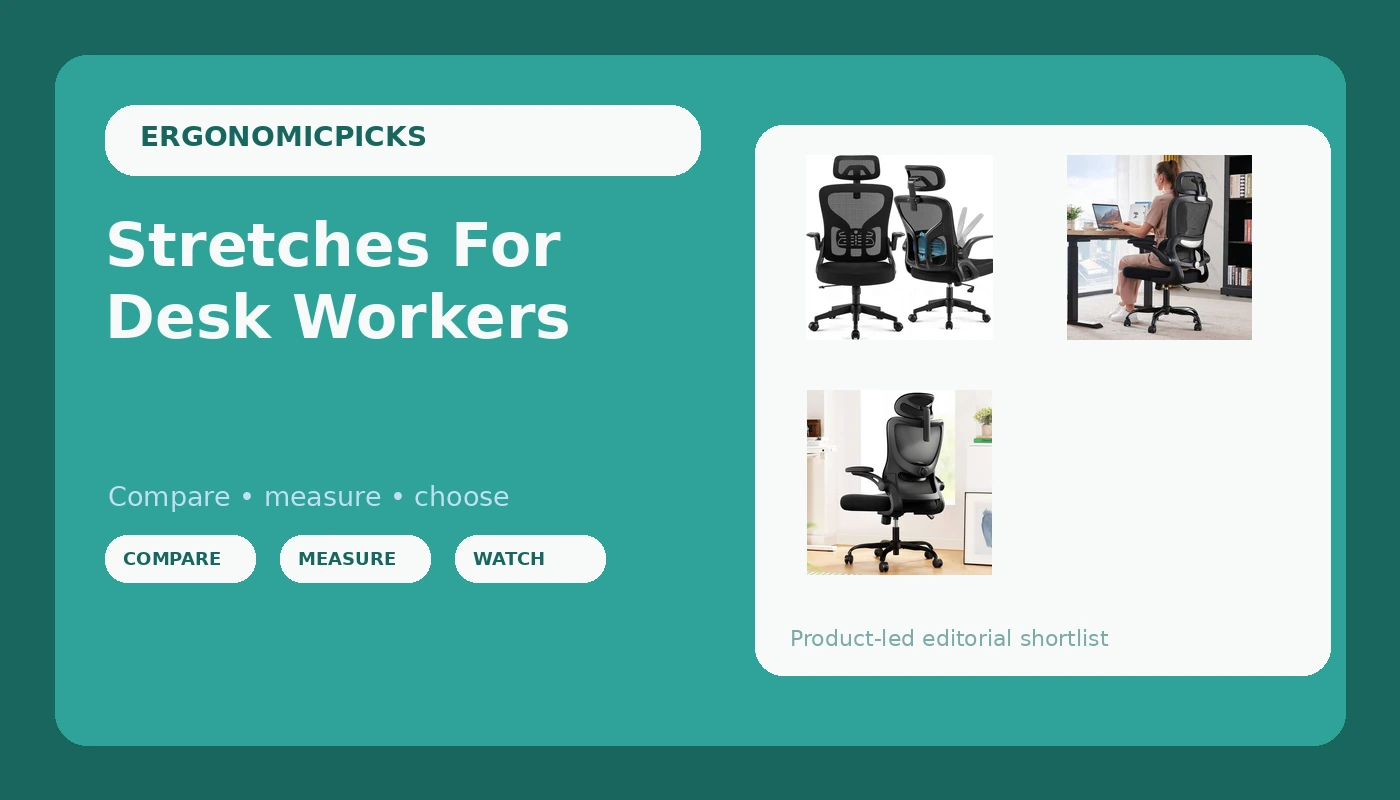
Well, you clicked on this because you sit in a chair for a living and your back has started filing complaints. I’m Dana, and I’ve been a physical therapist for 16 years, plus I’m the ergonomics consultant who gets called in after the cheap chairs start racking up workers’ comp claims.
I’ve spent the last eight years testing chairs in my own office, and I’ve got a 90-pound lab named Moose who claims the footrest of every single one.
The thing is, no chair is going to save you if your body is locked in a Z-shape for nine hours. I can recommend the perfect lumbar support, but if you never stand up, you’re still going to hurt. I’ve been testing the Hayelf chair for a week now, and while I’m still forming my verdict on the headrest, it got me thinking about the stretches that actually matter when you’re living in these things.
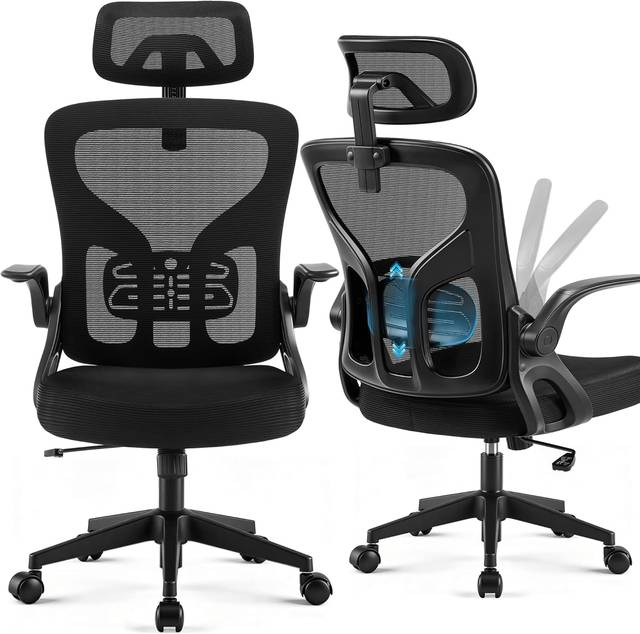
Let’s be real. The marketing for ergonomic chairs makes you think you’ll sit like a yoga instructor in a corporate video. The reality is that you’re going to slouch, you’re going to lean, and you’re going to hunch over your keyboard. These stretches are for that reality.
The Doorway Stretch (Chest and Shoulders)
This is the one I prescribe more than any other. After hours of reaching forward to your keyboard, your chest muscles shorten and your shoulders round forward. It’s the classic desk-worker posture, and it’s the root of most of the upper back pain I treat.
Find a doorway. Put your forearm on the frame, elbow at a 90-degree angle, and step through gently. You should feel a stretch across your chest, not your shoulder joint. Hold for 30 seconds, twice per side. I do this every time I get up to refill my water, which is roughly every hour. It’s the single best return on investment for a desk worker.
Seated Spinal Twist
You don’t even have to stand up for this one. Sit sideways in your chair, or just twist your torso toward the backrest. Grab the back of the chair for use and gently rotate your spine. I’m a big fan of this because it’s subtle enough to do during a conference call without anyone noticing you’re not paying attention.
The key is to breathe into the stretch and not force it. You’re looking for a gentle release in your lower back, not a dramatic crack. Hold for 20 seconds per side. If you’re doing this on the TRALT I’ve got at home, the lumbar support actually gives you something to push against, which makes the stretch more effective.
Chin Tucks for the Tech Neck
I see this constantly. Someone’s head drifts forward until their ears are in front of their shoulders. That’s an extra 10 to 15 pounds of pressure on your cervical spine. Chin tucks are the antidote.
Sit up straight, look forward, and then pull your chin straight back, like you’re making a double chin. Hold for 3 seconds, repeat 10 times. I tell my clients to do this every time they check their phone.
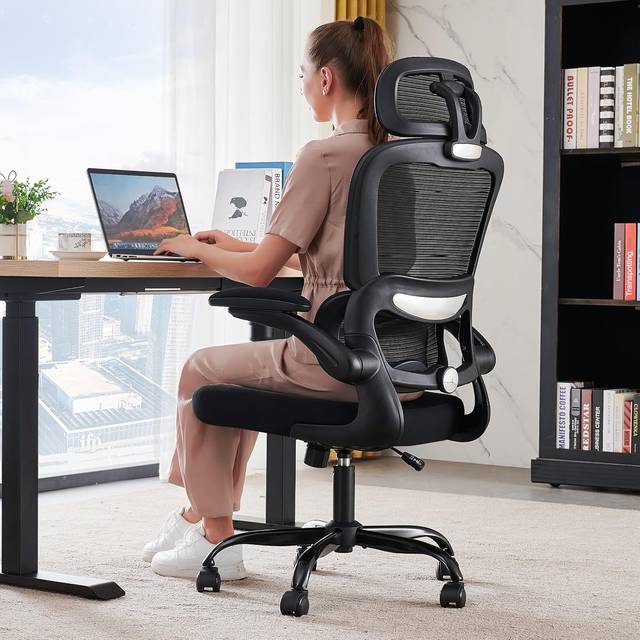
It’s not a stretch that feels dramatic, but it re-trains your posture over time. The Hayelf chair’s adjustable headrest is actually helpful here because it gives you a reference point for where your head should be.
The Forearm Stretch
Your wrists take a beating too. I see more carpal tunnel issues from people who ignore their forearms than from people with bad mice. Extend your arm, palm facing down, and gently pull your fingers toward you with the other hand. Then flip your palm up and pull again. Hold each for 15 seconds.
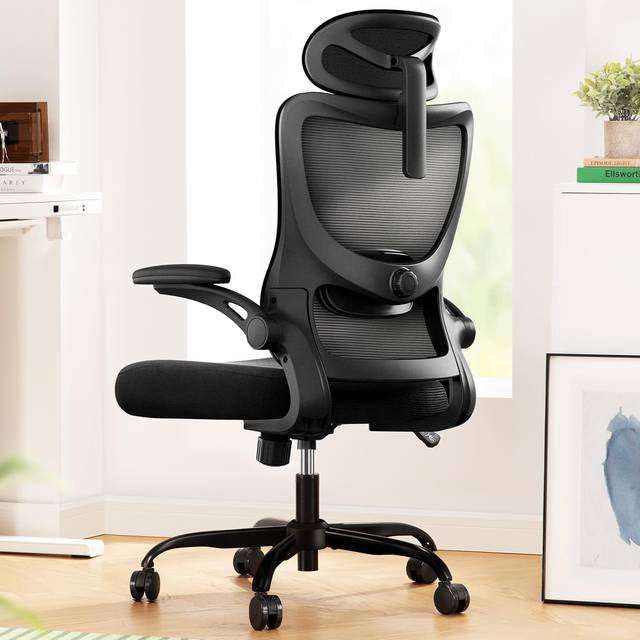
I associate this stretch with the Marsail because that’s the chair I had in my office when I first started teaching it to patients. The flip-up armrests on that chair are perfect for this. You can’t do a proper forearm stretch with your armrests digging into your elbows.
Why the Chair Still Matters
I’m not going to pretend that stretching fixes a garbage chair. It doesn’t. If your seat cushion has flattened out after six months, or your lumbar support is a fixed lump that hits you in the wrong spot, no amount of twisting is going to save you. My notebook of client complaints is full of people who tried to stretch their way out of a bad chair purchase. It doesn’t work.
The chair is the foundation. The stretches are the maintenance. You need both.
The Hamstring Stretch
I know you’re sitting at your desk, but stand up for this one. Place your heel on your chair seat, or on a low stool, and lean forward from your hips with a straight back. You should feel this in the back of your thigh, not your lower back. Hold for 30 seconds per leg.
Tight hamstrings pull your pelvis into a posterior tilt, which flattens your lumbar curve and makes you slouch. This is especially important if you’re shorter and your feet dangle in your chair. I have a 5’3” client who bought the TRALT and loves it, but she knows she has to get up and do this stretch or her hips lock up by mid-afternoon.
The Hip Flexor Lunge
This is the one that hurts, which means it’s the one you need most. Desk sitting shortens your hip flexors, and when they’re tight, they yank on your lower back. Do a kneeling lunge, sink your hips forward, and squeeze your glute on the same side. Hold for 30 seconds per side.
I’ve been doing this stretch for years, and I still groan when I start. It’s not comfortable. It’s effective. The heavy guy in my practice, 6’2” and 275 pounds, does this every morning before he sits down in his Marsail for his 10-hour shifts. He says it’s the difference between getting through the day and getting through the day without wanting to cry.
The Reality Check
Here’s what I know. I know the Marsail at ~$118 has beaten chairs that cost five times as much. I know the TRALT is the best value for shorter sitters who need a chair that actually fits. I know the Hayelf is promising for the 6’4” client I have who needs a neck rest that doesn’t push his head forward.
I don’t track prices day to day, so I won’t pretend to know next week’s deals. What I know is what my back feels like after hour seven, and what my clients tell me at their follow-up appointments.
You can buy the best chair in my rotation, but if you never get up, never stretch, and never move, you’re going to hurt. I’ve seen it a thousand times. A ~$1,200 used Aeron with dead foam won’t save you, and neither will a ~$60 lumbar pillow. What saves you is sitting in a chair that fits, and getting up every hour to twist, lunge, and reach.
The bottom line is simple. Stretching won’t fix a bad chair, but a good chair won’t fix a body that never moves. Do the stretches. They cost you five minutes and they’ll save you years of misery.