I have spent 16 years as a physical therapist and the last eight of those as an ergonomics consultant for offices that keep buying chairs nobody can sit in for a full workday. This ergonomic office chair comparison is the conversation I have with clients in my treatment room, minus the pressure map printout and minus the look on their face when I show them where their weight actually lands.
Four products are on the table this time. Three are chairs. One is a door sign, and that is not a typo. A door you can close is part of an ergonomic setup, because the best lumbar support in the world does nothing for you if you never get an unbroken stretch of focus long enough to use it. I will get to the sign. First the chairs, because that is where the money goes and where the marketing is at its worst.
The pick for most people here is the HOLLUDLE Ergonomic Mesh Office Chair, because its 3D lumbar support and 3D armrests give you two adjustment axes that still matter at hour six, not just in the showroom. If you are tall, work at a standing desk, or need a high weight capacity, the BOLISS Drafting Tall Office Chair is the better answer. The gaming chair with massage is a real option for a specific body type and a specific sitting habit, and I will say exactly which. The sign is a cheap fix for a problem no chair solves.
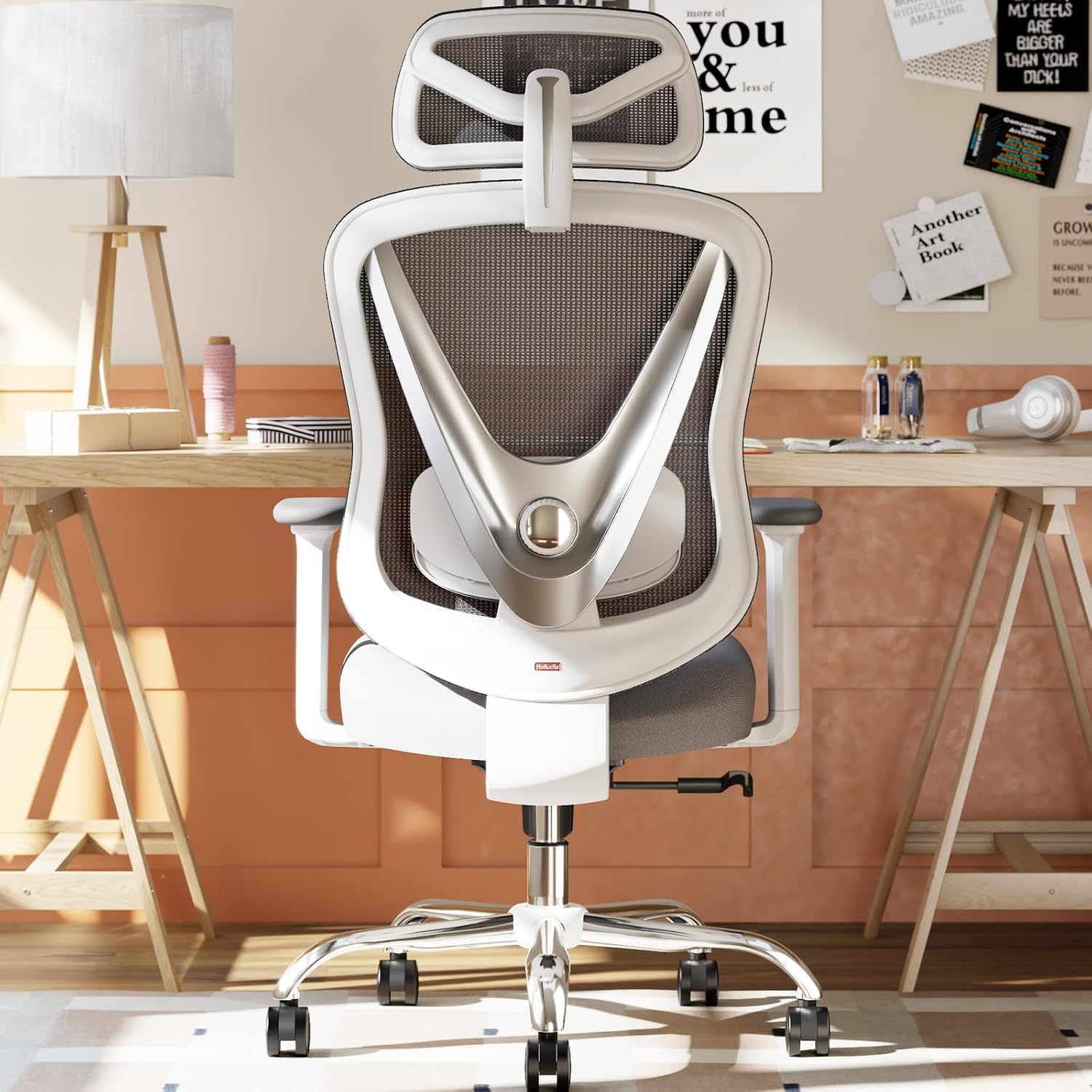
HOLLUDLE Ergonomic Mesh Office Chair
3D lumbar support and 3D armrests, two adjustment axes most chairs at this level skip, plus a V-shaped back that keeps the frame off your shoulder blades
Mesh is only as good as its frame tension, and a white finish shows every scuff and dust line
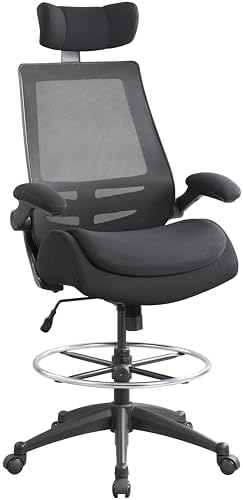
BOLISS Drafting Tall Office Chair
A 400 lb rating and a high back, built for standing desks and for bodies that need the extra height range
Tall geometry puts your feet on a ring instead of the floor, and it is a poor match for a standard-height desk
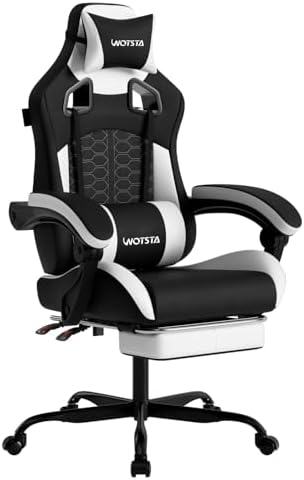
Gaming Chair with Massage and Footrest
Massage, footrest, headrest, and a lumbar pillow, with a 300 lb rating and a shape that rewards reclining
Bucket sides fight your shoulders when you sit upright to work, and a strap-on lumbar pillow moves the moment you do
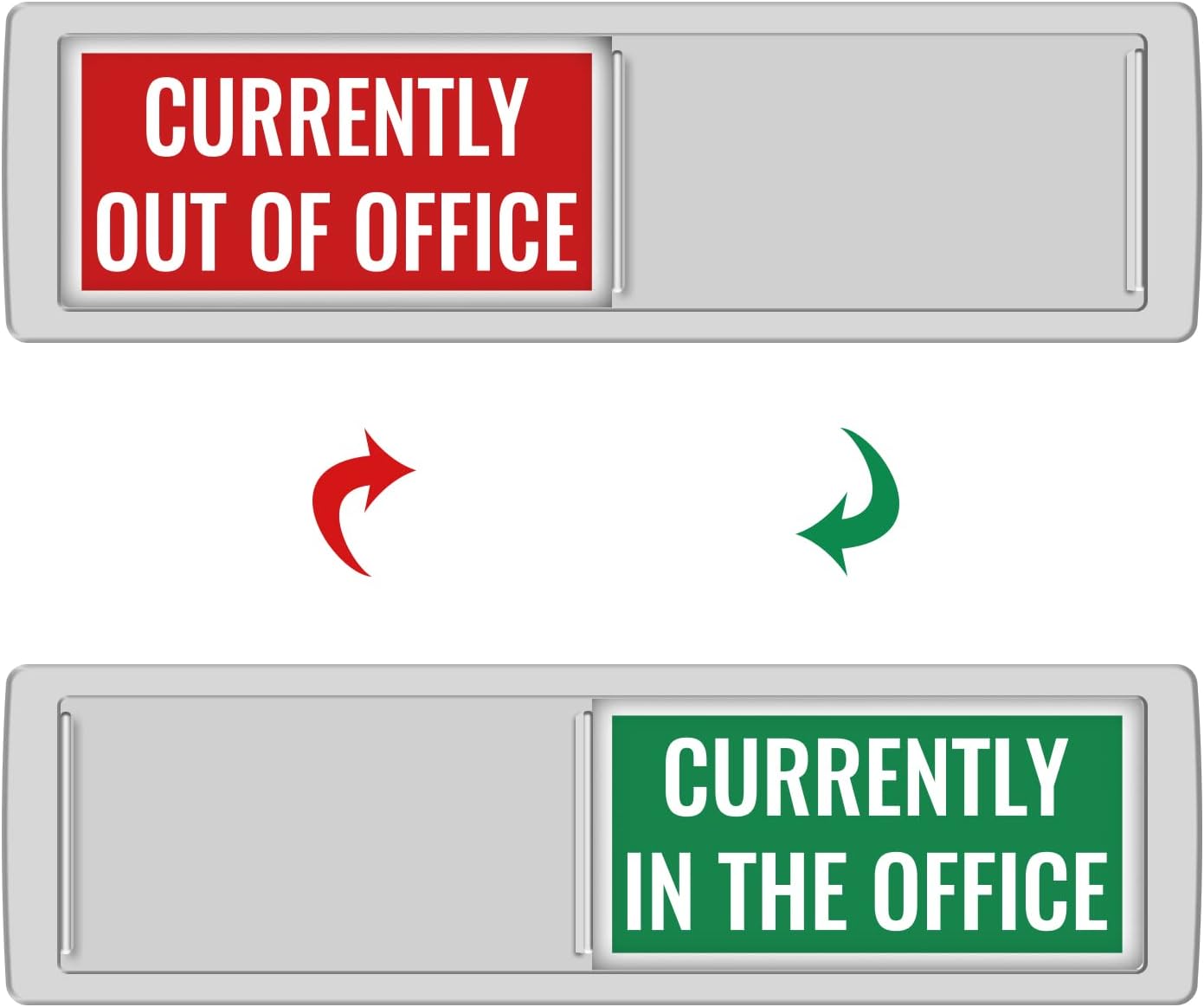
Currently in the Office Out of Office Door Sign
A magnetic slider that is readable from across a room, and the cheapest way to protect a focus block
It is not a chair, and a closed door only works if the people around you respect it
Prices and availability were captured from Amazon Creators API and may change.
How I judge a chair
Every chair that comes through my house runs the same protocol. Three full workdays minimum. One nine-hour day with no standing breaks. A sensor pad under the thighs and the sit bones so I can see where the weight actually lands. And a lumbar check at 2 p.m. on the second day, because that is the hour when cheap mechanisms start to creep and the pad that felt perfect at 9 a.m. has slid an inch down your back.
Four questions decide it. Does the lumbar support adjust in place, or does it just slide? Can I spend nine hours in the seat without standing up? Do the armrests hold their position under pressure? And would I prescribe it to a client with low back pain?
That is the whole test. Nothing on a spec sheet survives it, and nothing on a spec sheet replaces it. What follows is how these four products line up against that protocol based on what each one offers, plus what you should verify yourself in the first week.
The mesh chair: HOLLUDLE Ergonomic Mesh Office Chair
The HOLLUDLE is the one I would put in most home offices, and the reason is in the adjustment count. A 3D lumbar support means the pad moves in three directions instead of one slide track, and that matters more than it sounds. A pad that only slides up and down cannot follow the inward curve of your lower back when you lean back in the chair. It ends up as a shelf against your spine instead of support under it. A 3D armrest set does the same thing for your elbows: height, angle, and depth, so your forearms can rest with your shoulders down instead of floating.
The V-shaped back is the other detail I like. Splitting the frame around the spine keeps hard plastic off your shoulder blades when you sit upright, which is how you are supposed to sit for keyboard work.
Two cautions. First, mesh is not automatically breathable, and it is not automatically durable. The tension in the frame is what keeps mesh from turning into a hammock for your tailbone in year two, and you cannot judge that from a product photo. Second, the white finish is a commitment. It looks clean in a bright room and it shows every scuff, every dust line, and every pen mark.
The tall option: BOLISS Drafting Tall Office Chair
Drafting chairs change the geometry of sitting, and most people do not think about that until their thighs go numb. With the seat higher, your hips sit above your knees, your thighs angle down, and your feet no longer reach the floor. The foot ring becomes your contact point, and its position is the whole game. Too low and you get pressure behind the knees. Too high and your legs dangle and your thighs take the load.
The BOLISS is built for that setup: a tall, high-back frame rated to 400 lb and aimed at standing desks. The high back covers more of your thoracic spine, which helps if you are the kind of person who leans back between tasks. The heavy weight rating usually signals a sturdier base and a heavier-duty gas lift, and the gas lift is the part that dies first on cheap chairs. If you have ever owned a chair that sank slowly over 14 months until your knees were at your chin, you know exactly why that matters.
What you give up is versatility. On a standard-height desk you will be perched, and a foot ring at that height puts your knees in a position I spend my weeks treating. Buy this one because you already have a tall desk or a tall body, not because it looks impressive.
The gaming chair with massage, footrest, and a lumbar pillow
I make fun of gaming ergonomic marketing, and then I review gaming chairs anyway, because for some bodies they work. Here is the honest version.
The shape is the problem and the feature. Bucket sides hold you in place when you recline, and they also push your shoulders forward when you sit upright for keyboard work, which is most of your day if you have a job. If you spend your chair time leaning back with a controller or a laptop on your lap, the geometry is fine. If you sit bolt upright typing for eight hours, those side bolsters are going to win an argument with your shoulder blades.
The massage function is a vibration motor, and I want to be clear about what it is and is not. It feels pleasant for about 20 minutes. It does not change your lumbar curve, and it does not replace getting up and moving. The footrest is genuinely useful for a reclined position, the headrest and lumbar pillows are comfortable when they sit where your body needs them, and the 300 lb rating covers a wide range of sitters.
The lumbar pillow is the detail I would watch. A strap-on cushion that moves when you move is not lumbar support, it is lumbar decoration. If you can slide it down to the small of your back and keep it there through a work session, it counts. If it drifts, it does not. And check the headrest thickness: a pillow that pushes your head forward is worse than no pillow at all.
The odd one out: the out of office door sign
This is the product on the list with zero lumbar adjustment, and I put it here on purpose. The magnetic slider is easy to read from across a room, the silver finish is neutral enough for a home office or a treatment room, and it costs less than a takeout lunch.
Why it belongs in a chair article: your posture is only as good as your ability to change it. Focus blocks let you decide when to stand up, stretch, and reset, instead of being yanked out of a position by a knock at the door while your shoulders climb toward your ears. A closed door is the cheapest ergonomic intervention in the building. The sign just makes it official, and it prevents the awkward conversation where you have to explain that yes, you are in there, and no, you are not available.
One caveat, and it is not a small one. A door sign only works if the people on the other side read it. In an open office, it is decoration. In a home office with a partner, a kid, or a dog, it is a boundary that actually holds.
Seat depth, tilt tension, and the two-minute fit check
Before you buy any of these, do the fit check. Sit all the way back. There should be a two to three finger gap between the front edge of the seat and the back of your knees. Too long and the edge digs into your calves. Too short and your thighs carry weight they were not built to carry.
Set the seat height so your feet rest flat and your knees sit level with your hips, or slightly below. Then set the armrests so your elbows are near 90 degrees and your shoulders can drop. Floating elbows are how I get shoulder referrals every single week.
Then set the tilt tension. Loose tilt equals slouching, locked tilt equals stiffness and a sore lower back by mid-afternoon. You want enough resistance that leaning back takes a little effort and the chair holds you when you get there. That single adjustment changes how a chair feels more than any marketing claim about foam density.
Which chair for which body
Standard desk, average height, work that involves typing: the HOLLUDLE mesh chair, because the 3D lumbar and 3D armrests are the two adjustments that keep working after lunch.
Tall frame, standing desk, or a heavier body that has killed lesser gas lifts: the BOLISS drafting chair, with the foot ring set so your thighs angle down and your feet have a real home.
Long reclining sessions, gaming, or a body that changes position constantly: the gaming chair, as long as you accept the trade-off in upright shoulder position.
Anyone who shares a home or an office with people who do not understand closed doors: the sign, first, before the chair.
What I would skip
Do not buy a chair because the word ergonomic is stamped on it. Look for a lumbar support that adjusts in place, armrests that lock, and a return window long enough to cover a full work week. Do not buy a chair you cannot send back, because the chair that fits my body and the chair that fits yours are different chairs, and no spec sheet settles that argument. And do not spend the whole budget on the seat and nothing on the desk height, the monitor position, or the door you cannot close.
The short version
Three chairs, three different bodies, one door sign that makes all of them easier to live with. The HOLLUDLE covers the most people because its adjustments are the ones that stay put. The BOLISS serves the tall desk and the heavy frame. The gaming chair serves the recliner. And the sign costs the least and fixes the problem none of the other three can touch. Check current Amazon price on the one that matches your height, your desk, and your pain, and give it a full week before you decide.